Refugio County
About
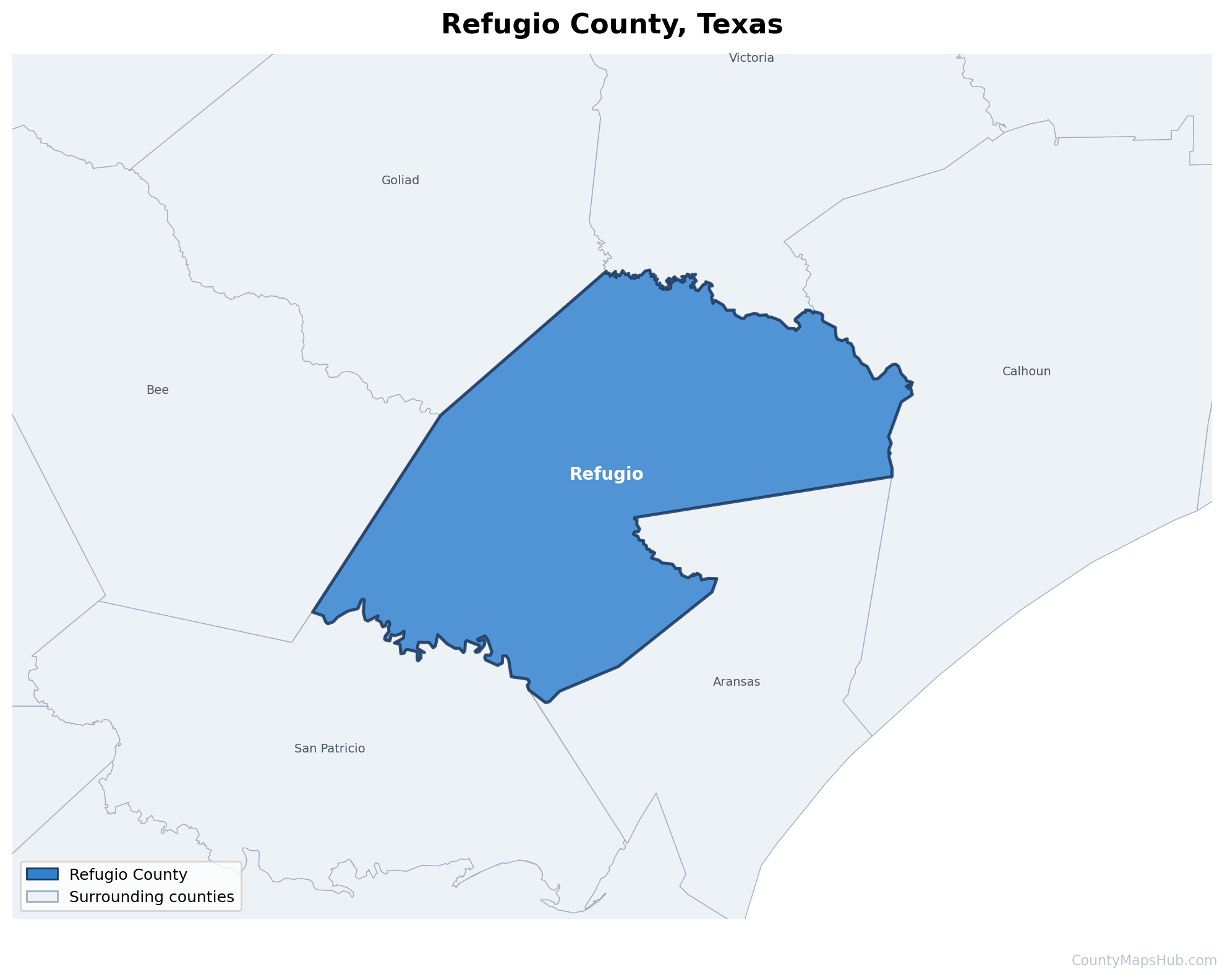
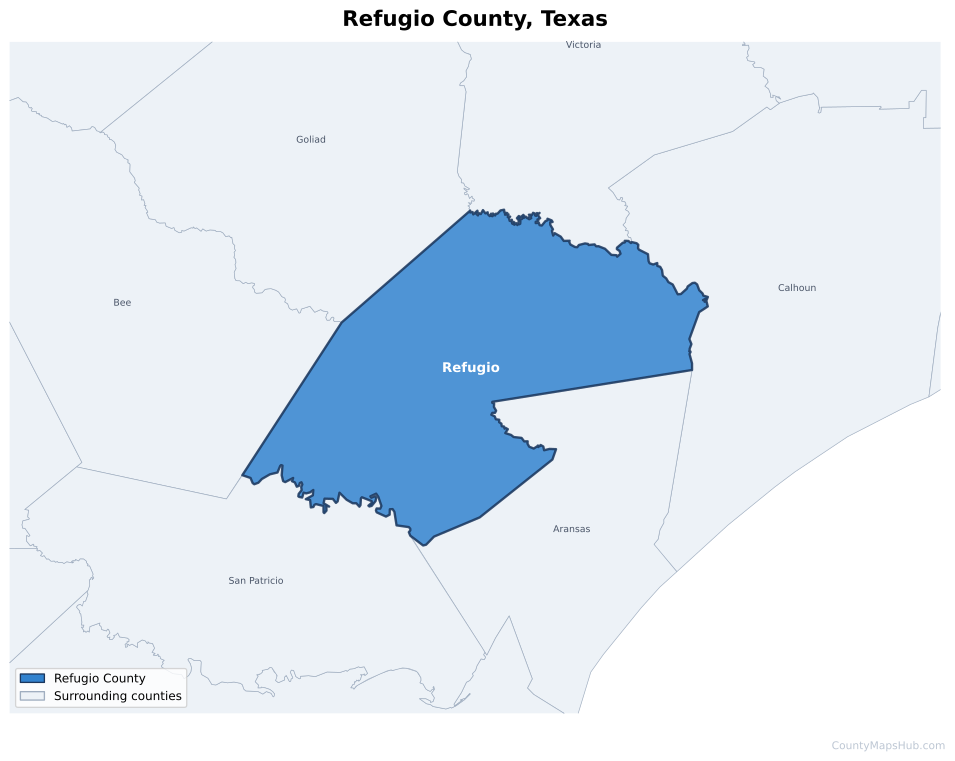
Refugio County was established in 1836, making it one of the original counties formed during the early days of the Republic of Texas. The county takes its name from Mission Nuestra Señora del Refugio, a Spanish colonial mission that served as an important religious and cultural center in the region during the 18th and early 19th centuries. This mission heritage reflects the broader pattern of Spanish colonization along the Texas coastal plains.
The county’s location in the South Texas coastal region positioned it at the crossroads of various historical movements, from Spanish missionary activity to Anglo-American settlement following Texas independence. Throughout the 19th and 20th centuries, the area developed an economy based on ranching and agriculture, typical of many Texas Gulf Coast counties. The county seat, Refugio, has served as the administrative and commercial center since the county’s establishment, maintaining its role as the heart of local government and community life for nearly two centuries.
Population
According to 2020 census data, Refugio County has a population of 6,741 residents spread across its 770 square miles of territory. This relatively modest population density reflects the county’s character as a rural area with wide open spaces and agricultural landscapes. The population is centered primarily around the county seat and smaller communities scattered throughout the region. Like many rural Texas counties, Refugio County has experienced population fluctuations over the decades as economic conditions and employment opportunities have shifted, though it maintains a stable community of residents who value the area’s small-town atmosphere and connection to the land.
Climate
Refugio County experiences a humid subtropical climate, characteristic of the Texas Gulf Coast region. This climate zone brings warm to hot summers with high humidity levels and mild winters, creating a year-round growing season that has historically supported agricultural activities. Annual precipitation is generally adequate for supporting both native vegetation and cultivated crops.
The county’s proximity to the Gulf of Mexico influences its weather patterns, bringing moisture-laden air masses that contribute to the humid conditions. Residents can expect warm temperatures for much of the year, with the coastal influence moderating some of the extreme heat found farther inland. The climate supports a mix of coastal prairie and brushland ecosystems typical of South Texas.
Tourist Attractions
Refugio County offers visitors an authentic South Texas experience with its rural landscapes and small-town charm. The area’s historical connections to Spanish colonial missions provide opportunities for those interested in early Texas history and cultural heritage. Visitors interested in the region’s past can explore the historical significance of the mission from which the county derives its name, reflecting the area’s deep roots in Texas history.
Outdoor enthusiasts will find the county’s coastal prairie environment suitable for activities such as birdwatching, as the region lies along important migratory bird routes. The rural character of the county provides a peaceful setting for those seeking to experience the traditional Texas countryside. Local parks and recreational areas offer spaces for picnicking and enjoying the natural landscape. The county’s proximity to the Gulf Coast also makes it a convenient stopover for travelers exploring the broader Coastal Bend region of Texas.
Culture
Refugio County embodies the cultural heritage of South Texas, where Spanish colonial influences blend with Anglo-American and Mexican traditions. The county’s name itself reflects the enduring legacy of the Spanish mission era, and this historical foundation continues to influence local identity and community character. Small-town values, agricultural traditions, and a strong sense of community define the social fabric of the area.
Local cultural life revolves around community gatherings, celebrations, and events that bring residents together throughout the year. The region’s ranching heritage remains an important part of the cultural identity, with many families maintaining connections to the land that span multiple generations. Like much of rural Texas, the county features traditions of hospitality and neighborliness, where residents take pride in their community’s history and work to preserve its character for future generations. The blend of cultures that have shaped South Texas over centuries continues to be reflected in local customs, cuisine, and community celebrations.