Roberts County
About
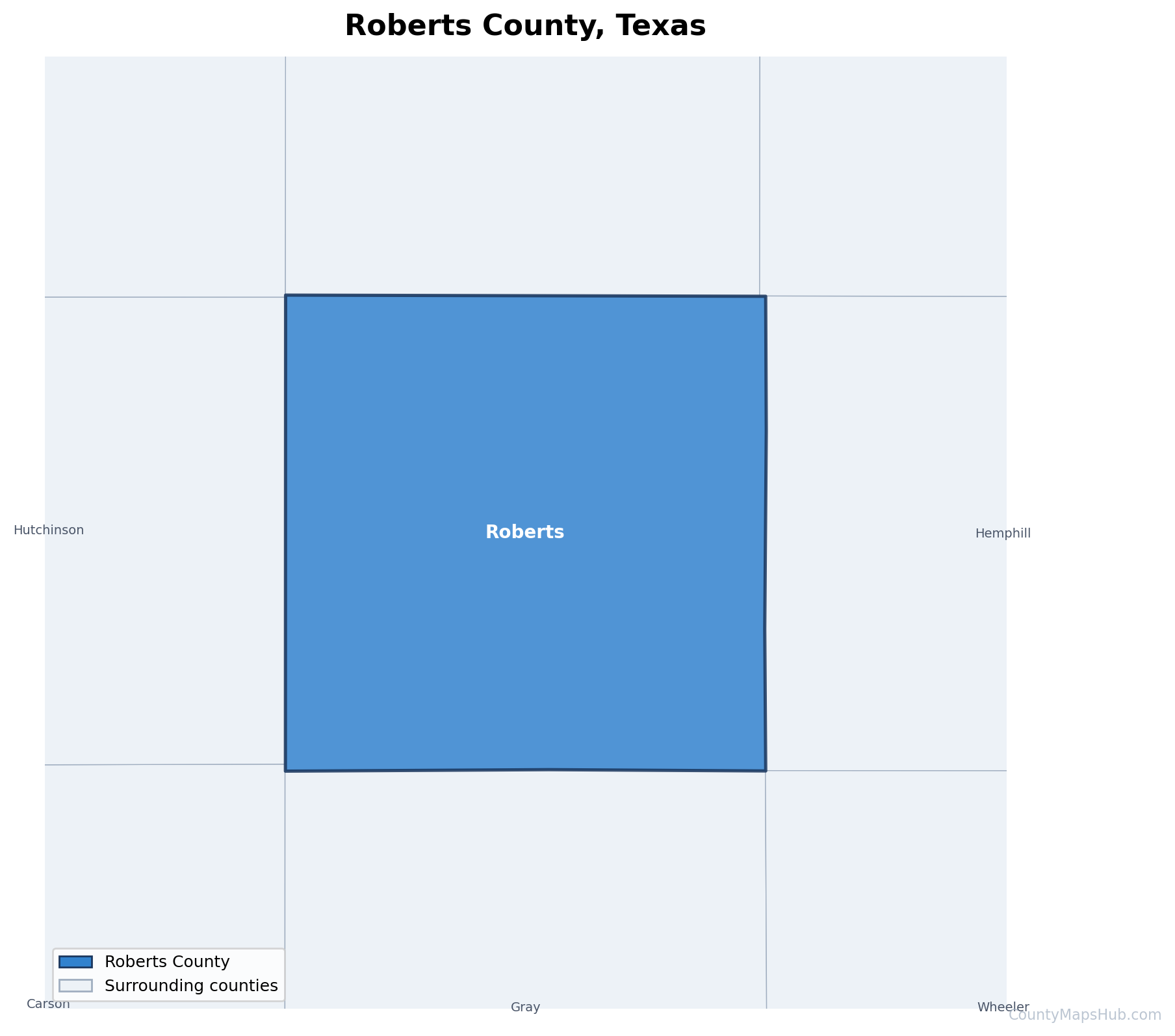
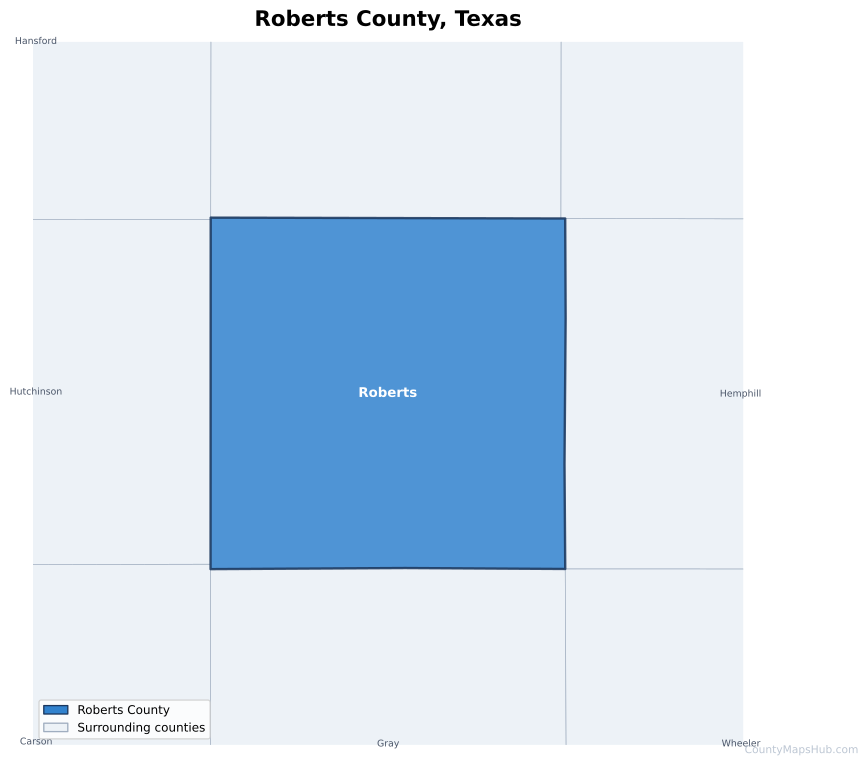
Roberts County was established in 1876 during a period of significant expansion and organization in the Texas Panhandle. The county was named after Oran Milo Roberts and John S. Roberts, reflecting the prominent figures who shaped early Texas governance and settlement. Miami serves as the county seat, providing administrative services for this rural region.
The county’s development closely followed patterns typical of the High Plains area, with early settlement driven by ranching opportunities and later agricultural development. The region’s history reflects the transition from open range cattle operations to more established communities as infrastructure and governmental institutions took root in the late nineteenth century. The challenging semi-arid environment shaped both the settlement patterns and economic activities that would characterize the county for generations.
Population
According to 2020 census data, Roberts County had a population of 827 residents, making it one of the least populated counties in Texas. This small population is distributed across the county’s 924 square miles, resulting in a very low population density characteristic of rural Texas Panhandle counties. The limited population reflects the county’s agricultural economy and remote location, with residents typically engaged in ranching, farming, and related industries that have sustained the community for over a century.
Climate
Roberts County experiences a semi-arid climate typical of the Texas Panhandle region. The area is characterized by low annual precipitation, wide temperature variations between seasons, and abundant sunshine throughout the year. Summers tend to be hot with occasional thunderstorms, while winters can bring cold temperatures and occasional winter precipitation events.
The semi-arid conditions have historically influenced land use patterns, favoring cattle ranching and drought-resistant agricultural practices. Wind is a consistent feature of the local climate, contributing to the region’s character. The climate presents both challenges and opportunities for residents, requiring adaptations in water management, agricultural techniques, and daily life that reflect the realities of High Plains living.
Tourist Attractions
Roberts County offers visitors an authentic experience of rural Texas Panhandle life. The landscape features wide-open spaces, expansive horizons, and a sense of solitude increasingly rare in modern America. Outdoor enthusiasts may appreciate opportunities for wildlife observation, photography of dramatic skies and terrain, and experiencing the region’s agricultural heritage firsthand.
The county seat of Miami provides a glimpse into small-town Texas, where historic architecture and local establishments reflect the region’s heritage. Visitors interested in Western history and ranch culture will find the area’s character appealing. The sparse population and minimal light pollution also create excellent conditions for stargazing, offering clear views of the night sky that urban areas cannot match.
Culture
Roberts County’s culture reflects traditional rural Texas values centered on ranching heritage, self-reliance, and tight-knit community bonds. The sparse population creates a social environment where neighbors often know one another and community events serve as important gathering points. Local culture emphasizes practical skills, agricultural knowledge, and adaptation to the challenging environment of the High Plains.
The region’s cultural identity is shaped by its frontier heritage and continuing agricultural economy. Traditional Western customs, including rodeo culture and livestock traditions, remain important aspects of community life. Residents take pride in their county’s history and the resilience required to thrive in this remote corner of Texas, maintaining connections to the pioneering spirit that first brought settlers to the area over a century ago.