Rockwall County
About
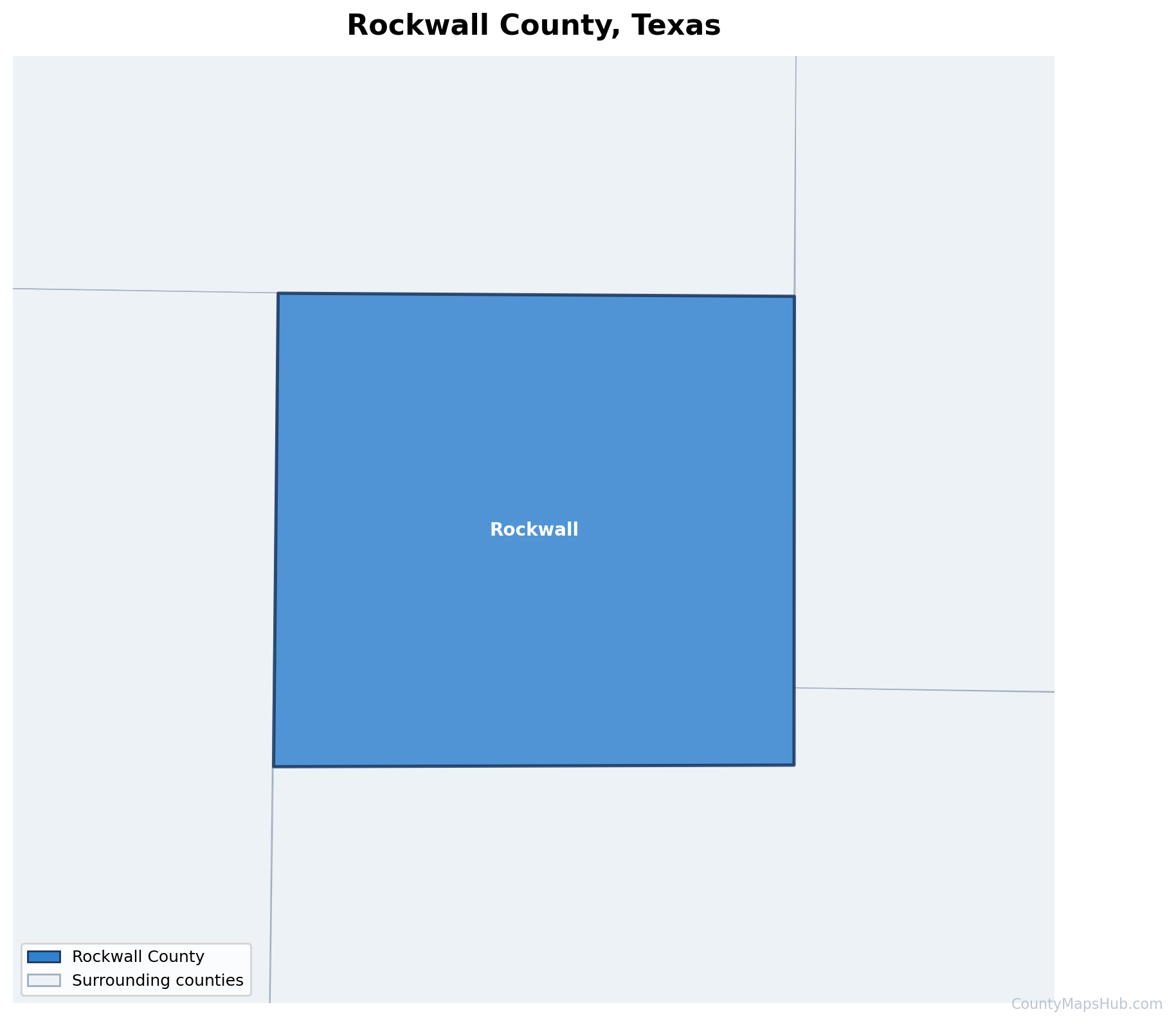
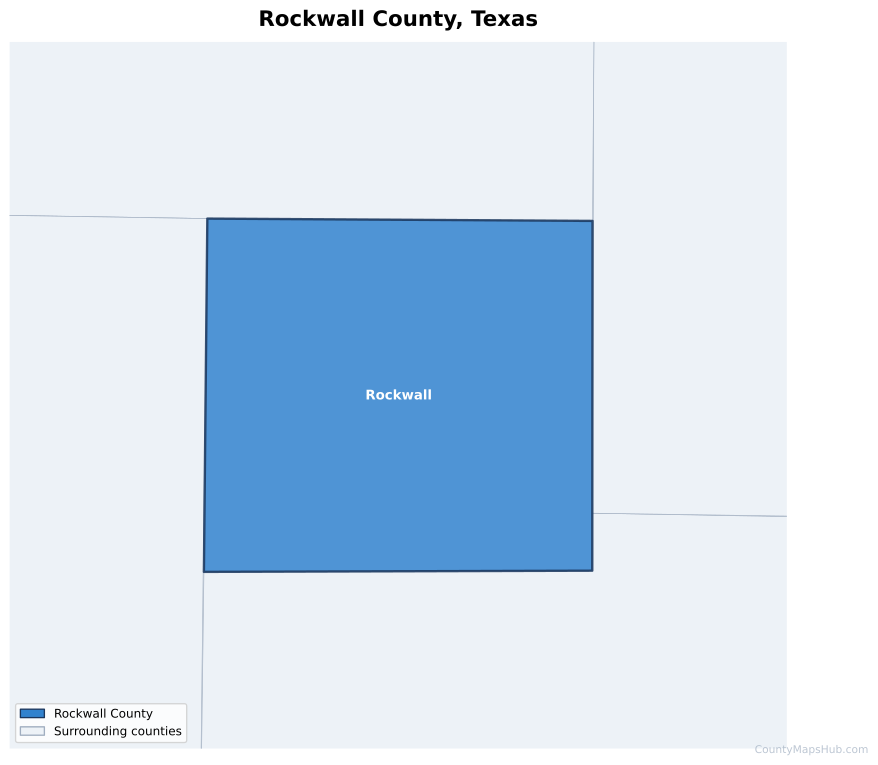
Rockwall County was established in 1873, making it one of the younger counties in Texas. The county derives its unique name from an underground rock wall, a geological feature that sparked curiosity and speculation among early settlers and continues to be part of the area’s historical identity. The county seat is located in the city of Rockwall, which shares the county’s distinctive name.
Throughout its history, the county developed as part of the broader North Texas region, transitioning from a primarily agricultural economy to a more diverse economic base. The proximity to major metropolitan areas influenced its growth patterns over the decades, as transportation networks and regional development shaped the character of local communities. The relatively small geographic footprint of the county, covering just 127 square miles, contributed to its close-knit development and community identity.
Population
As of the 2020 census, Rockwall County had a population of 107,819 residents. This population density reflects the county’s status as one of the smaller counties in Texas by land area, with its 127 square miles creating a relatively compact community structure. The county has experienced growth trends consistent with its position in the broader North Texas region, attracting residents who value proximity to urban amenities while maintaining a distinct local identity. The demographic composition reflects a mix of long-established families and newer arrivals drawn to the area’s combination of residential opportunities and regional accessibility.
Climate
Rockwall County experiences a humid subtropical climate, characterized by hot summers and mild to cool winters typical of North Texas. Summer temperatures regularly climb into the 90s Fahrenheit, with high humidity levels that can make conditions feel warmer. Winters are generally moderate, with occasional cold fronts bringing cooler temperatures and rare winter precipitation events.
The area receives moderate rainfall distributed throughout the year, with peak precipitation typically occurring during spring months. Severe weather, including thunderstorms and occasional tornadoes, can affect the region during spring and early summer as part of the broader weather patterns common to North Texas. The growing season is relatively long, supporting various vegetation types and allowing for diverse landscaping and agricultural activities in rural portions of the county.
Tourist Attractions
Rockwall County offers visitors a range of recreational opportunities centered around its natural landscapes and water features. The area includes access to lakes and waterways that provide settings for boating, fishing, and waterfront activities popular with both residents and visitors. Parks and outdoor spaces throughout the county offer trails, picnic areas, and facilities for various recreational pursuits suitable for families and outdoor enthusiasts.
The county’s compact size and community-oriented character create opportunities for visitors to experience local events and seasonal celebrations that reflect North Texas traditions. Historic downtown areas feature local businesses, dining establishments, and occasional markets that showcase regional products and crafts. The county’s position within the greater Dallas-Fort Worth metropolitan area also makes it a convenient base for exploring wider regional attractions while maintaining a more relaxed atmosphere than larger urban centers.
Culture
The cultural fabric of Rockwall County reflects its evolution from rural Texas roots to a modern suburban community with connections to the broader North Texas metropolitan region. Local traditions maintain elements of Texas heritage while embracing contemporary influences brought by diverse populations. Community gatherings, seasonal festivals, and local celebrations provide opportunities for residents to connect and maintain shared traditions that bridge historical and contemporary identities.
The county’s cultural life benefits from its proximity to major cultural institutions in nearby metropolitan areas while developing its own local character through community organizations, civic groups, and educational institutions. Religious congregations, service organizations, and recreational leagues contribute to the social infrastructure that defines community life. The blend of small-town atmosphere and metropolitan accessibility creates a distinctive cultural environment where residents value both neighborly connections and access to broader regional amenities and cultural offerings.