Rusk County
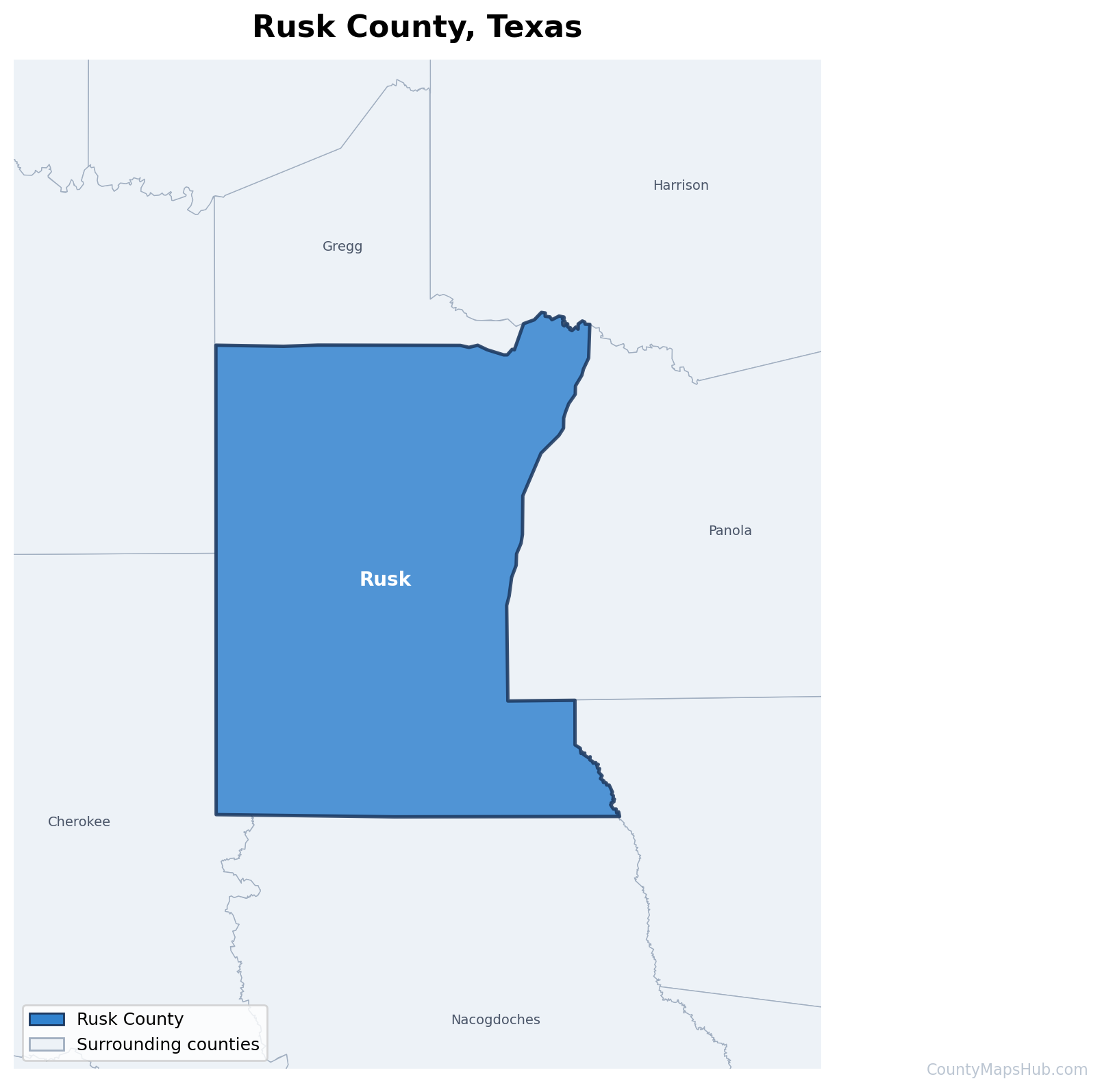
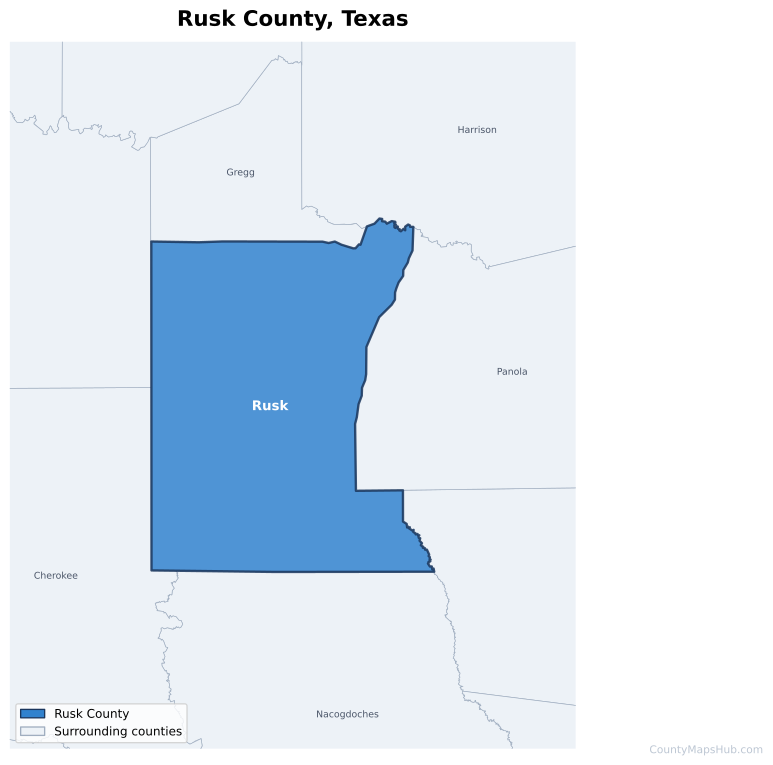
About
Rusk County was established in 1843 during the formative years of the Republic of Texas, named after Thomas Jefferson Rusk, a prominent Texas statesman and military leader who served as Secretary of War for the Republic and later as a United States Senator. The county’s creation reflected the westward expansion and settlement patterns characteristic of mid-19th century Texas, as pioneers moved into the East Texas region seeking agricultural opportunities and new communities.
Throughout its history, the county has been shaped by the broader economic and social trends of East Texas. The region’s development was influenced by agriculture, timber resources, and later by the discovery of oil in East Texas during the early 20th century. Henderson, designated as the county seat, became the administrative and commercial center, serving the surrounding rural communities and helping to anchor the county’s growth through various economic transitions over the generations.
Population
According to the 2020 census, Rusk County has a population of 52,214 residents spread across its 924 square miles. This population density reflects the county’s character as a predominantly rural East Texas county with a mix of small-town communities and agricultural lands. The county seat of Henderson serves as the primary population center, providing essential services, employment opportunities, and civic infrastructure for residents throughout the region. The population represents families with deep generational roots in the area as well as newer residents attracted to the county’s combination of rural character and proximity to larger Texas metropolitan areas.
Climate
Rusk County experiences a humid subtropical climate typical of East Texas, characterized by hot, humid summers and mild to cool winters. Summer temperatures regularly reach the upper 90s Fahrenheit, with high humidity levels creating warm conditions that extend from late spring through early fall. Winter months bring cooler temperatures, though freezing conditions are generally brief and infrequent, with occasional cold fronts moving through the region.
The area receives ample rainfall distributed throughout the year, with slightly higher precipitation during spring and early summer months. This moisture supports the lush vegetation and pine forests characteristic of the East Texas landscape. Residents should be prepared for the possibility of severe weather during spring months, including thunderstorms and occasional tornado activity common to this part of Texas.
Tourist Attractions
Rusk County offers visitors opportunities to explore the natural beauty and cultural heritage of East Texas. The region features scenic rural landscapes, pine forests, and opportunities for outdoor recreation including fishing, hiking, and wildlife observation. Local parks and recreational areas provide spaces for family activities and community gatherings, while the county’s small-town atmosphere offers a peaceful retreat from urban centers.
Visitors interested in regional history can explore local museums and historical sites that preserve the heritage of East Texas settlement and development. The county seat and surrounding communities feature historic architecture and downtown districts that reflect the area’s 19th and early 20th century heritage. Annual community events and festivals celebrate local traditions, while antique shops and local businesses offer authentic small-town Texas experiences for those seeking to understand rural East Texas culture.
Culture
The culture of Rusk County reflects the traditions of East Texas, blending Southern hospitality with Texas independence and rural values. Community life centers around family, faith, and neighborly connections, with local churches serving as important social institutions. High school athletics, particularly football, generate strong community support and pride, bringing residents together during the school year. The cultural landscape reflects the agricultural heritage that shaped the region, with values of hard work, self-reliance, and community cooperation remaining central to local identity.
Local cuisine showcases classic Southern and Texas comfort foods, with barbecue, home-style cooking, and traditional recipes passed through generations. Community gatherings, whether for civic events, school activities, or seasonal celebrations, reinforce the social bonds that characterize small-town Texas life. The county’s cultural fabric includes influences from the various groups that settled East Texas over the past two centuries, creating a distinctly regional identity that honors both tradition and the gradual evolution of rural Texas communities in the modern era.