San Augustine County
About
San Augustine County was established in 1836, making it one of the original counties formed during the Republic of Texas era. Named after Mission San Agustín, the county’s nomenclature reflects the deep Spanish colonial influence that characterized East Texas during the 18th century. The mission heritage speaks to the region’s role as a crossroads of Spanish, Mexican, and Anglo-American settlement patterns that shaped early Texas history.
Throughout the 19th century, the county developed as part of the broader East Texas Piney Woods region, where agriculture and timber became foundational to the local economy. The county seat, San Augustine, served as a governmental and commercial center for surrounding rural communities. The area’s historical significance is tied to its position along early travel routes and its connection to the cultural exchanges that occurred between indigenous peoples, Spanish missionaries, and American settlers during Texas’s formative years.
Population
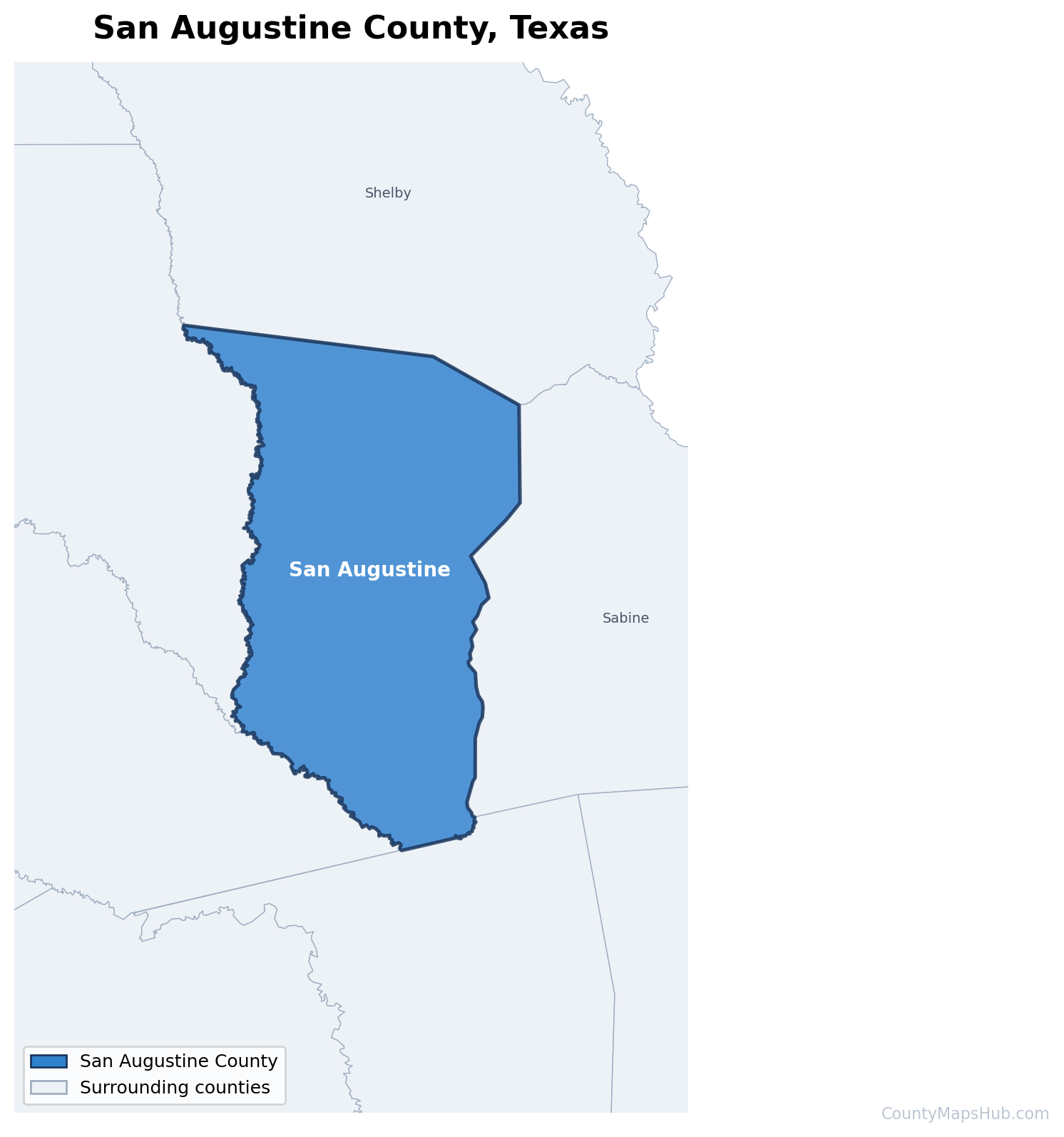
According to the 2020 Census, San Augustine County has a population of 7,918 residents spread across its 528 square miles. This relatively modest population density reflects the county’s rural character, typical of many East Texas counties where small towns and unincorporated communities dominate the landscape. The population includes families with deep generational roots in the region as well as newer residents attracted to the area’s quiet, countryside atmosphere. The county’s demographic profile reflects broader patterns seen throughout rural East Texas, where agriculture, forestry, and small-scale commerce sustain local communities.
Climate
San Augustine County experiences a humid subtropical climate, characterized by hot, humid summers and mild to cool winters. This climate zone supports the lush pine forests that define the East Texas landscape, with adequate rainfall distributed throughout the year. Summer temperatures frequently reach the 90s Fahrenheit, accompanied by high humidity levels that are typical of the southeastern United States.
Winters are generally mild, with occasional cold fronts bringing brief periods of freezing temperatures. The region receives abundant precipitation, supporting diverse vegetation and contributing to the area’s agricultural viability. Spring and fall offer pleasant transitional seasons with moderate temperatures, making these periods particularly favorable for outdoor activities and exploring the natural beauty of the Piney Woods.
Tourist Attractions
Visitors to San Augustine County can explore the natural beauty of the East Texas Piney Woods, where towering pine and hardwood forests create scenic landscapes ideal for outdoor recreation. The region offers opportunities for hiking, birdwatching, and nature photography, with numerous trails and natural areas showcasing the biodiversity of this forested environment. Lakes and streams provide options for fishing and water-based activities, attracting outdoor enthusiasts throughout the year.
The county’s historical significance is preserved through various local sites that commemorate its Spanish colonial heritage and early Texas history. Heritage enthusiasts can discover architectural remnants and historical markers that tell the story of the region’s development from mission territory through the Republic of Texas era and beyond. The small-town atmosphere of the county seat offers a glimpse into rural Texas life, with local shops and community events reflecting the area’s cultural traditions.
Culture
San Augustine County embodies the cultural traditions of Deep East Texas, where Southern hospitality merges with frontier heritage and Spanish colonial influences. The community maintains strong ties to its agricultural and forestry roots, with local customs reflecting generations of families who have worked the land. Religious institutions, particularly churches, serve as important social anchors, hosting community gatherings and preserving traditions that date back to the county’s earliest settlements.
The cultural fabric of the region celebrates its diverse historical influences, from Native American heritage through Spanish missionary activity to Anglo-American settlement. Local cuisine reflects Southern and Texas foodways, with barbecue, comfort foods, and traditional recipes passed down through families. Community events throughout the year bring residents together to celebrate shared heritage, fostering a strong sense of place and continuity that characterizes small-town Texas life in the Piney Woods region.