San Jacinto County
About
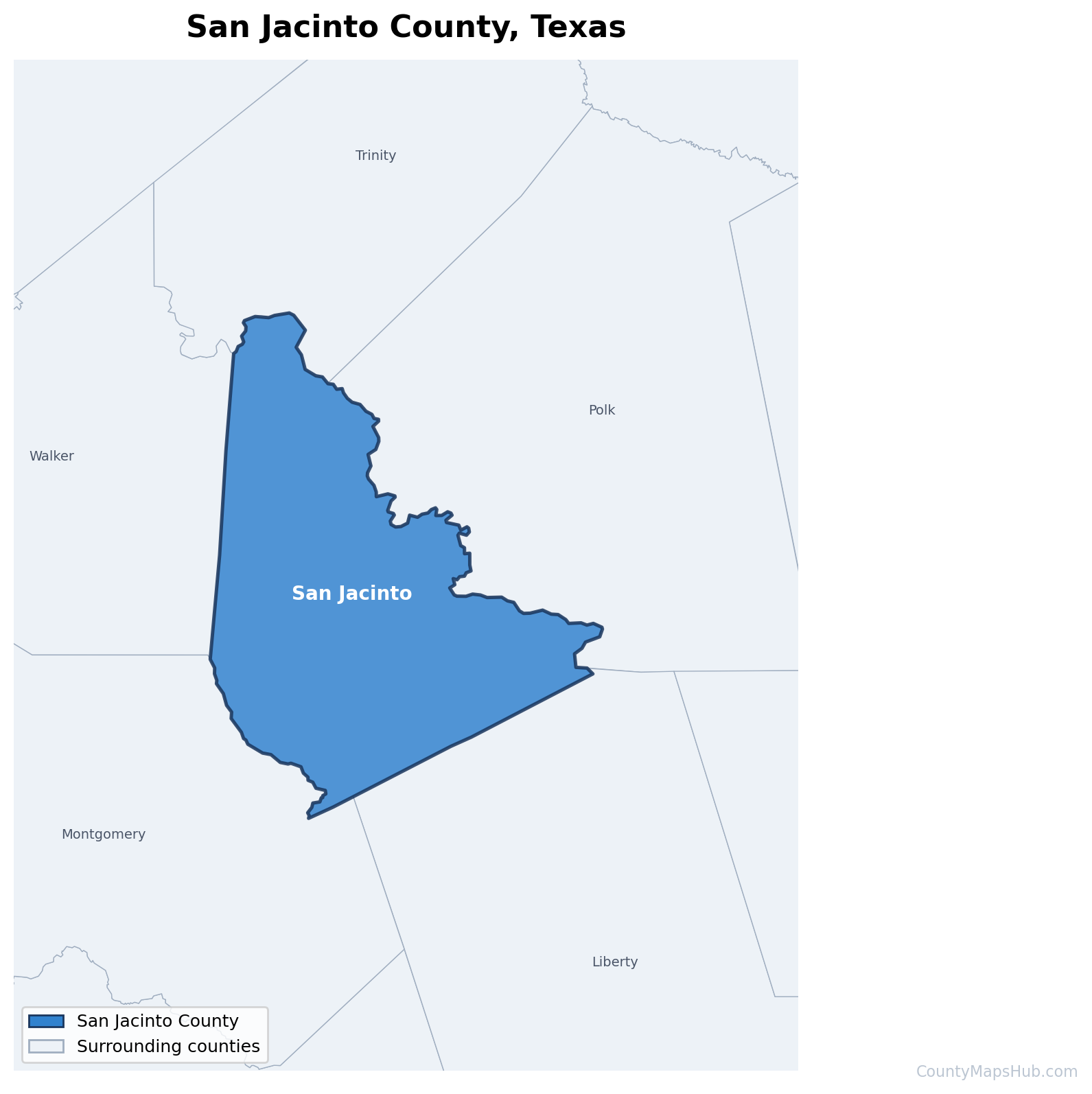
San Jacinto County was established in 1869, taking its name from the historic Battle of San Jacinto, the decisive conflict that secured Texas independence from Mexico in 1836. The county was carved from portions of surrounding counties during the Reconstruction era following the Civil War, representing part of the organizational growth of East Texas during this transformative period. Coldspring, the county seat, has served as the administrative center since the county’s formation.
The region’s early development was closely tied to the timber industry and agriculture, which shaped the economic and social landscape of the area throughout the late 19th and early 20th centuries. The pine forests of East Texas provided abundant resources for lumber operations, while the fertile soil supported farming communities. Over time, San Jacinto County evolved from a primarily rural, resource-based economy into a more diversified region, though it has retained much of its small-town character and natural beauty that attracted early settlers to the area.
Population
According to the 2020 census, San Jacinto County has a population of 27,402 residents spread across its 628 square miles. This relatively modest population density reflects the county’s character as a predominantly rural area within the Houston metropolitan region’s outer sphere. The population has grown steadily over recent decades as the county has attracted residents seeking a quieter lifestyle while maintaining reasonable access to urban amenities in nearby metropolitan areas. The demographic composition reflects typical East Texas patterns, with a mix of long-established families and newer residents drawn to the area’s natural environment and affordable living options.
Climate
San Jacinto County experiences a humid subtropical climate, characterized by hot, humid summers and mild to cool winters typical of East Texas. Summer temperatures regularly reach into the 90s Fahrenheit, with high humidity levels that can make conditions feel even warmer. The region receives abundant rainfall throughout the year, with precipitation supporting the lush pine forests and diverse vegetation that define the local landscape.
Winters are generally mild, with occasional cold fronts bringing brief periods of cooler weather, though freezing temperatures and snowfall are relatively rare. Spring and fall offer pleasant transitional periods with moderate temperatures and lower humidity. The climate supports a long growing season and contributes to the area’s rich biodiversity, including the thriving forest ecosystems that have historically been central to the county’s economy and continue to define its natural character.
Tourist Attractions
San Jacinto County offers visitors opportunities to experience the natural beauty of East Texas pine forests and outdoor recreation. The region features opportunities for hiking, fishing, and wildlife observation in various natural settings. Water-based activities are popular in the area, with lakes and waterways providing venues for boating, fishing, and swimming during warmer months. The forested landscape creates ideal conditions for camping and nature photography, attracting outdoor enthusiasts throughout the year.
Visitors interested in regional history can explore the area’s small-town heritage and connections to Texas history. The county’s rural character and preserved natural areas offer a contrast to urban environments, making it an appealing destination for those seeking quiet retreats. Local events and community gatherings throughout the year reflect the area’s traditional Texas culture, while seasonal activities take advantage of the region’s natural resources and agricultural heritage.
Culture
San Jacinto County embodies the culture of rural East Texas, where traditional values and close-knit community bonds remain central to daily life. The county’s heritage reflects the pioneering spirit of early settlers and the resource-based economy that shaped the region’s development. Local culture emphasizes family, faith, and community involvement, with churches and civic organizations playing important roles in social life. The area maintains strong connections to its agricultural and forestry roots, even as economic patterns have diversified over time.
Cultural activities in the county tend to center around community events, local celebrations, and outdoor pursuits that take advantage of the natural environment. The tradition of Texas hospitality is evident in the welcoming nature of local communities. Educational institutions serve as community anchors, while local government and volunteer organizations work to preserve the county’s quality of life. The culture reflects a blend of respect for historical traditions and adaptation to contemporary needs, creating a distinctive identity within the broader East Texas region.