San Patricio County
About
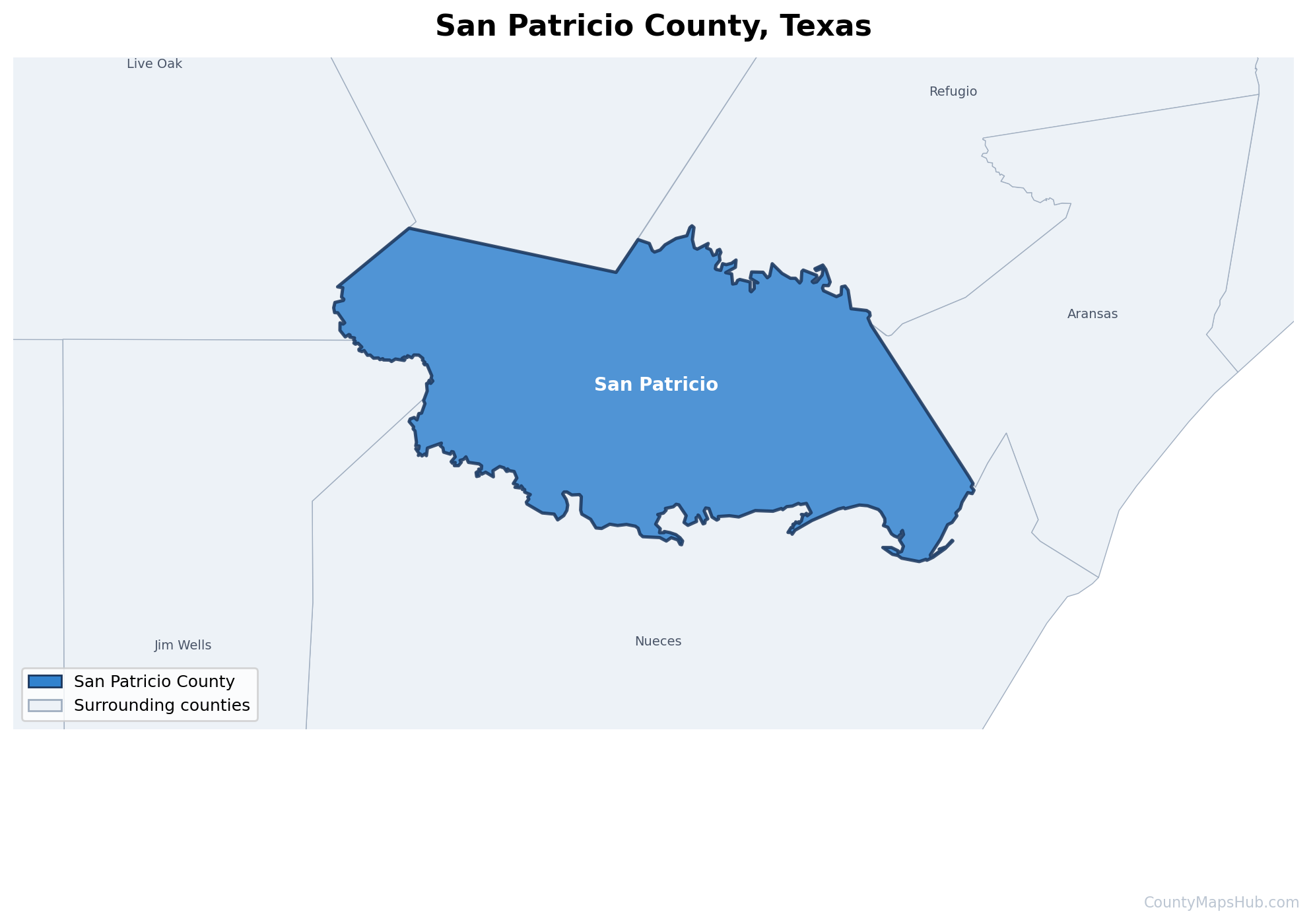
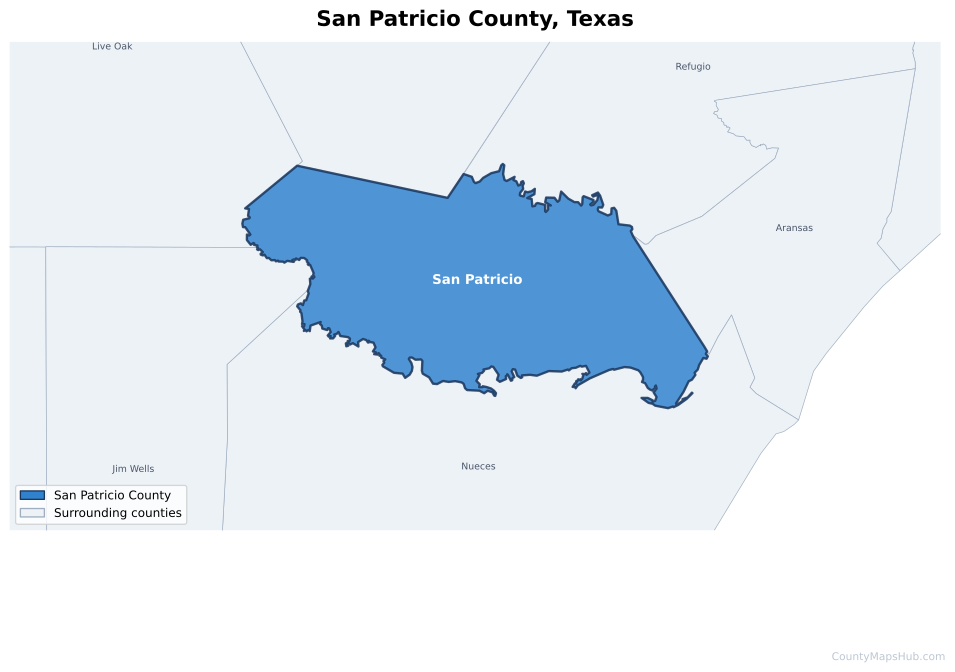
San Patricio County was established in 1836, making it one of the original counties created in the early days of Texas independence. Named after St. Patrick, the county reflects the influence of Irish settlers who played a significant role in the region’s early development. The county’s formation coincided with the founding of the Republic of Texas, placing it at the heart of the state’s formative period.
Throughout the 19th century, the county developed as an agricultural region, with settlers drawn to the fertile coastal plains and opportunities for ranching and farming. The establishment of Sinton as the county seat provided a governmental and commercial center that helped organize the growing population. The county’s location along the Texas Gulf Coast facilitated trade and transportation, contributing to its steady growth and integration into the broader economic networks of South Texas.
In the 20th century, San Patricio County diversified its economy while maintaining its agricultural heritage. The discovery of oil and natural gas resources brought industrial development to complement traditional ranching and farming activities. Today, the county represents a blend of its historical roots and modern development, serving as an important part of the Coastal Bend region of Texas.
Population
According to the 2020 census, San Patricio County has a population of 68,755 residents spread across 693 square miles. This population density reflects a mix of small-town communities and rural areas characteristic of South Texas counties. The county seat of Sinton serves as the governmental hub and one of the primary population centers. The demographic composition includes families with deep generational ties to the land as well as newer residents attracted by employment opportunities in agriculture, energy, and related industries. The population has remained relatively stable, with growth patterns typical of rural Texas Gulf Coast counties that balance traditional ways of life with gradual economic diversification.
Climate
San Patricio County experiences a humid subtropical climate typical of the Texas Gulf Coast region. This climate pattern brings hot, humid summers with temperatures regularly reaching the 90s Fahrenheit, while winters remain mild with average temperatures rarely dropping below freezing. The proximity to the Gulf of Mexico moderates temperature extremes and contributes significant moisture to the area.
Rainfall is distributed throughout the year, with slightly higher precipitation during spring and fall months. The county occasionally experiences tropical weather systems, including hurricanes and tropical storms moving inland from the Gulf. Humidity levels remain elevated year-round, particularly during summer months, creating conditions that support the region’s agricultural activities while also presenting challenges during severe weather events. The long growing season and adequate rainfall make the area well-suited for various crops and livestock operations.
Tourist Attractions
San Patricio County offers visitors an authentic South Texas experience with opportunities to explore the natural beauty and rural character of the Coastal Bend region. The county’s landscape features coastal prairies, wetlands, and agricultural areas that attract nature enthusiasts and birdwatchers. Outdoor recreation opportunities include hunting, fishing, and wildlife observation in the region’s diverse ecosystems. The area’s proximity to the Gulf Coast provides access to beaches and water-based activities for those seeking coastal experiences.
Visitors interested in Texas history can explore the county’s heritage through local historical markers and sites that commemorate the region’s role in early Texas history. The agricultural landscape itself serves as an attraction, with working ranches and farms offering glimpses into the traditional way of life that has characterized the area for generations. Small-town charm is evident throughout the county, where local dining establishments serve regional cuisine and community events reflect the cultural traditions of South Texas.
Culture
The culture of San Patricio County is deeply rooted in South Texas traditions, blending influences from multiple heritage groups including Hispanic, Anglo, and Irish communities. This cultural mix is reflected in local celebrations, cuisine, and community values that emphasize family, faith, and connection to the land. The agricultural lifestyle continues to shape the county’s identity, with ranching and farming traditions passed down through generations creating a strong sense of place and continuity.
Community gatherings often center around seasonal events, livestock shows, and celebrations that bring together residents from across the county. The predominant languages spoken include both English and Spanish, reflecting the region’s cultural diversity. Local cuisine showcases South Texas flavors with influences from Mexican and American traditions, featuring barbecue, Tex-Mex dishes, and Gulf Coast seafood. Religious institutions play an important role in community life, serving as gathering places and centers for social activities. The county’s residents take pride in their heritage while adapting to modern changes, maintaining a distinctive regional identity within the broader Texas cultural landscape.