Schleicher County
About
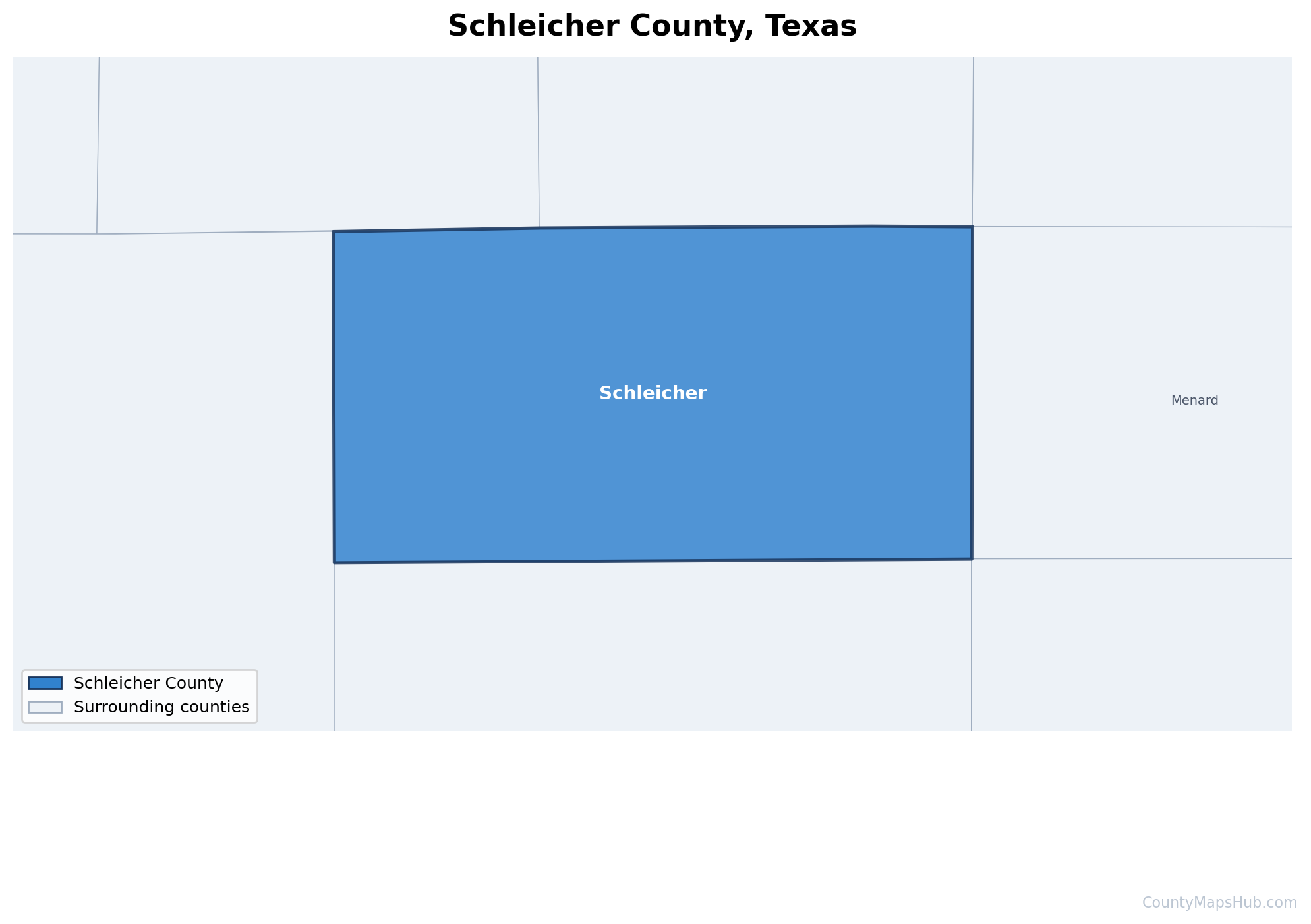
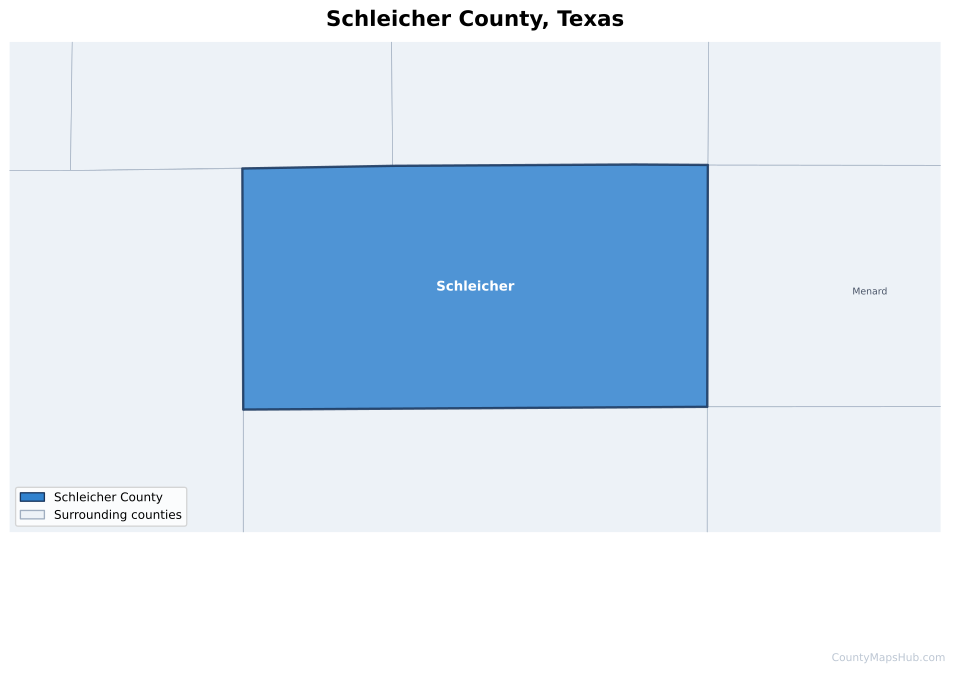
Schleicher County was established in 1887 in the heart of West Texas, named after Gustav Schleicher, a prominent figure in Texas history. The county seat is located in Eldorado, which has served as the administrative and commercial center since the county’s formation. Like many counties in this region of Texas, Schleicher County’s early development was shaped by ranching and agriculture, with settlers drawn to the area’s open landscapes and grazing opportunities.
Throughout its history, the county has maintained its rural character while adapting to the economic changes that have affected West Texas over the decades. The establishment of infrastructure and transportation routes helped connect this remote region to larger Texas markets. The county’s development reflects the broader patterns of settlement and growth that characterized the Texas frontier during the late nineteenth century, as communities organized themselves into formal governmental structures and built the institutions necessary for civic life.
Population
According to the 2020 census, Schleicher County has a population of 2,793 residents spread across its 1,311 square miles, resulting in one of the lower population densities characteristic of West Texas counties. This small population reflects the rural nature of the region, where communities are centered around ranching, agriculture, and local service industries. The county’s demographic profile is typical of remote Texas counties, with tight-knit communities where residents often have deep generational roots in the area. Despite its small size, the population supports essential services and maintains the community institutions necessary for county governance and daily life.
Climate
Schleicher County experiences a semi-arid climate typical of the Edwards Plateau region of West Texas. The area receives limited annual precipitation, with rainfall patterns that can vary significantly from year to year, creating challenges for both agriculture and water resource management. Summers are hot and dry, while winters are generally mild with occasional cold fronts sweeping down from the north.
The semi-arid conditions support native vegetation adapted to drought, including various grasses, shrubs, and hardy trees. Temperature variations between day and night can be substantial, particularly during spring and fall. These climatic conditions have historically influenced land use patterns, favoring ranching operations over intensive agriculture. Residents and visitors should be prepared for the intense sun exposure and low humidity that characterize this climate zone throughout much of the year.
Tourist Attractions
Schleicher County offers visitors an authentic West Texas experience characterized by wide-open spaces and rural landscapes. The region’s natural environment provides opportunities for outdoor activities such as wildlife observation, hunting, and exploring the distinctive terrain of the Edwards Plateau. Visitors interested in the ranching heritage of Texas will find the county’s working landscapes and small-town atmosphere provide insight into the lifestyle that has defined this part of the state for generations.
Those traveling through the area can appreciate the stark beauty of the semi-arid environment and the clear night skies that make stargazing a memorable experience far from urban light pollution. Local community events and gatherings offer glimpses into the tight-knit social fabric of rural Texas life. The county’s remote location makes it an ideal destination for travelers seeking solitude and a break from the bustle of larger metropolitan areas, though visitors should come prepared with supplies as services are limited in this sparsely populated region.
Culture
The cultural character of Schleicher County is deeply rooted in West Texas ranching traditions and the values of rural community life. Social connections tend to be strong in small population centers, where residents often know one another and participate in community institutions. The ranching heritage continues to influence local culture, from community events to economic activities, preserving traditions that have been passed down through generations of Texas families.
Like many rural Texas counties, community life often centers around schools, churches, and civic organizations that serve as gathering places for residents. The culture emphasizes self-reliance, neighborly assistance, and stewardship of the land. Traditional Texas hospitality is evident in the welcoming nature of local residents toward visitors. The county’s cultural identity reflects the broader West Texas ethos of independence and connection to the land, creating a distinct sense of place that differs markedly from the state’s urban centers while remaining authentically Texan in character.