Shackelford County
About
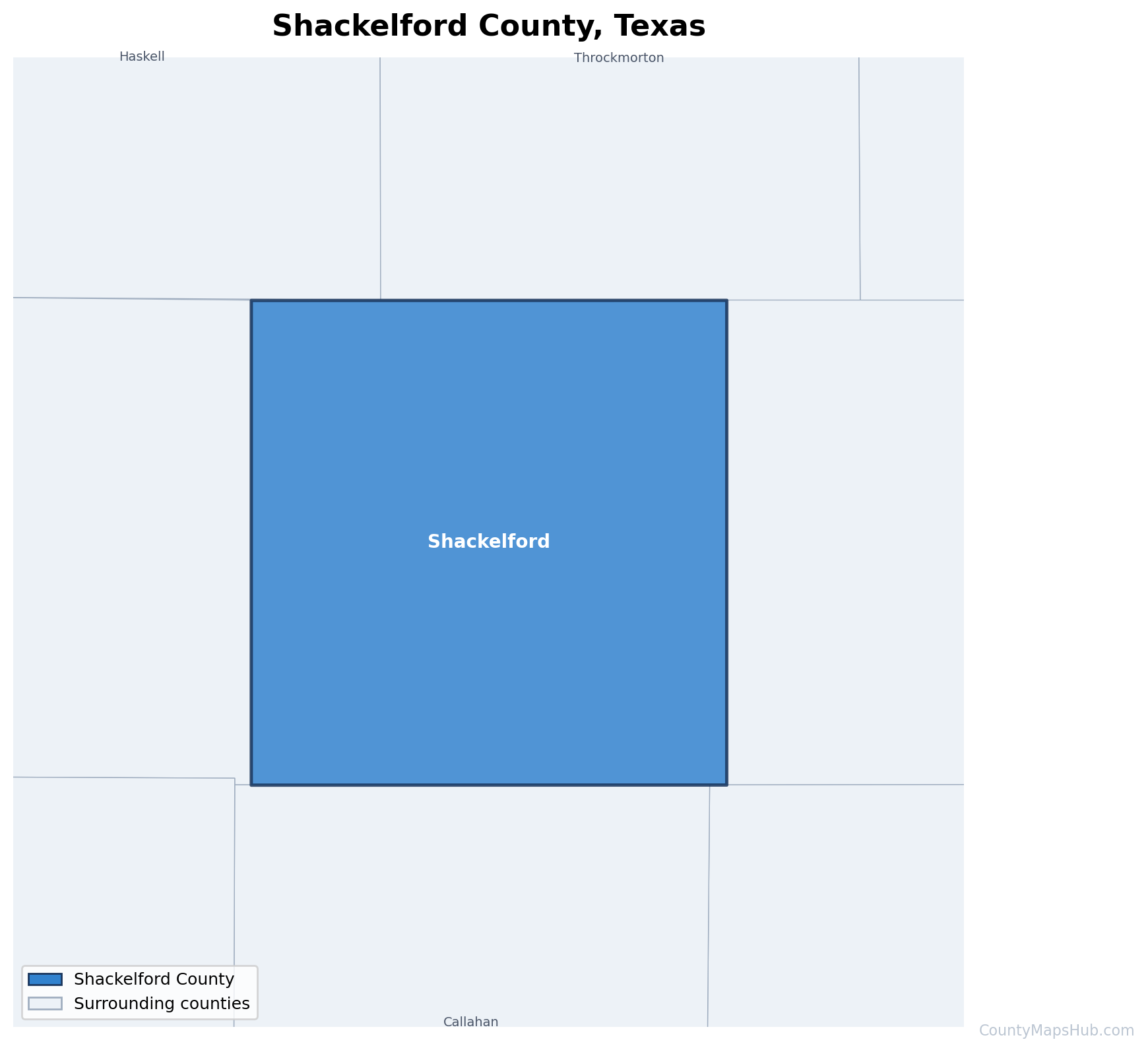
Shackelford County was established in 1858 and named after Jack Shackelford, honoring his contributions to Texas history. The county seat, Albany, has served as the administrative center since the county’s organization. Located in north-central Texas, the area’s early development was shaped by ranching and agriculture, which remain important to the region’s identity today.
The county’s formation occurred during a period of westward expansion in Texas, when settlers were moving into frontier territories. The landscape and climate presented both challenges and opportunities for those who made Shackelford County their home. Over the decades, the county evolved from frontier territory into an established community while maintaining its rural character and connection to the land.
Throughout its history, Shackelford County has reflected the broader patterns of Texas development, including the transition from open range to fenced ranches, the impact of railroad expansion, and the adaptation to changing economic conditions. The county’s heritage continues to influence its present-day character and community values.
Population
According to the 2020 census, Shackelford County has a population of 3,105 residents spread across its 914 square miles, resulting in a low population density typical of rural Texas counties. This small population reflects the county’s character as a predominantly rural area where agriculture and ranching remain significant aspects of daily life. The limited population size fosters a close-knit community atmosphere where residents often know their neighbors and maintain strong local connections. The demographic profile represents families with deep roots in the region as well as those attracted to the peaceful, wide-open spaces of north-central Texas.
Climate
Shackelford County experiences a semi-arid climate characterized by hot summers, mild winters, and limited precipitation. This climate zone is typical of the transitional area between the more humid regions of eastern Texas and the true desert conditions further west. Temperatures can be quite warm during summer months, while winters are generally moderate with occasional cold fronts bringing brief periods of cooler weather.
The semi-arid conditions mean that rainfall is relatively scarce and often unpredictable, which has historically influenced land use patterns and agricultural practices in the county. Residents and ranchers have adapted to these climatic conditions over generations, developing water conservation strategies and selecting drought-resistant crops and livestock management practices suited to the environment. The clear skies and low humidity typical of semi-arid regions provide plenty of sunshine throughout the year.
Tourist Attractions
Shackelford County offers visitors an authentic experience of rural Texas, where the landscape and pace of life reflect the region’s ranching heritage. The wide-open spaces and rolling terrain provide opportunities for outdoor activities such as wildlife observation, photography, and experiencing the natural beauty of north-central Texas. The county’s small-town atmosphere in Albany and surrounding communities gives visitors a glimpse into traditional Texas life away from urban centers.
Those interested in Texas history will find the county’s heritage reflected in its historic architecture and community traditions. The region’s ranching culture remains visible in the working ranches that dot the countryside, and visitors can gain appreciation for the resilience required to thrive in this semi-arid environment. Local events and community gatherings throughout the year offer opportunities to experience genuine Texas hospitality and connect with the area’s cultural traditions.
Culture
The cultural identity of Shackelford County is deeply rooted in ranching traditions and rural Texas values. The community maintains a strong connection to the land and agricultural heritage that has defined the region for generations. Social life often centers around community events, local institutions, and gatherings that bring together residents from across the county’s expansive territory. This tight-knit community culture reflects the practical necessity of cooperation in rural areas and a shared pride in local history.
The county’s cultural landscape reflects broader patterns found throughout west-central Texas, where independence, self-reliance, and neighborliness are highly valued traits. Traditional activities and skills related to ranching and farming remain respected parts of the local culture, passed down through families and celebrated as connections to the past. The slower pace of life and emphasis on personal relationships distinguish the county from more urbanized areas, offering residents and visitors alike a chance to experience a way of life that has remained relatively unchanged despite modern developments elsewhere.