Smith County
About
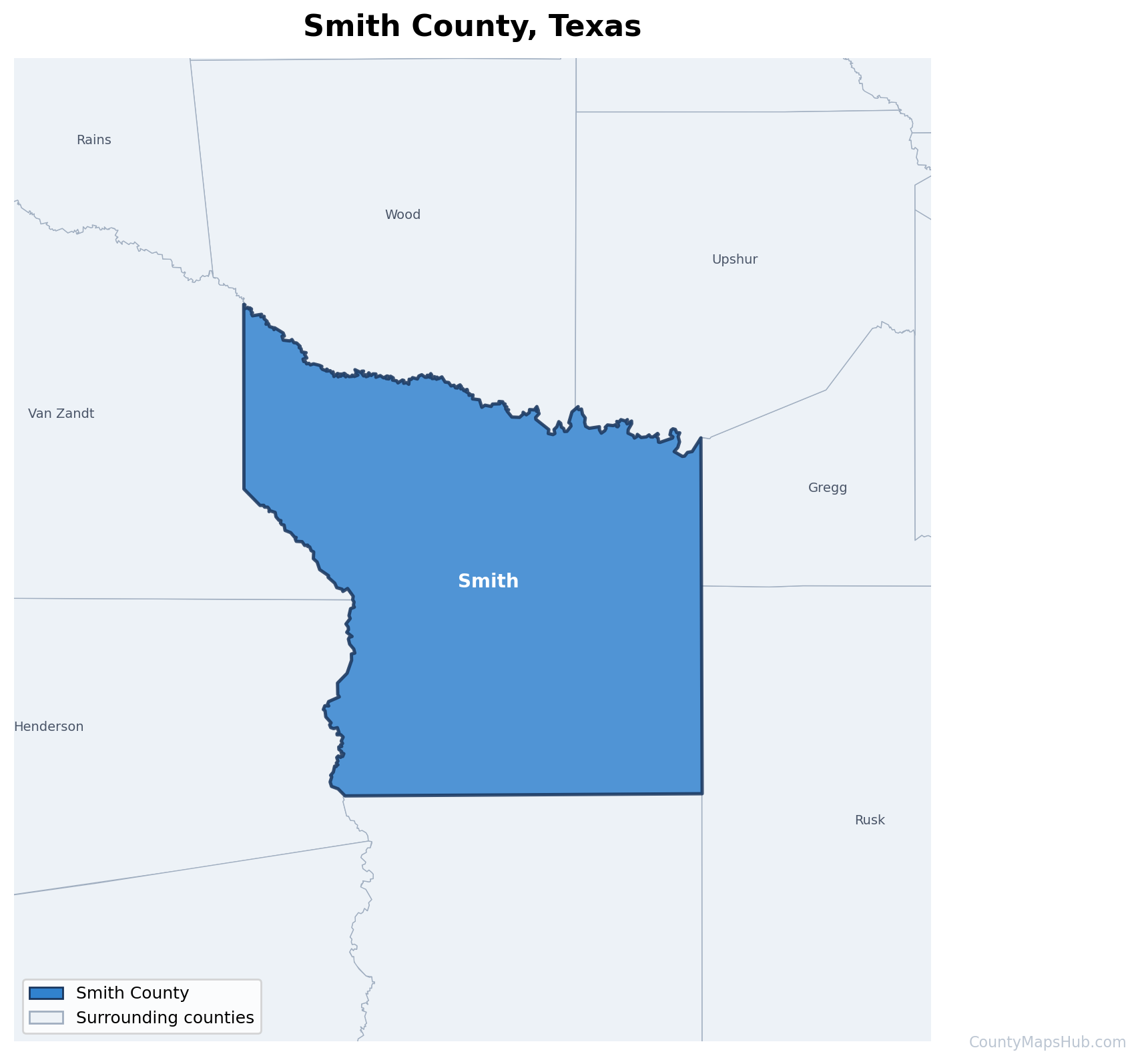
Smith County was established in 1846 during a period of rapid expansion in the Republic and early State of Texas. The county was named after James Smith, honoring his contributions to the region during its formative years. Tyler serves as the county seat, anchoring the administrative and civic life of the area.
Throughout the 19th century, Smith County developed as an agricultural hub in East Texas, with cotton and other crops forming the economic foundation. The arrival of rail lines in the late 1800s accelerated growth and connected the county to broader markets. The 20th century brought diversification, with manufacturing, healthcare, education, and service industries complementing the traditional agricultural base. Today, Smith County represents a blend of its historical roots and modern economic development, maintaining its significance as a key population and commercial center in East Texas.
Population
According to 2020 census data, Smith County has a population of 233,479 residents, making it one of the more populous counties in East Texas. This substantial population is distributed across 948 square miles, creating a mix of urban density in the county seat and surrounding areas, along with more rural landscapes in outlying sections. The population reflects diverse demographic characteristics typical of modern Texas counties, with a blend of long-established families and newer residents attracted by economic opportunities and quality of life. The county’s population growth over recent decades demonstrates its continuing appeal as a regional center for employment, education, healthcare, and commerce.
Climate
Smith County experiences a humid subtropical climate characterized by hot summers and mild winters, typical of East Texas locations. Summer temperatures regularly reach the 90s Fahrenheit, with high humidity levels creating warm, muggy conditions from June through September. Winters are generally mild, with occasional cold fronts bringing brief periods of cooler weather and rare freezing precipitation.
The county receives moderate to abundant rainfall distributed throughout the year, with spring and fall often seeing the heaviest precipitation events. This moisture supports the lush vegetation characteristic of the region, including extensive pine and hardwood forests. Severe weather, including thunderstorms and occasional tornadoes, can occur primarily during spring months. The growing season is long, typically extending from March through November, supporting diverse agricultural activities and maintaining the area’s verdant appearance year-round.
Tourist Attractions
Smith County offers visitors a variety of recreational and cultural experiences rooted in East Texas traditions. The region features numerous parks and natural areas where outdoor enthusiasts can enjoy hiking, fishing, and wildlife observation among the characteristic pine forests and waterways. Local lakes and reservoirs provide opportunities for boating, swimming, and lakeside relaxation, drawing residents and visitors throughout the warmer months.
The county’s communities host various annual events celebrating regional heritage, agriculture, and the arts, fostering a strong sense of local identity. Visitors can explore local museums that preserve and interpret the area’s history, from its settlement era through modern development. The downtown areas feature historic architecture, local shops, and dining establishments showcasing both traditional Southern cuisine and contemporary culinary trends. Antique shops and boutiques attract those interested in regional crafts and collectibles, while performing arts venues and galleries highlight local and touring talent.
Culture
Smith County’s culture reflects its East Texas heritage, blending Southern traditions with the independent spirit characteristic of Texas history. The region maintains strong connections to agricultural roots, with farming and ranching continuing to influence local values and community identity. Religious institutions play a significant role in community life, and family-oriented values remain central to the social fabric. Music traditions encompassing country, gospel, blues, and contemporary styles find expression in local venues and community gatherings.
Education and healthcare serve as major cultural touchstones, with institutions in these sectors functioning as significant employers and community anchors. The county embraces a blend of conservative values and progressive economic development, seeking to preserve historical character while accommodating growth and modernization. Local cuisine emphasizes Southern comfort foods, barbecue traditions, and Tex-Mex influences. Community festivals, high school sports, and civic organizations provide important gathering points that strengthen social bonds and celebrate shared regional identity across generations.