Stephens County
About
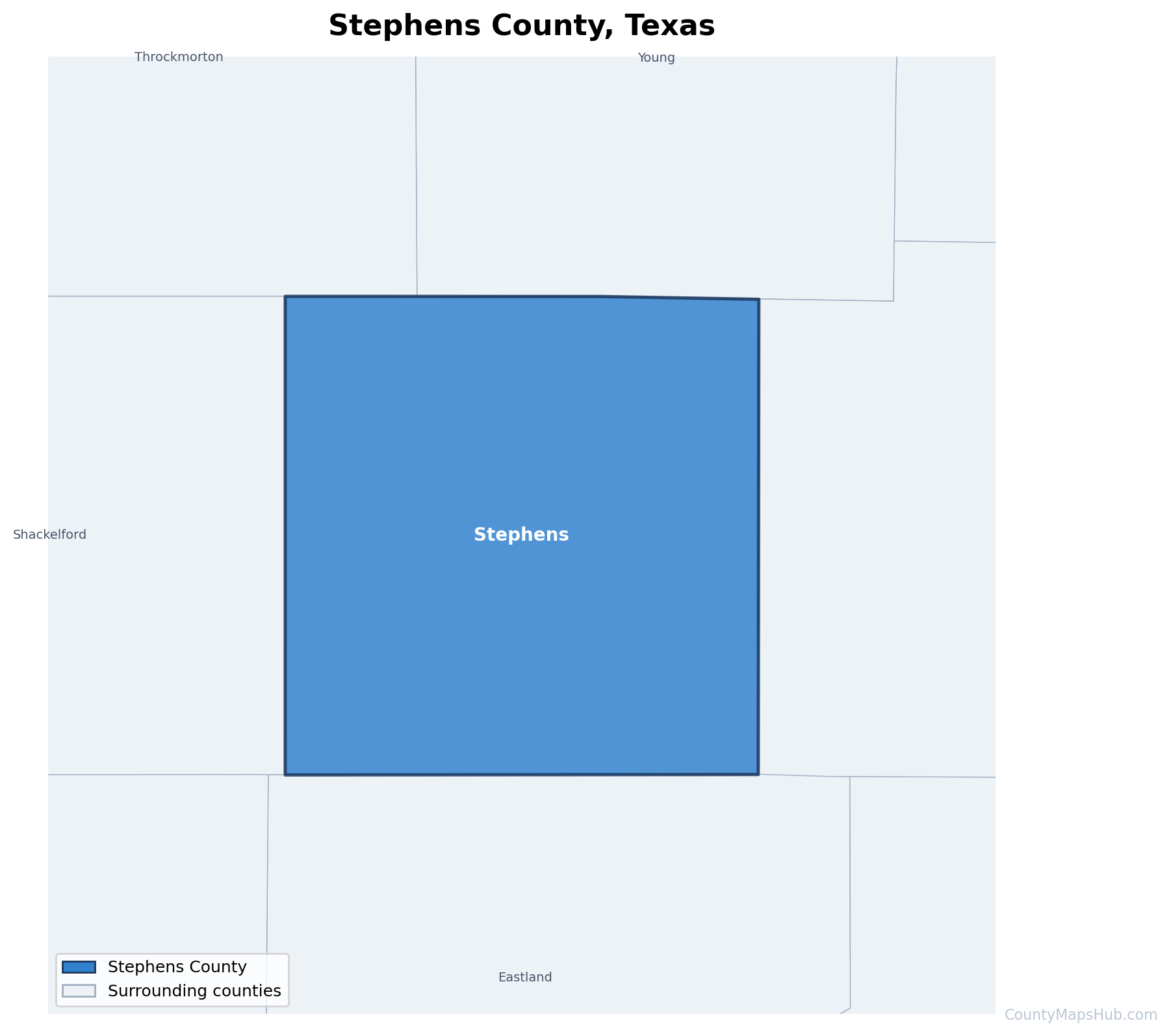
Stephens County was established in 1858 and named after Alexander H. Stephens, who would later serve as Vice President of the Confederate States of America. The county’s formation occurred during a period of significant westward expansion in Texas, as settlers pushed into North Central Texas seeking new opportunities in agriculture and ranching. Breckenridge serves as the county seat, anchoring the administrative and civic life of the region.
Throughout the late nineteenth and early twentieth centuries, the county developed alongside the broader patterns of Texas history, experiencing the challenges and transformations common to frontier communities. The discovery of oil in the region during the early 1900s brought economic changes that shaped local development. Over the decades, Stephens County evolved from its frontier origins into a community balancing traditional ranching heritage with modern industry, reflecting the diverse economic history characteristic of North Central Texas counties.
Population
As of the 2020 census, Stephens County recorded a population of 9,101 residents spread across its 895 square miles of territory. This relatively modest population density reflects the county’s character as a predominantly rural area where open spaces and agricultural landscapes define much of the terrain. The population distribution typical of such Texas counties often features a concentration of residents in and around the county seat, with smaller communities and ranches dispersed throughout the countryside. This demographic pattern supports a close-knit community atmosphere while maintaining the wide horizons and expansive vistas that characterize the North Central Texas region.
Climate
Stephens County experiences a humid subtropical climate, characterized by hot summers and generally mild winters typical of North Central Texas. Summer temperatures regularly climb into the 90s Fahrenheit, while winter months bring cooler conditions that occasionally dip below freezing, though extended cold periods are relatively uncommon. The region receives moderate rainfall distributed throughout the year, with spring and early summer typically seeing the most precipitation.
This climate zone supports a landscape of mixed grasslands and scattered woodlands, suitable for both cattle ranching and certain agricultural pursuits. Residents experience the full range of Texas weather patterns, including occasional severe thunderstorms during spring months and the potential for drought conditions during hot, dry summers. The climate influences daily life, outdoor activities, and the agricultural practices that have long been central to the county’s economy and culture.
Tourist Attractions
Visitors to Stephens County can explore the heritage and natural beauty of North Central Texas through various regional attractions. The area offers opportunities for outdoor recreation including fishing, hunting, and wildlife observation in the surrounding countryside. Local lakes and waterways provide venues for boating and water-based activities during warmer months. The county’s rural character appeals to those seeking a slower pace and authentic Texas landscapes away from urban centers.
The county seat features local museums and historical sites that preserve the stories of frontier settlement and regional development. Travelers interested in Texas history can discover artifacts and exhibits reflecting the area’s ranching heritage and the oil boom era that transformed many North Central Texas communities. Seasonal events and community gatherings offer glimpses into local traditions, while the surrounding landscapes provide scenic drives through rolling terrain characteristic of this part of the state.
Culture
The cultural fabric of Stephens County reflects traditional Texas values rooted in ranching heritage, self-reliance, and community cooperation. Social life often centers around local institutions including schools, civic organizations, and religious congregations that serve as gathering points for residents. The county maintains the small-town atmosphere common to rural Texas, where personal relationships and community involvement remain important aspects of daily life. Rodeos, livestock shows, and agricultural fairs typically feature prominently in the annual calendar, celebrating the region’s continuing connection to ranching and farming traditions.
Local cuisine reflects broader Texas culinary traditions, with barbecue, Tex-Mex influences, and hearty ranch-style cooking forming staples of the regional diet. Community values emphasize neighborly assistance, respect for the land, and preservation of the county’s historical character. The cultural landscape balances respect for tradition with gradual adaptation to modern life, creating a distinctive identity that distinguishes Stephens County within the diverse tapestry of Texas communities. This blend of old and new continues to shape the county’s social fabric and community character.