Sterling County
About
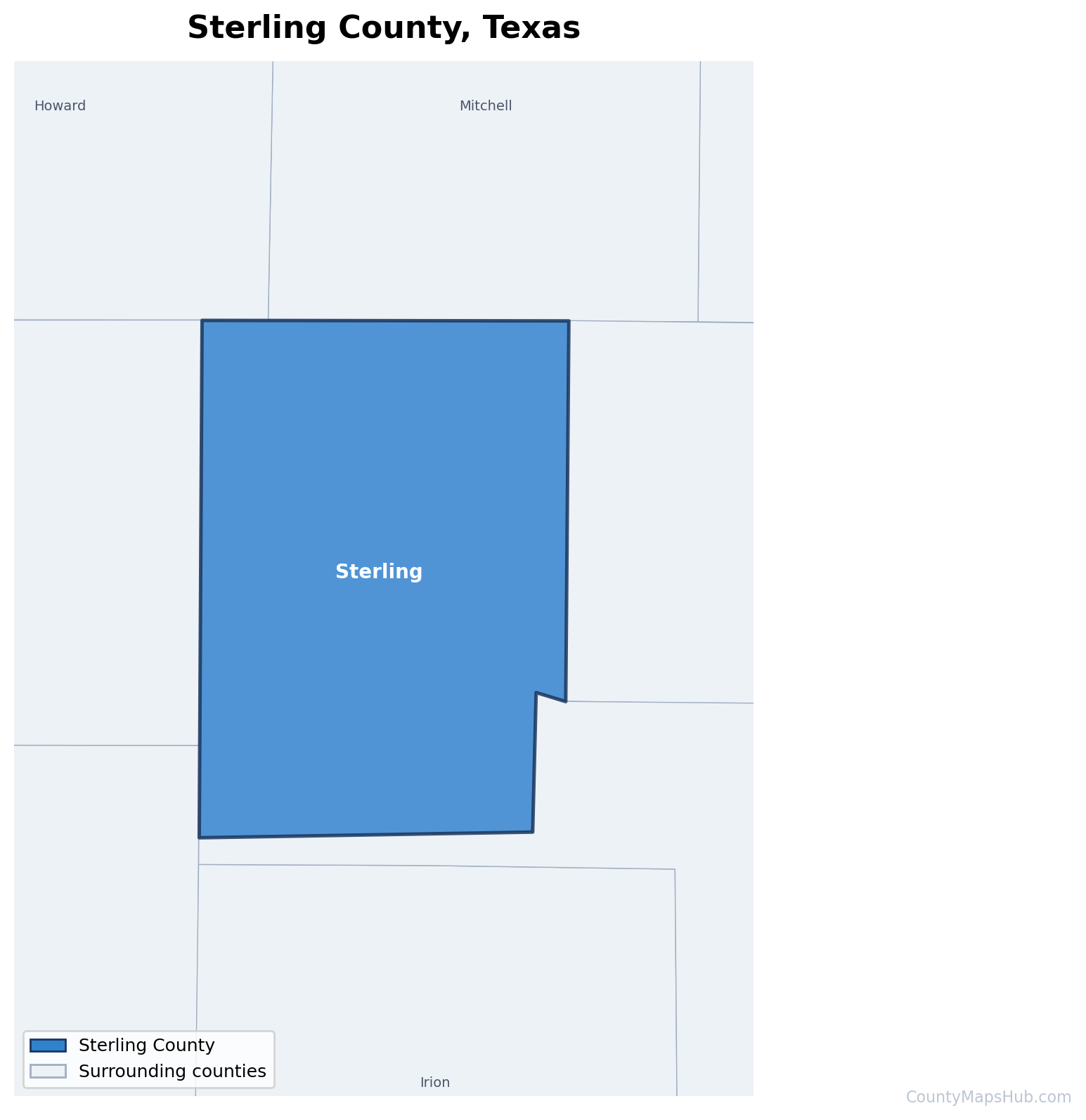
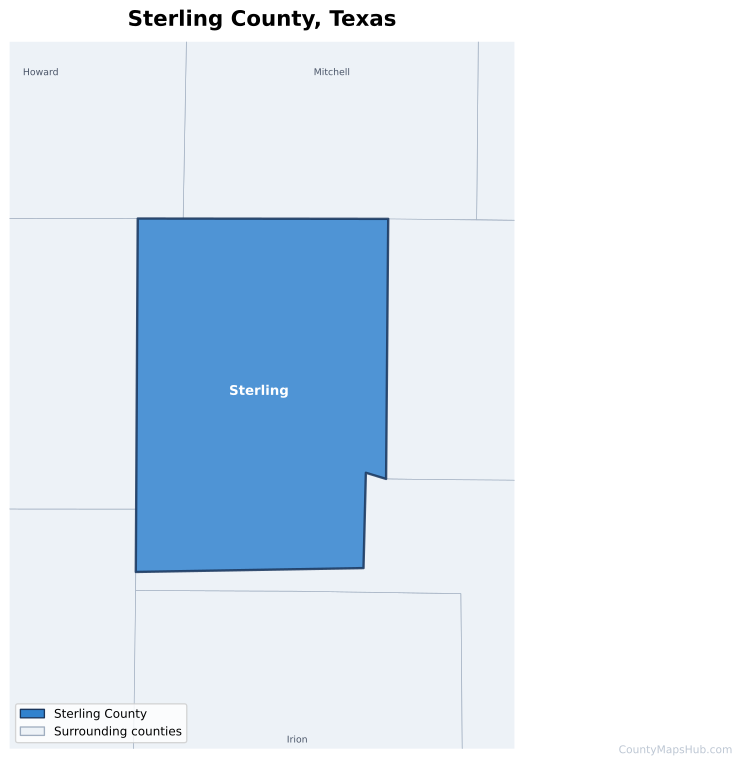
Sterling County was established in 1891 and named after W.S. Sterling, reflecting the pioneering spirit of late 19th-century West Texas settlement. The county’s formation came during a period of expansion when the region was being organized into administrative units to serve growing ranching and agricultural communities. Sterling City serves as the county seat, providing governmental and commercial services to residents.
Throughout its history, the county has maintained its rural character, with the economy traditionally centered on ranching and agriculture suited to the semi-arid climate. The development of the area was influenced by the challenges and opportunities presented by the West Texas landscape, including water management and adaptation to the region’s environmental conditions. Like many rural Texas counties, Sterling County has preserved much of its frontier heritage while adapting to modern times.
Population
According to the 2020 Census, Sterling County has a population of 1372 residents, making it one of the smaller counties in Texas by population. With an area of 924 square miles, the county maintains a very low population density characteristic of rural West Texas. This small population reflects the county’s continued focus on ranching and agriculture rather than urban development. The intimate community size allows for close-knit social networks and a lifestyle that emphasizes the open spaces and independence valued in rural Texas culture.
Climate
Sterling County experiences a semi-arid climate typical of West Texas, characterized by low annual precipitation and significant temperature variations between seasons. Summers are generally hot with abundant sunshine, while winters tend to be mild to cool with occasional cold fronts. The limited rainfall and dry conditions have shaped both the natural vegetation and the types of agricultural activities viable in the region.
The semi-arid environment supports native grasses and drought-resistant plant species, making the area well-suited for livestock grazing. Residents and visitors should be prepared for the intense sun and low humidity common to this climate zone. The clear skies and low moisture content also contribute to significant temperature swings between day and night throughout much of the year.
Tourist Attractions
Sterling County offers visitors an authentic West Texas experience centered on its rural landscapes and wide-open spaces. The semi-arid environment features characteristic terrain that appeals to those interested in experiencing the genuine character of the region. Outdoor enthusiasts may find opportunities for activities suited to the open country, while those interested in the history of Texas settlement can explore the legacy of late 19th-century frontier development.
The county seat provides a glimpse into small-town Texas life, where historic courthouse architecture and local establishments reflect the area’s heritage. Visitors seeking to understand rural Texas culture will appreciate the unhurried pace and the connection to ranching traditions that continue to define the region. The area serves as a quiet retreat for those looking to escape urban environments and experience the vastness of the West Texas landscape.
Culture
Sterling County embodies the cultural traditions of rural West Texas, where ranching heritage and agricultural values remain central to community identity. The small population fosters strong community bonds, with residents sharing connections through local institutions and events. The culture emphasizes self-reliance, hospitality, and respect for the land, values passed down through generations of ranching families and agricultural workers who have made their lives in this challenging but rewarding environment.
Social life in the county revolves around community gatherings, with residents coming together to support local activities and maintain their shared heritage. The cultural landscape reflects a blend of frontier history and modern rural life, where traditional skills and knowledge about living in semi-arid conditions continue to be valued. Visitors will find that the local culture is welcoming yet unpretentious, reflecting the practical mindset required to thrive in West Texas and the pride residents take in their county’s distinct character and history.