Stonewall County
About
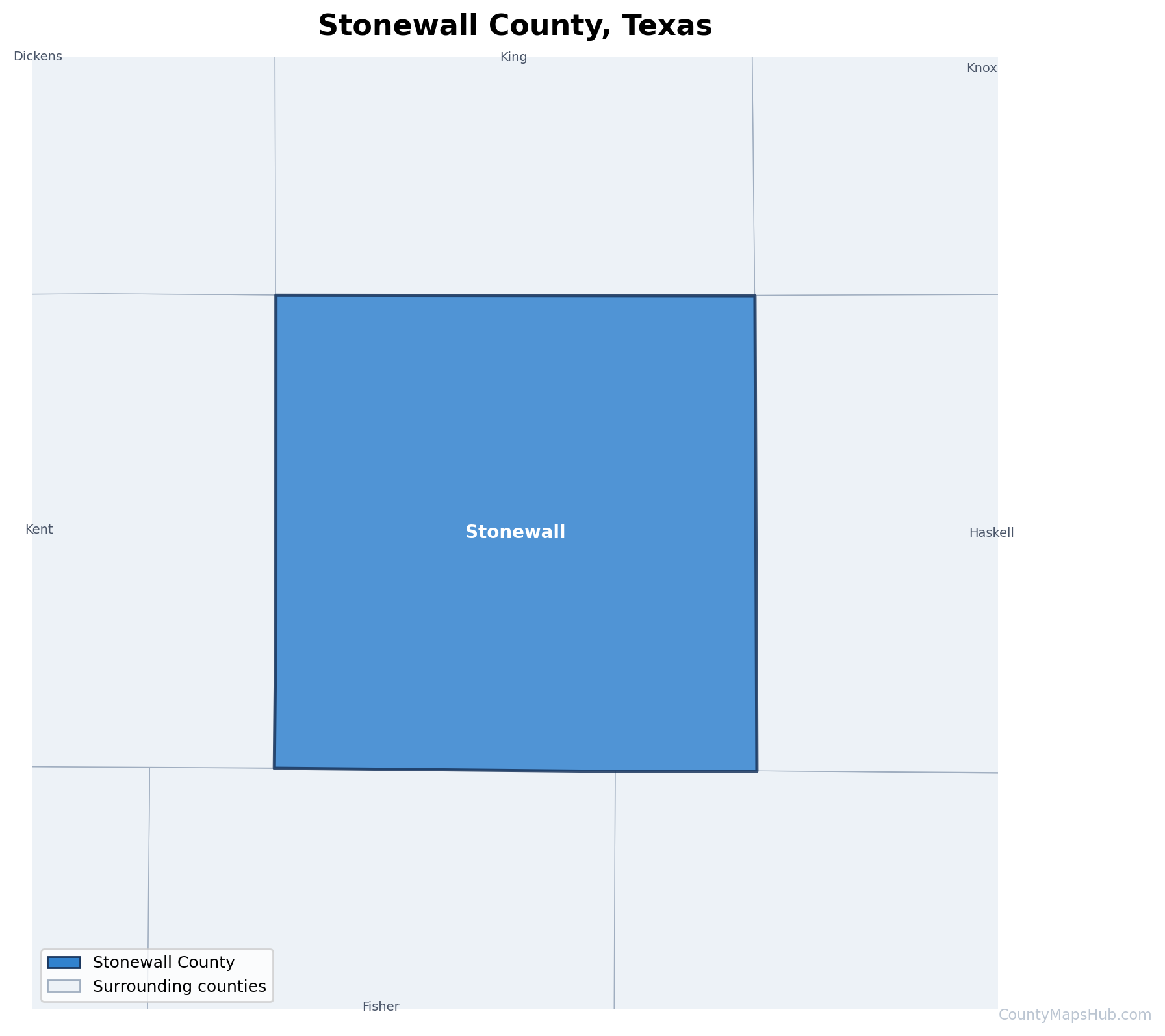
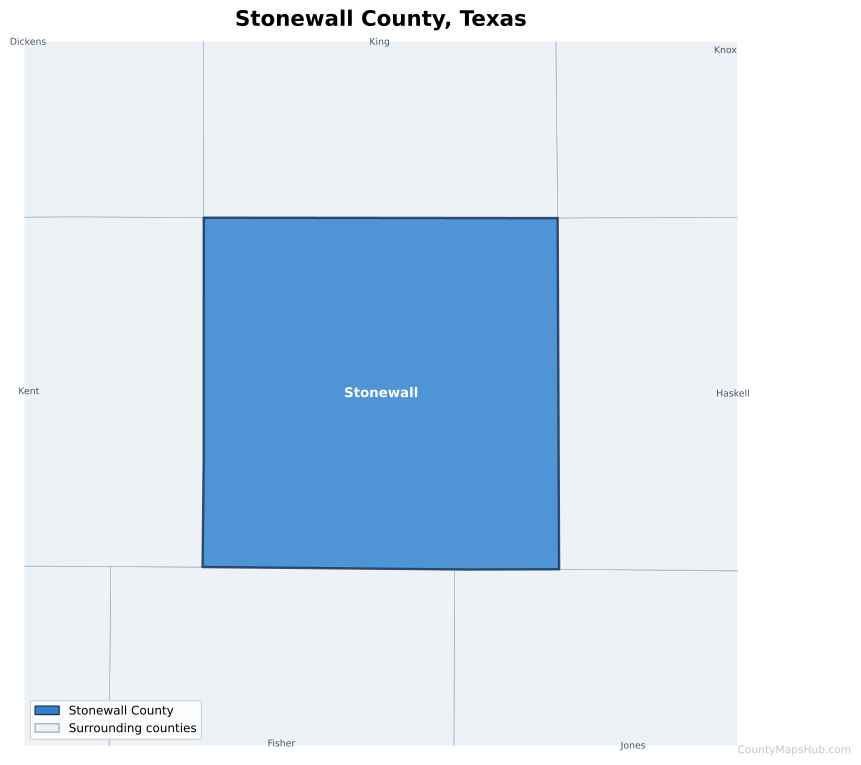
Stonewall County was established in 1876 and named after Stonewall Jackson, the Confederate general renowned for his tactical prowess during the American Civil War. The county’s formation came during the post-Civil War period of westward expansion in Texas, when settlers were moving into the rolling plains region. Aspermont serves as the county seat, providing governmental and administrative services to the region.
The county’s development followed patterns typical of rural Texas counties in the late nineteenth century, with ranching and agriculture forming the economic backbone of the community. The semi-arid climate and terrain shaped settlement patterns and economic activities, as early residents adapted to the challenges of the Texas plains. Over the decades, the county has maintained its rural character while evolving with changes in agricultural practices and technology.
Population
According to the 2020 census, Stonewall County has a population of 1,245 residents spread across its 919 square miles, making it one of the more sparsely populated counties in Texas. This low population density reflects the county’s rural agricultural character and the challenges of sustaining larger communities in semi-arid environments. The population has followed trends common to many rural Texas counties, where young people often migrate to urban areas for educational and employment opportunities while maintaining family connections to the land.
Climate
Stonewall County experiences a semi-arid climate typical of the Texas Rolling Plains region. This climate zone is characterized by hot summers, mild to cool winters, and limited annual precipitation that significantly influences land use and economic activities. Temperature variations between seasons can be substantial, with summer highs often reaching well into the nineties while winter temperatures occasionally dip below freezing.
The semi-arid conditions require careful water management for both agricultural operations and residential use. Rainfall patterns tend to be irregular, with most precipitation occurring during spring and early summer months. These climatic conditions have historically shaped the county’s agricultural focus toward livestock ranching and drought-resistant crops, practices that continue to define the local economy and landscape.
Tourist Attractions
Stonewall County offers visitors an authentic experience of rural Texas life and the natural beauty of the Rolling Plains region. The expansive landscapes provide opportunities for outdoor activities including hunting, wildlife observation, and photography of the distinctive semi-arid terrain. The county’s wide-open spaces and clear night skies appeal to those seeking solitude and a connection to the traditional Texas countryside.
Visitors interested in small-town Texas culture will find the county seat and surrounding areas showcase the architecture and community life characteristic of rural West Texas. Local historical sites and buildings reflect the county’s late nineteenth-century origins and agricultural heritage. The region’s authentic rural atmosphere attracts those looking to experience a slower pace of life and understand the challenges and rewards of living in one of Texas’s more remote counties.
Culture
The culture of Stonewall County reflects the values and traditions of rural West Texas, where ranching heritage and agricultural life remain central to community identity. Social life often revolves around local institutions, seasonal activities, and community gatherings that bring together residents from across the county’s wide geography. The sparse population creates tight-knit communities where residents often know one another and maintain strong traditions of neighborly cooperation.
Like many rural Texas counties, Stonewall County maintains cultural connections to both its pioneer past and Confederate namesake, while adapting to contemporary rural American life. The county’s isolation and small population have helped preserve traditional ways of life even as modern technology and communications link residents to broader regional and national culture. Local traditions related to ranching, agricultural cycles, and community celebrations continue to mark the rhythm of life in this sparsely populated corner of Texas.