Swisher County
About
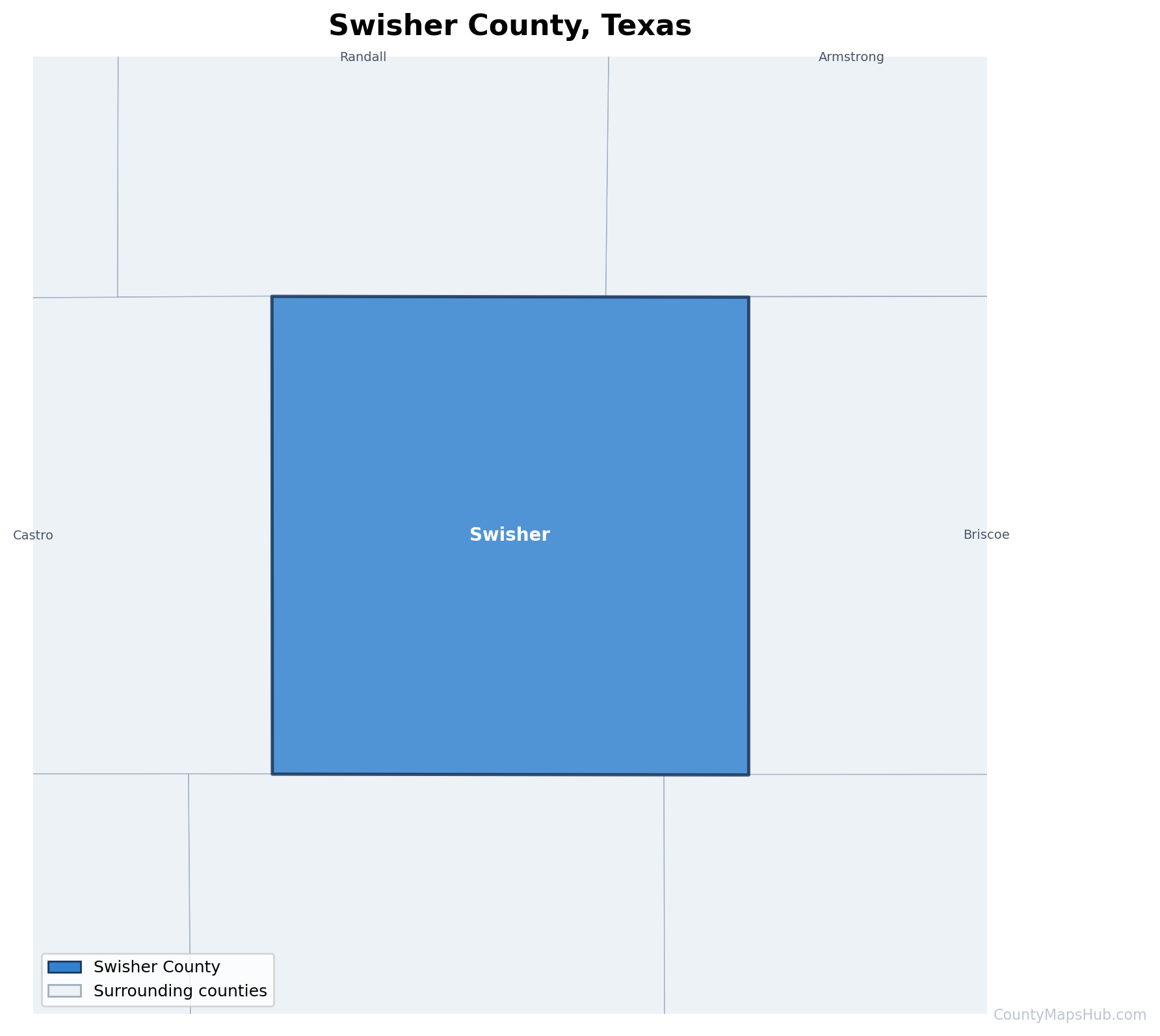
Swisher County was established in 1876 and named after James Gibson Swisher, honoring his contributions to Texas history. The county’s formation came during a period of westward expansion across the Texas Panhandle, as settlers moved into the High Plains region seeking agricultural opportunities. Tulia, the county seat, became the administrative and commercial center for the surrounding rural communities.
The development of Swisher County reflects the broader patterns of settlement in the Texas Panhandle during the late nineteenth century. Early residents faced the challenges of adapting to the semi-arid environment, establishing farms and ranches that would form the economic foundation of the region. Over the decades, the county evolved from a frontier territory into an established agricultural community, shaped by the determination of generations who made their homes on the High Plains.
Population
According to the 2020 census, Swisher County has a population of 7,397 residents spread across its 900 square miles. This relatively sparse population density is characteristic of many Texas Panhandle counties, where agricultural land use predominates and communities are often separated by considerable distances. The population is centered primarily around Tulia and smaller rural settlements, with residents engaged in farming, ranching, and related industries. The county’s demographic profile reflects the broader trends of rural Texas, where tight-knit communities maintain traditional values while adapting to changing economic conditions in agriculture and energy sectors.
Climate
Swisher County experiences a semi-arid climate typical of the Texas High Plains, characterized by low annual precipitation and significant temperature variations between seasons. Summers are generally hot with abundant sunshine, while winters can bring cold fronts and occasional winter storms sweeping down from the north. The region receives most of its limited rainfall during late spring and early summer months, making water conservation a priority for agricultural operations.
The semi-arid conditions significantly influence life in Swisher County, affecting everything from farming practices to daily activities. The area experiences moderate to high winds, particularly in spring, and the flat terrain offers little natural protection from weather systems. These climatic factors have historically shaped the types of crops grown and livestock raised, with residents developing expertise in dryland farming and irrigation techniques suited to the challenging environment.
Tourist Attractions
Swisher County offers visitors an authentic glimpse into life on the Texas High Plains, where wide-open spaces and agricultural landscapes dominate the scenery. The county’s rural character provides opportunities for those interested in understanding the agricultural heritage of the region, with working farms and ranches illustrating the challenges and rewards of life in semi-arid Texas. The expansive skies and relatively undeveloped terrain appeal to photographers and nature enthusiasts seeking solitude and dramatic vistas.
Outdoor recreation in the area tends toward activities suited to the High Plains environment, including hunting during appropriate seasons and birdwatching along migration routes. The county’s location in the broader Texas Panhandle region places it within reach of various historical sites and cultural attractions found in neighboring areas, making it a potential stop for travelers exploring West Texas. Local community events throughout the year offer visitors a chance to experience small-town Texas hospitality and regional traditions.
Culture
The culture of Swisher County reflects the values and traditions of rural Texas Panhandle communities, where agriculture remains central to local identity and economy. Residents maintain strong connections to the land and take pride in the agricultural heritage that has sustained families for multiple generations. Community gatherings and seasonal events provide important social touchstones, bringing together neighbors from across the county’s 900 square miles and reinforcing the bonds that define small-town life.
The cultural landscape is shaped by the practical demands of ranching and farming, fostering values of self-reliance, hard work, and mutual assistance among neighbors. Churches and civic organizations play significant roles in community life, offering both spiritual guidance and social connection. The county’s heritage reflects the diverse influences that have shaped the Texas Panhandle, blending frontier traditions with adaptations to modern agricultural practices and rural life in the twenty-first century.