Aransas County
About
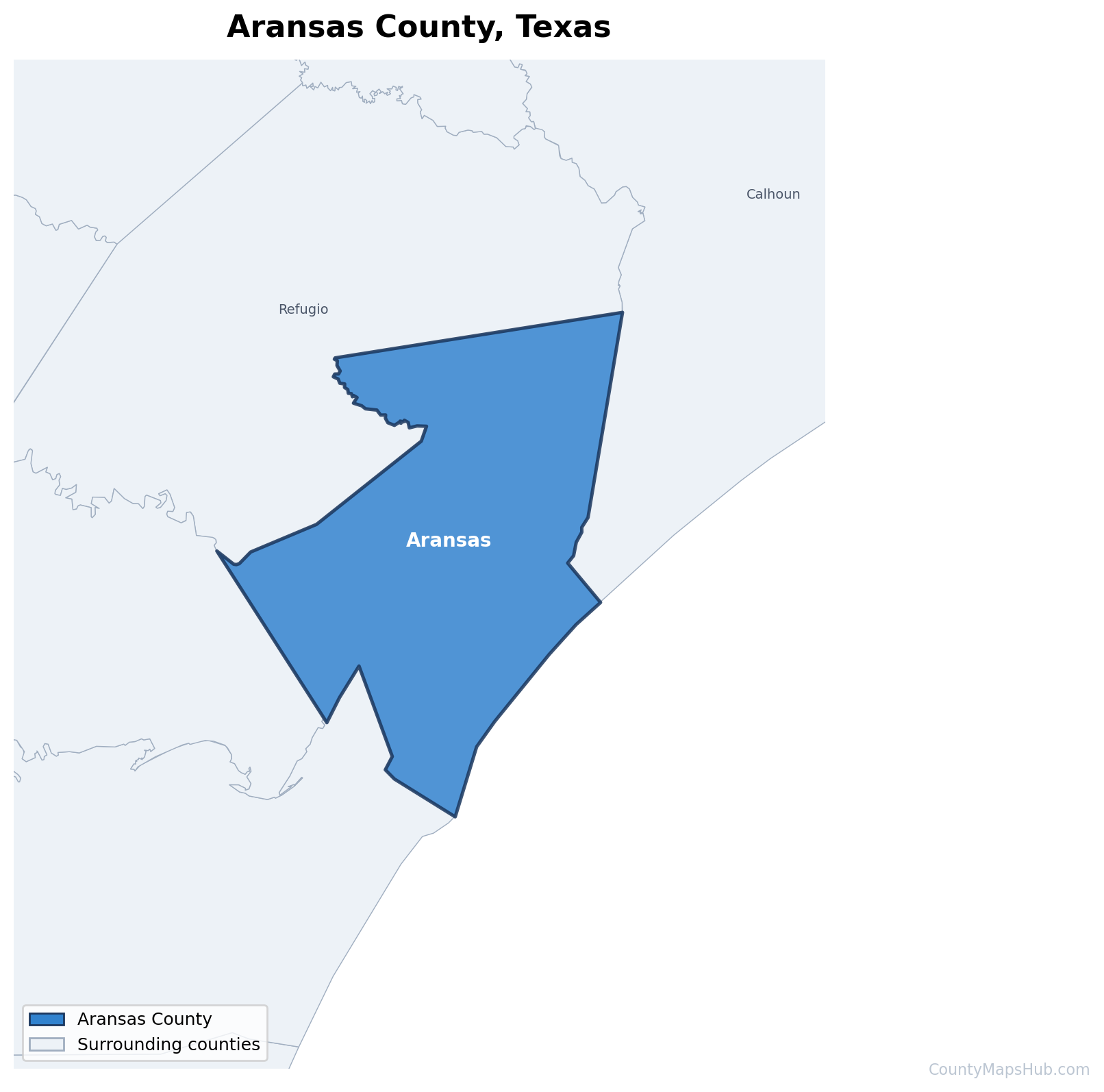
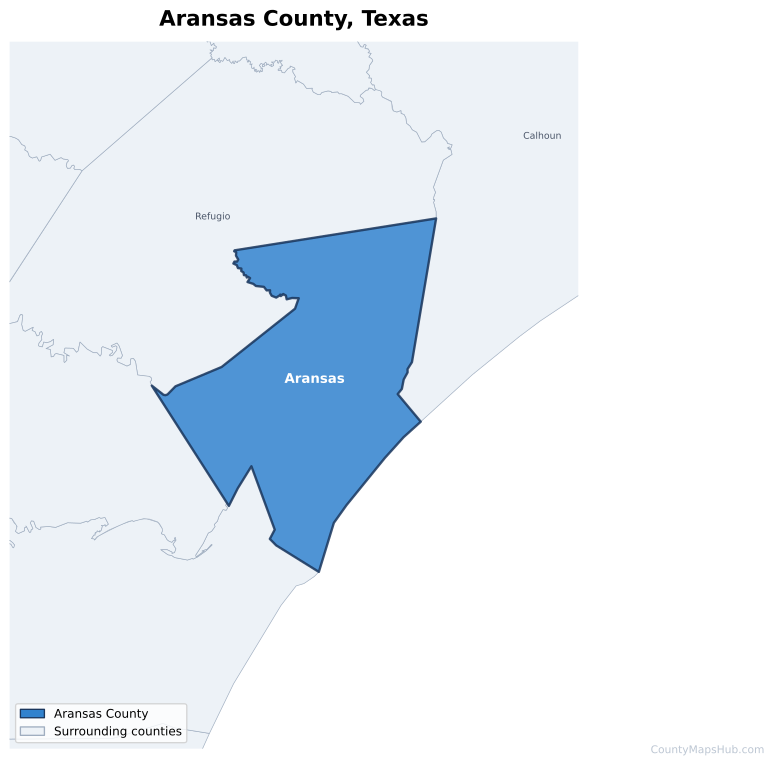
Aransas County was established in 1871, taking its name from Aransas Bay, the significant body of water that shapes the county’s eastern boundary and has influenced its development for generations. The region’s history is deeply connected to the Texas Gulf Coast maritime heritage, with early settlements dependent on fishing, shipping, and trade through the bay’s protected waters. The county seat of Rockport has served as the governmental and commercial center since the county’s formation.
Throughout its existence, Aransas County has weathered the challenges common to coastal Texas communities, including tropical storms and hurricanes that periodically reshape both the landscape and the resilient character of its residents. The county’s economy evolved from its early dependence on maritime industries to include tourism, recreation, and services that take advantage of the area’s natural coastal setting. The interplay between preservation of natural resources and economic development continues to define the county’s trajectory into the modern era.
Population
As of the 2020 census, Aransas County recorded a population of 23,830 residents distributed across its 252 square miles. This population density reflects a balance between developed coastal communities and areas that retain a more rural character. The county’s modest size and population create a close-knit atmosphere where residents often maintain strong connections to both the land and the surrounding waters. Demographic trends in the county mirror broader patterns seen in Texas coastal regions, with seasonal fluctuations as visitors arrive to enjoy the Gulf Coast environment and some residents maintain part-time or seasonal residence in the area.
Climate
Aransas County experiences a humid subtropical climate characteristic of the Texas Gulf Coast, marked by hot, humid summers and mild winters that rarely see freezing temperatures. The proximity to the Gulf of Mexico moderates temperature extremes while contributing to higher humidity levels throughout much of the year. Summer months typically bring warm temperatures and occasional afternoon thunderstorms, while winter provides a temperate respite that attracts seasonal visitors seeking refuge from colder climates.
The coastal location makes the county subject to tropical weather systems during hurricane season, which runs from June through November. Rainfall is fairly evenly distributed throughout the year, supporting the lush vegetation typical of coastal Texas. The moderate winter temperatures and extended growing season create favorable conditions for both native plant species and cultivated landscapes.
Tourist Attractions
The county’s primary appeal to visitors centers on its Gulf Coast location and access to coastal waters. The area offers numerous opportunities for recreational fishing, both from shore and by boat, with the bay systems providing habitat for a variety of sought-after species. Birdwatching attracts enthusiasts year-round, as the coastal location places the county along major migratory routes and provides habitat for resident species. Boating, kayaking, and other water-based activities draw those seeking to explore the intricate network of bays, channels, and coastal environments.
Visitors also appreciate the county’s beaches and waterfront areas, which offer a more relaxed alternative to larger resort destinations. Local galleries, seafood restaurants, and shops cater to tourists while maintaining the character of authentic coastal communities. Nature preserves and wildlife areas provide opportunities to observe coastal ecosystems, and the county’s position on the Great Texas Coastal Birding Trail enhances its reputation among wildlife enthusiasts. The combination of natural attractions and small-town hospitality creates an appealing destination for those seeking coastal experiences without overwhelming crowds.
Culture
Aransas County’s culture reflects its maritime heritage and the lifestyle shaped by living along the Texas Gulf Coast. The rhythms of coastal life, influenced by tides, seasons, and weather patterns, create a cultural identity distinct from inland Texas communities. Fishing traditions, boat building, and seafaring skills passed through generations remain valued aspects of local knowledge, even as the economy has diversified. The community maintains a strong connection to the natural environment, with conservation efforts reflecting an understanding of the delicate balance in coastal ecosystems.
Social life in the county often revolves around water-based activities and community gatherings that celebrate coastal heritage. Local festivals and events typically incorporate elements of maritime culture, seafood traditions, and artistic expression inspired by the coastal landscape. The visual arts community draws inspiration from the ever-changing coastal scenery, dramatic skies, and abundant wildlife. This blend of practical coastal living, environmental awareness, and artistic appreciation creates a cultural atmosphere that values both tradition and the natural beauty that defines the region.