Tarrant County
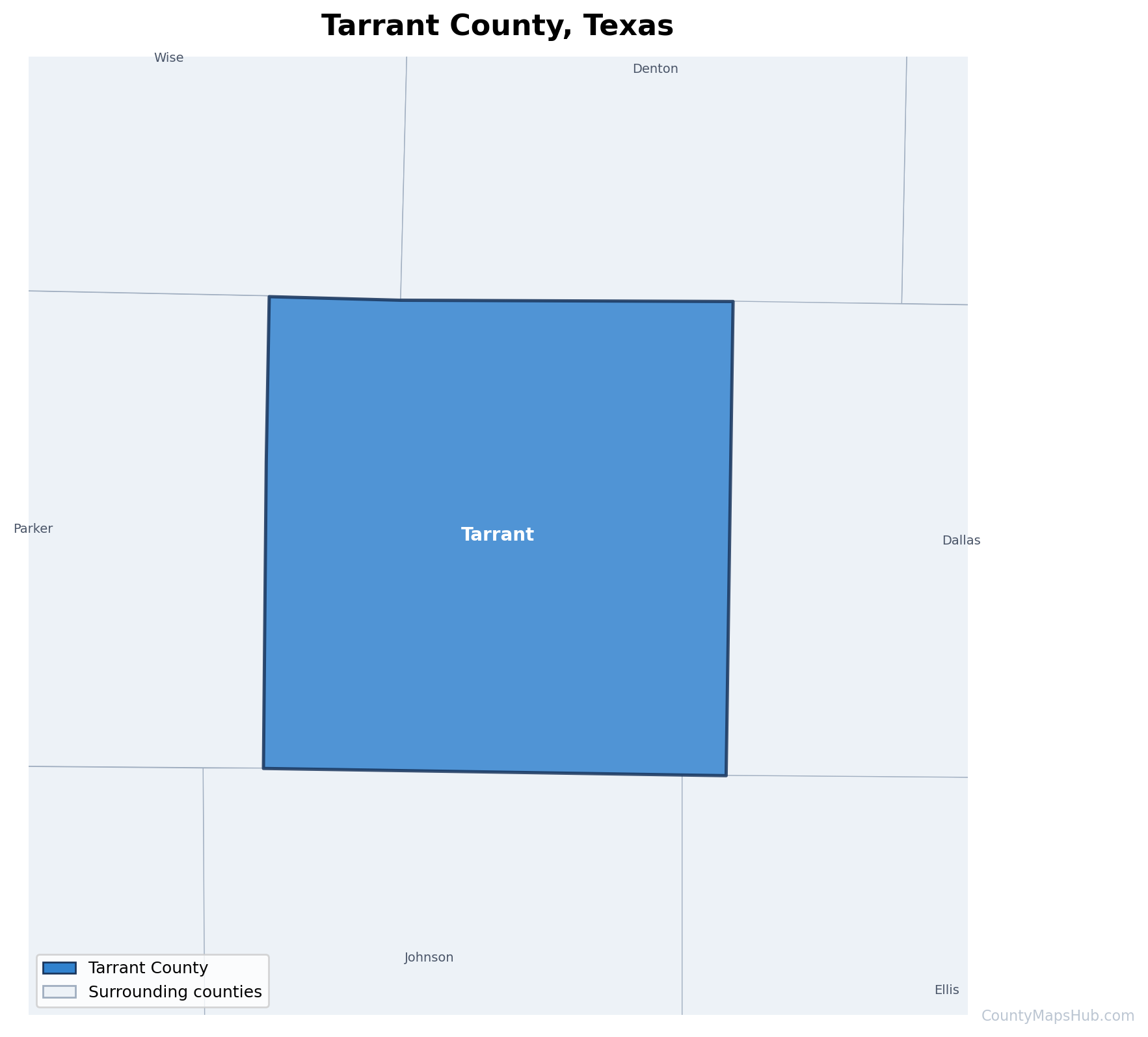
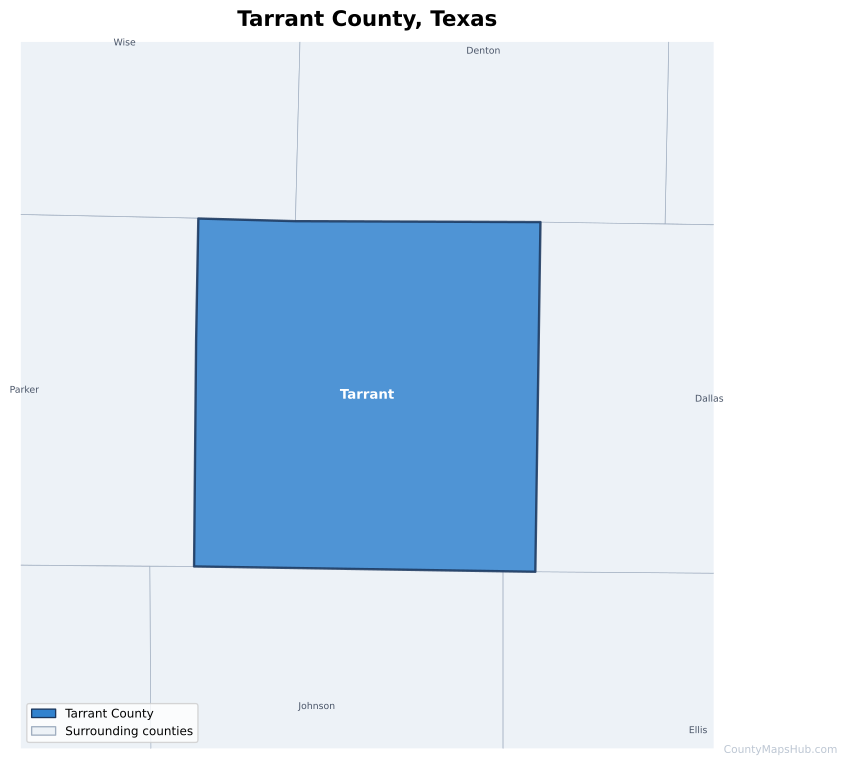
About
Tarrant County was established in 1849, during a period of rapid expansion and settlement across Texas following statehood. The county was named after Edward H. Tarrant, a military figure who played a role in the early history of the region. As one of the older counties in North Central Texas, it witnessed the transformation from frontier territory to a major metropolitan area over the course of more than 170 years.
The county seat, Fort Worth, grew from its origins as a military outpost into a significant commercial and cultural center. Throughout the late 19th and early 20th centuries, the area developed as a hub for cattle drives and later the railroad industry, which brought prosperity and population growth. The post-World War II era saw dramatic suburban expansion, and Tarrant County became an integral part of the Dallas-Fort Worth metropolitan complex, one of the fastest-growing regions in the United States.
Population
As of 2020, Tarrant County’s population stood at 2,110,640 residents, making it one of the most populous counties in Texas and among the largest in the nation. This substantial population reflects decades of steady growth driven by economic opportunities, migration from other states, and the expansion of urban and suburban communities. The county’s 864 square miles accommodate a diverse mix of residential neighborhoods, commercial districts, and industrial zones. Population density and demographics vary across the county, with urban cores showing higher concentrations and outlying areas featuring more dispersed settlement patterns. The large population base supports a robust economy and a wide array of public services and infrastructure.
Climate
Tarrant County experiences a humid subtropical climate characterized by hot summers and mild to cool winters. Summer months typically bring high temperatures and humidity, with afternoon thunderstorms providing occasional relief. Winters are generally moderate, with brief cold spells and rare snowfall events. Spring and fall serve as transitional seasons, often featuring pleasant weather but also the potential for severe storms, including tornadoes, as the region lies within a climatically active zone.
Rainfall is distributed throughout the year, with peak precipitation often occurring in late spring. The humid subtropical conditions support a variety of vegetation and contribute to the county’s green landscapes during wetter periods. Residents and visitors should be prepared for weather variability and stay informed during storm seasons, as conditions can change rapidly in North Central Texas.
Tourist Attractions
Tarrant County offers a wide range of attractions that appeal to diverse interests. Visitors can explore museums showcasing art, science, and regional history, providing insight into both local heritage and broader cultural themes. The county features numerous parks and recreational areas where families can enjoy outdoor activities, picnicking, and nature observation. Urban districts offer shopping, dining, and entertainment venues that reflect the area’s cosmopolitan character.
Cultural events and festivals occur throughout the year, celebrating everything from music and food to seasonal traditions. The region’s Western heritage is evident in various attractions and public spaces. Sports enthusiasts can attend games and events, while those interested in architecture and history can tour historic districts and landmarks. Whether seeking educational experiences, outdoor adventures, or entertainment, visitors will find a broad selection of activities across the county.
Culture
The culture of Tarrant County is shaped by its location in Texas and its history as part of the American West. The area reflects a blend of Southern hospitality, Western traditions, and modern urban influences. Rodeos, livestock shows, and country music are part of the regional identity, while contemporary arts, theater, and diverse culinary scenes add cosmopolitan flair. The population includes a mix of long-time residents and newcomers from across the United States and beyond, contributing to a dynamic and evolving cultural landscape.
Community life in the county emphasizes family, education, and entrepreneurship. Local institutions support a range of cultural activities, from visual and performing arts to historical preservation. The county’s role within the larger Dallas-Fort Worth area means residents benefit from both the amenities of a major metropolitan region and the distinct character of local communities. Religious congregations, civic organizations, and neighborhood groups all contribute to a sense of place and shared identity across this diverse and populous county.