Tom Green County
About
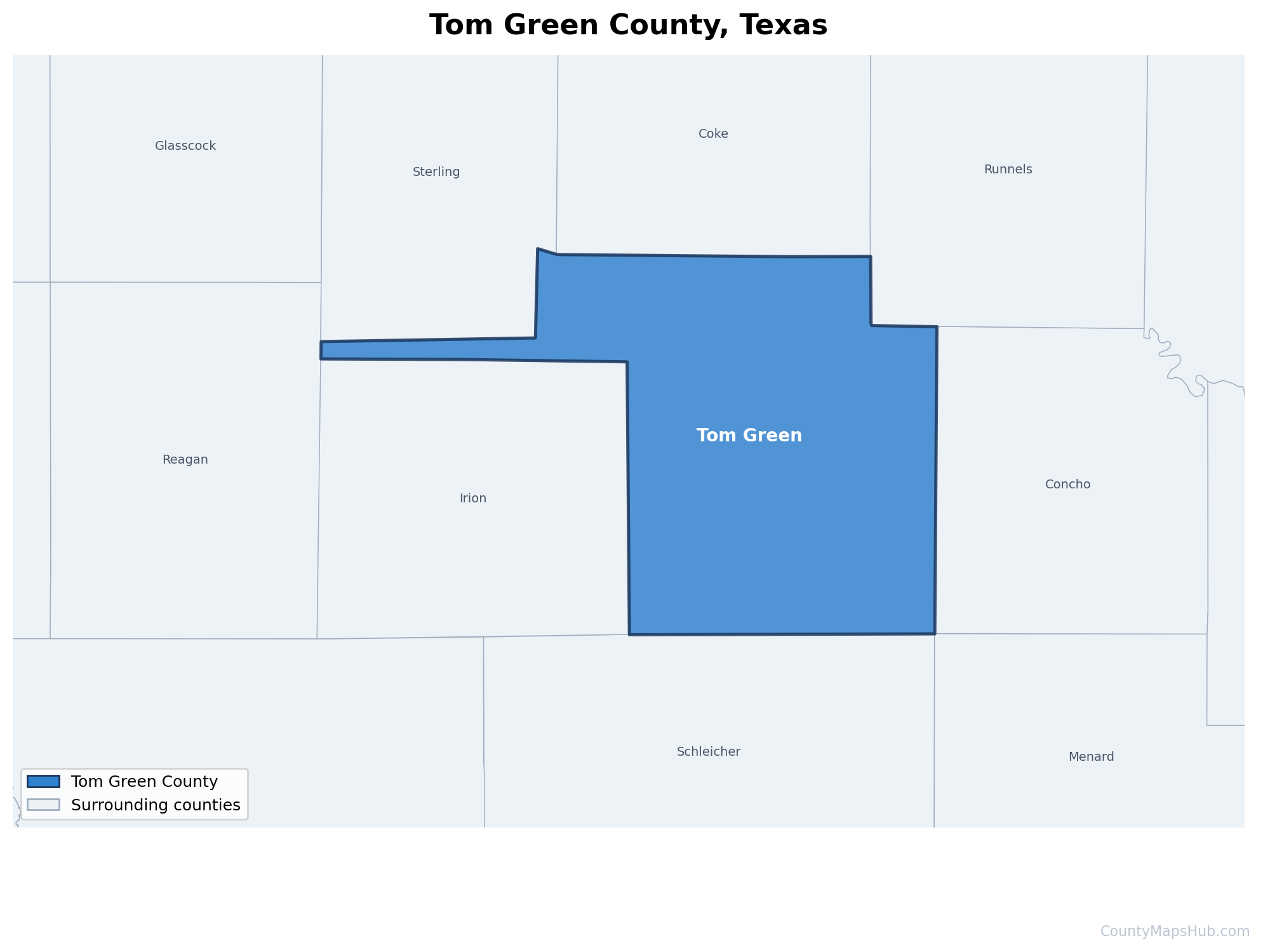
Tom Green County was established in 1874 and named after Thomas Green, a soldier and clerk of the Texas Supreme Court who served the Republic and State of Texas during the mid-19th century. The county seat is San Angelo, which developed as a central hub in West Central Texas during the frontier era. The region’s history reflects the broader narrative of Texas settlement, including ranching traditions, military presence, and the challenges of building communities in a semi-arid landscape.
Throughout its development, the county has been shaped by its location in the Concho River Valley, which provided essential water resources for early settlers and livestock operations. The area transitioned from a frontier territory to an established county as infrastructure expanded and communities grew. Over the decades, Tom Green County has evolved while maintaining connections to its ranching heritage and Western Texas culture, adapting to economic changes while preserving the character that defines this part of the state.
Population
According to 2020 census data, Tom Green County has a population of 120,003 residents spread across its 1,531 square miles. This population density reflects the county’s role as a regional center in West Central Texas, with the county seat serving as the primary population hub. The demographic composition represents the diverse communities that have contributed to the region’s development over nearly 150 years. The population size supports a range of services, educational institutions, and economic activities that serve both county residents and surrounding rural areas, making it an important anchor in this part of Texas.
Climate
Tom Green County experiences a semi-arid climate characterized by hot summers, mild winters, and limited annual precipitation. This climate zone is typical of West Central Texas, where continental influences create significant temperature variations between seasons. Summer temperatures frequently exceed 90 degrees Fahrenheit, while winters remain relatively moderate with occasional cold fronts. The limited rainfall requires careful water management and influences both agricultural practices and natural vegetation.
The semi-arid conditions support drought-resistant plant species and favor livestock ranching over intensive crop agriculture. Residents and visitors should prepare for intense sunshine, low humidity, and occasional severe weather events including thunderstorms during spring and early summer. The climate shapes daily life, architectural styles, and outdoor recreational opportunities throughout the year, creating a distinctive environment that defines the West Texas experience.
Tourist Attractions
Tom Green County offers visitors a glimpse into authentic West Texas landscapes and culture. The region features outdoor recreation opportunities suited to its semi-arid environment, including areas for hiking, wildlife observation, and experiencing the distinctive terrain of West Central Texas. The county’s rivers and waterways provide settings for fishing and nature appreciation, while the open spaces showcase the characteristic vistas of the Texas Hill Country’s western edge.
Visitors interested in Western heritage will find the county seat offers museums and cultural venues that preserve ranching history and frontier life. The area’s historic downtown districts, local galleries, and seasonal community events reflect the traditions of this part of Texas. Regional parks and natural areas provide opportunities to experience the unique flora and fauna adapted to semi-arid conditions, making the county an educational destination for those interested in Texas ecology and history.
Culture
The cultural identity of Tom Green County is deeply rooted in West Texas ranching traditions and frontier heritage. The region maintains strong connections to cowboy culture, livestock industries, and the independent spirit associated with rural Texas communities. Local traditions often revolve around agricultural cycles, rodeo events, and community gatherings that bring together residents from across the county’s expansive geography. The cultural landscape reflects a blend of Hispanic, Anglo, and other influences that have shaped the region since its establishment.
Community life in the county emphasizes neighborly cooperation, self-reliance, and pride in regional history. Cultural institutions preserve and celebrate the area’s development from frontier territory to modern county, offering educational programs and exhibits about pioneer life, military history, and the evolution of ranching practices. The arts scene includes local craftspeople, musicians, and artists who draw inspiration from the distinctive West Texas environment, creating works that capture the landscape, wildlife, and cultural heritage of this unique region of the Lone Star State.