Trinity County
About
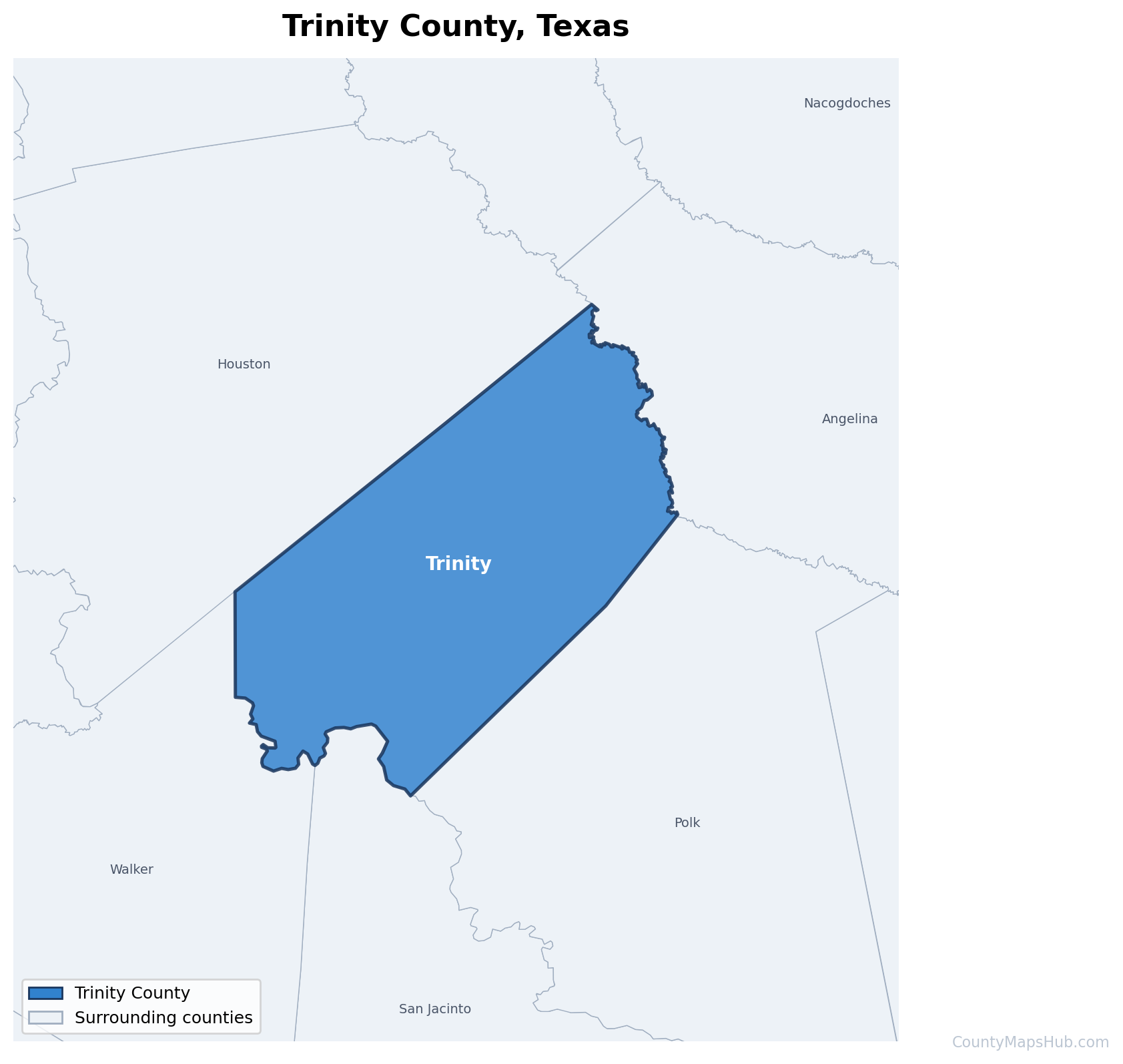
Trinity County was established in 1850, making it one of the older counties in East Texas. Named after the Trinity River, which flows through the region, the county was formed during a period of significant expansion and settlement in Texas following statehood. The area’s development was closely tied to the timber industry and agriculture, which attracted settlers to the piney woods region.
Groveton serves as the county seat, providing administrative and judicial services to residents throughout the county. The county’s history reflects the broader patterns of East Texas development, including the influence of Native American heritage, Spanish and Mexican territorial periods, and the subsequent waves of Anglo-American settlement in the nineteenth century. Over the decades, Trinity County has maintained its rural character while adapting to changing economic conditions and modern infrastructure needs.
Population
According to the 2020 census, Trinity County has a population of 14,062 residents spread across its 714 square miles. This population density reflects the county’s rural nature, with communities distributed throughout the piney woods landscape. The county seat of Groveton serves as a central hub for local government and services. The population has remained relatively stable over recent decades, maintaining the county’s character as a quiet rural area within the broader East Texas region. Residents tend to value the slower pace of life and natural surroundings that define Trinity County.
Climate
Trinity County experiences a humid subtropical climate typical of East Texas, characterized by hot, humid summers and mild winters. Summer temperatures regularly climb into the upper 90s, while winter months see moderate conditions with occasional cold fronts bringing cooler temperatures. The region receives abundant rainfall throughout the year, supporting the lush pine forests and diverse vegetation that cover much of the county.
This climate pattern creates an environment favorable for agriculture and forestry, the county’s traditional economic foundations. Spring and fall offer particularly pleasant weather, with moderate temperatures and lower humidity levels. Residents and visitors should be prepared for occasional severe weather, including thunderstorms during the warmer months, which are common across this part of Texas.
Tourist Attractions
Trinity County offers visitors an authentic East Texas experience centered around outdoor recreation and natural beauty. The extensive pine forests provide opportunities for hiking, hunting, and wildlife observation throughout the year. The county’s lakes and waterways attract anglers and boating enthusiasts seeking a peaceful retreat from urban areas. The rural landscape and forested areas create ideal conditions for camping and nature photography.
Visitors interested in regional history can explore the architectural heritage visible in older structures throughout the county and learn about the area’s development through local historical resources. The county’s position within the piney woods region makes it an attractive destination for those seeking to experience traditional East Texas culture and natural environments. Seasonal activities align with the agricultural calendar and outdoor recreation opportunities that change with the weather patterns throughout the year.
Culture
Trinity County embodies the traditional culture of rural East Texas, where community connections and outdoor traditions remain central to daily life. The county’s heritage reflects influences from various groups who settled the region over the past two centuries, creating a distinctive local identity rooted in agriculture, forestry, and small-town values. Churches and community organizations serve as important gathering places, maintaining social bonds across the rural landscape.
Local culture celebrates the natural environment and the practical skills associated with rural living. Traditional activities such as hunting, fishing, and woodworking continue to be passed down through generations. The county’s cultural life reflects a slower pace and emphasis on neighborly relationships typical of small Texas communities. Seasonal gatherings and community events provide opportunities for residents to maintain connections and celebrate their shared heritage within this East Texas county.