Archer County
About
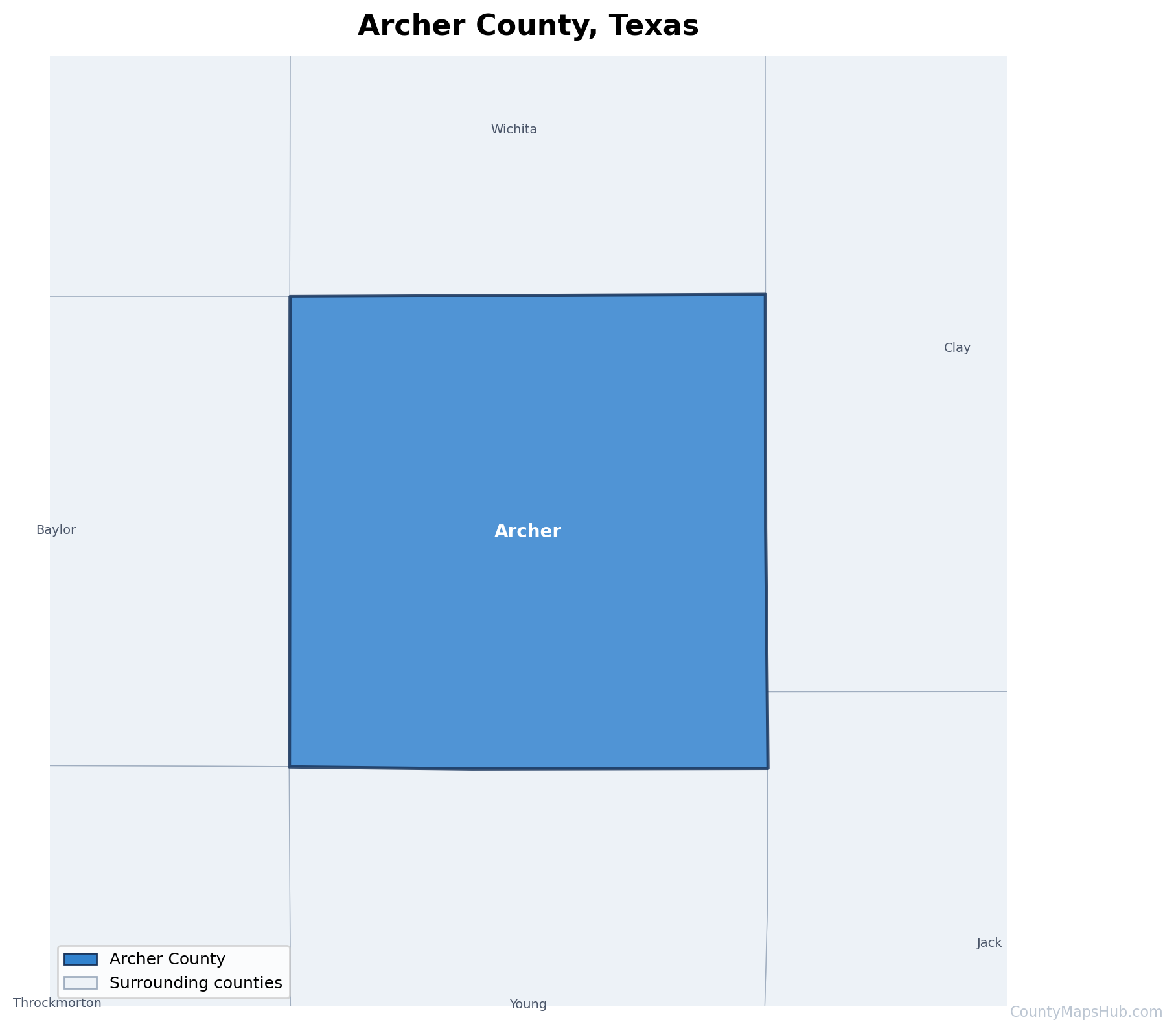
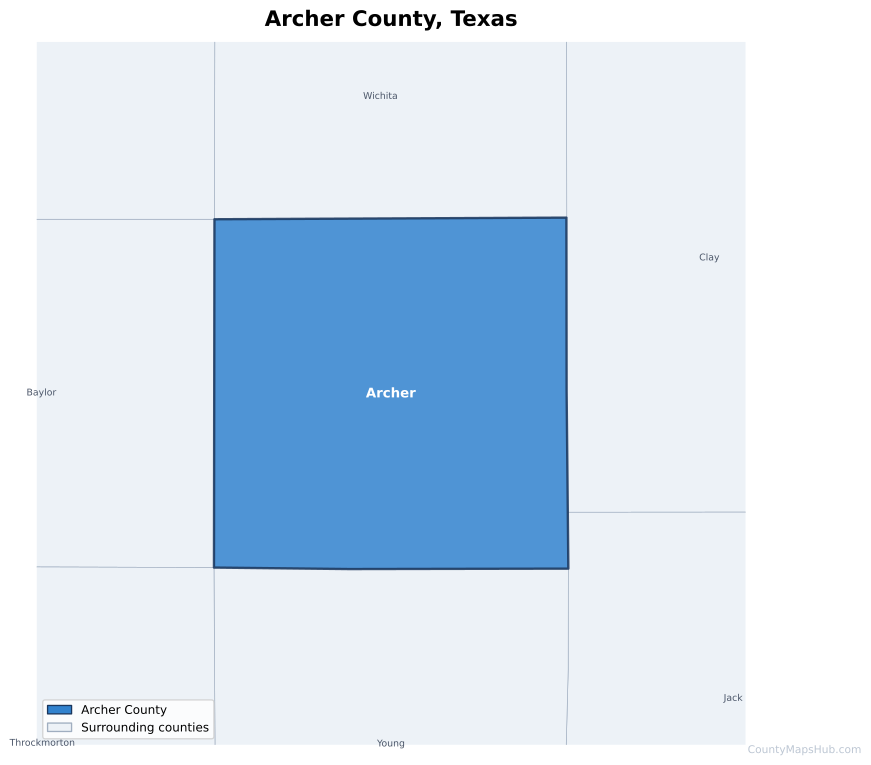
Archer County was established in 1858 and named after Branch T. Archer, a notable figure in early Texas history who served as a commissioner to the United States and was an advocate for Texas independence. The county’s formation came during a period of westward expansion in Texas, as settlers pushed into the north-central region of the state. Archer City serves as the county seat, providing administrative and civic services to the region.
The development of Archer County followed the typical pattern of North Texas settlement, with ranching and agriculture forming the economic foundation. The county’s growth was influenced by its position in the frontier region, where settlers established communities and developed the land for livestock and farming operations. Over the decades, the county has maintained its primarily rural character while adapting to changing economic conditions in Texas.
Population
According to 2020 census data, Archer County has a population of 8,560 residents spread across its 910 square miles. This translates to a relatively low population density characteristic of rural North Texas counties. The county seat of Archer City serves as the primary population center, providing essential services and community facilities for residents throughout the region. The population reflects the county’s agricultural heritage and rural lifestyle, with families and individuals drawn to the area’s open spaces and small-town character.
Climate
Archer County experiences a humid subtropical climate typical of North Texas, characterized by hot summers and mild to cool winters. Summer temperatures regularly climb into the 90s Fahrenheit, while winter months see more moderate conditions with occasional cold fronts bringing cooler weather. The region receives variable precipitation throughout the year, with spring and early summer typically seeing the most rainfall.
This climate supports a mix of agricultural activities and native vegetation adapted to the North Texas environment. Residents experience four distinct seasons, though summer heat tends to dominate much of the year. The weather patterns influence both agricultural practices and outdoor recreational opportunities available throughout the county.
Tourist Attractions
Archer County offers visitors a glimpse into authentic North Texas rural life and heritage. The region’s landscape features rolling prairies and agricultural lands that showcase the area’s ranching and farming traditions. Visitors interested in small-town Texas culture will find the county seat and surrounding communities offer a peaceful alternative to urban destinations, with local businesses and community events reflecting the area’s close-knit character.
Outdoor enthusiasts can enjoy the natural landscapes characteristic of North Texas, including opportunities for wildlife observation and appreciation of the region’s open spaces. The county’s rural roads and scenic vistas provide peaceful driving routes for those exploring the area. Local historical sites and community gathering places offer insights into the county’s development since its establishment in the mid-19th century.
Culture
The cultural identity of Archer County is rooted in traditional Texas values and rural community life. The area maintains strong connections to its ranching and agricultural heritage, with many families having deep generational ties to the land. Community events and gatherings typically revolve around agricultural traditions, school activities, and civic organizations that bring residents together throughout the year.
Small-town Texas hospitality characterizes social interactions in Archer County, where neighbors know one another and community bonds remain strong. The county’s cultural landscape reflects the values of self-reliance, hard work, and connection to the land that have defined rural Texas communities for generations. Local institutions, including schools and civic organizations, serve as important centers for community life and cultural preservation.