Upshur County
About
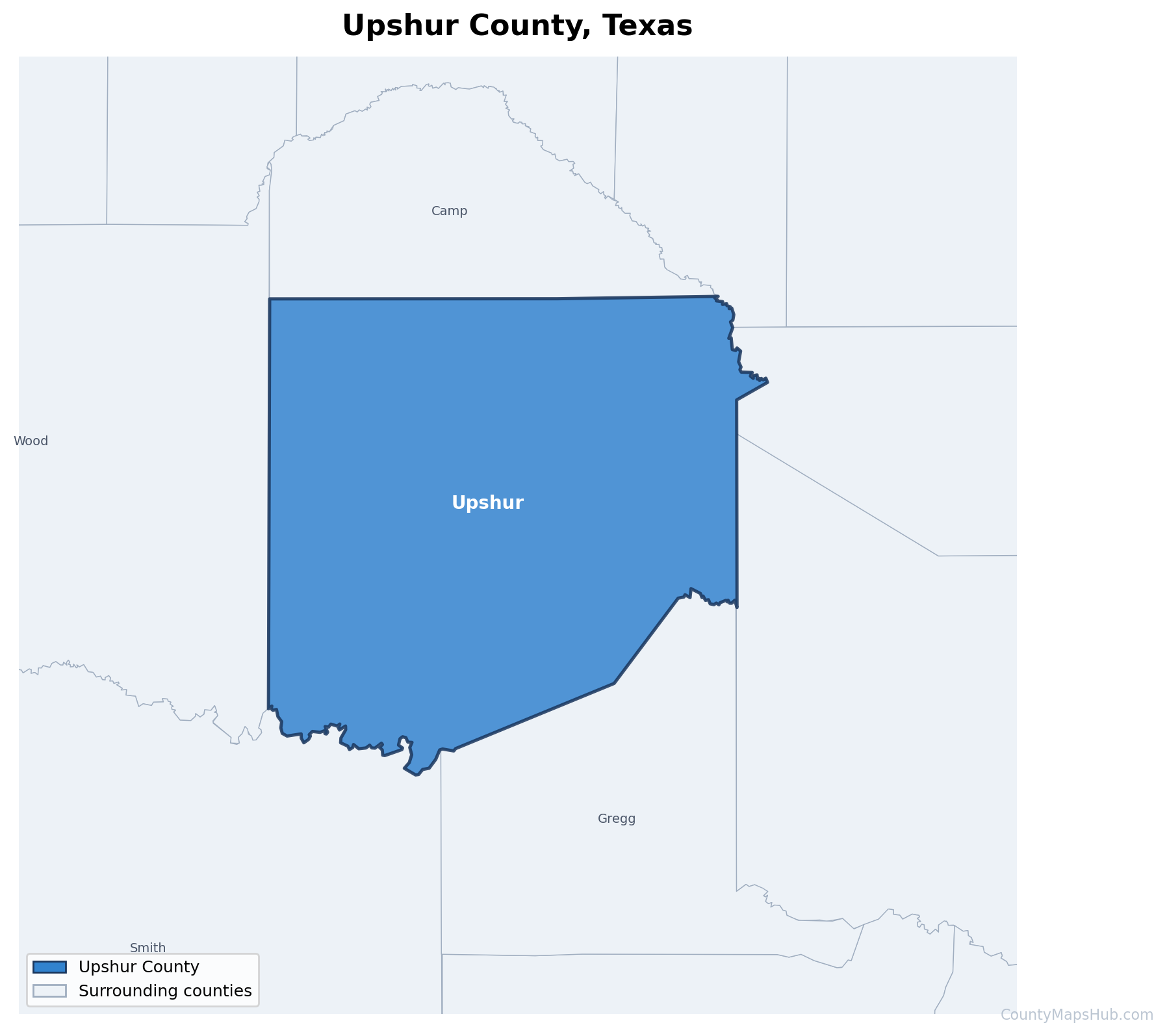
Upshur County was established in 1846, making it one of the counties formed during the early years of Texas statehood. The county was named after Abel P. Upshur, who served as Secretary of State and Secretary of the Navy under President John Tyler. Upshur played a significant role in the annexation of Texas to the United States, making the naming particularly meaningful for this East Texas county.
The county seat, Gilmer, has served as the administrative center since the county’s formation. Throughout the 19th and early 20th centuries, the region developed around agriculture, timber, and natural resource extraction, industries that shaped the economic and social fabric of the area. Like many East Texas counties, Upshur County experienced growth tied to regional railroad expansion and the discovery of oil fields, which brought economic diversification and population increases to the area over the decades.
Population
According to the 2020 census, Upshur County has a population of 41,753 residents spread across its 592 square miles. This population density reflects a mix of small-town communities and rural landscapes characteristic of East Texas. The county has experienced moderate growth over recent decades, balancing traditional rural character with gradual development. The population distribution centers around the county seat and smaller communities throughout the region, with residents engaged in diverse occupations ranging from agriculture and industry to education and services.
Climate
Upshur County experiences a humid subtropical climate, typical of the East Texas region. This climate zone is characterized by hot, humid summers with temperatures frequently reaching the 90s Fahrenheit, and mild to cool winters with occasional cold fronts bringing brief periods of freezing temperatures. The area receives ample rainfall throughout the year, with slightly higher precipitation during spring and fall months, supporting the lush vegetation and pine forests common to the region.
The growing season is long, typically extending from late March through early November, which has historically supported agricultural activities. Residents can expect occasional severe weather, including thunderstorms during spring and summer months. The humid conditions and moderate temperatures contribute to the characteristic greenery of East Texas, with the landscape remaining verdant for much of the year.
Tourist Attractions
Upshur County offers visitors a taste of authentic East Texas charm and natural beauty. The region’s landscape features pine forests, rolling hills, and scenic rural roads that provide opportunities for outdoor recreation and nature appreciation. Visitors can explore local parks and natural areas that showcase the native ecosystems of East Texas, including opportunities for hiking, fishing, and wildlife observation in tranquil settings away from urban congestion.
The county’s small-town atmosphere provides a glimpse into traditional Texas community life, with local shops, seasonal farmers markets, and community events that reflect regional heritage. Historic architecture in downtown areas tells the story of the county’s development over more than 175 years. Visitors interested in regional history can discover traces of early settlement patterns, agricultural traditions, and the oil boom era that shaped modern East Texas. The area serves as a convenient base for exploring the broader Piney Woods region while offering its own unique character and hospitality.
Culture
The cultural identity of Upshur County is deeply rooted in East Texas traditions, blending Southern hospitality with frontier heritage. The community maintains strong connections to its agricultural past while adapting to contemporary economic realities. Traditional values of family, faith, and community involvement remain central to local life, expressed through churches, civic organizations, and volunteer groups that form the backbone of social networks throughout the county.
Local culture celebrates regional cuisine featuring Southern comfort foods and Texas barbecue traditions, with family recipes passed down through generations. Community gatherings, whether for local sports events, seasonal celebrations, or civic occasions, serve as important social touchstones. The arts are appreciated through local crafts, music traditions including country and gospel, and community theater productions. Educational institutions play vital roles in preserving local heritage while preparing younger generations for the future, maintaining the balance between honoring the past and embracing progress that characterizes many East Texas communities.