Upton County
About
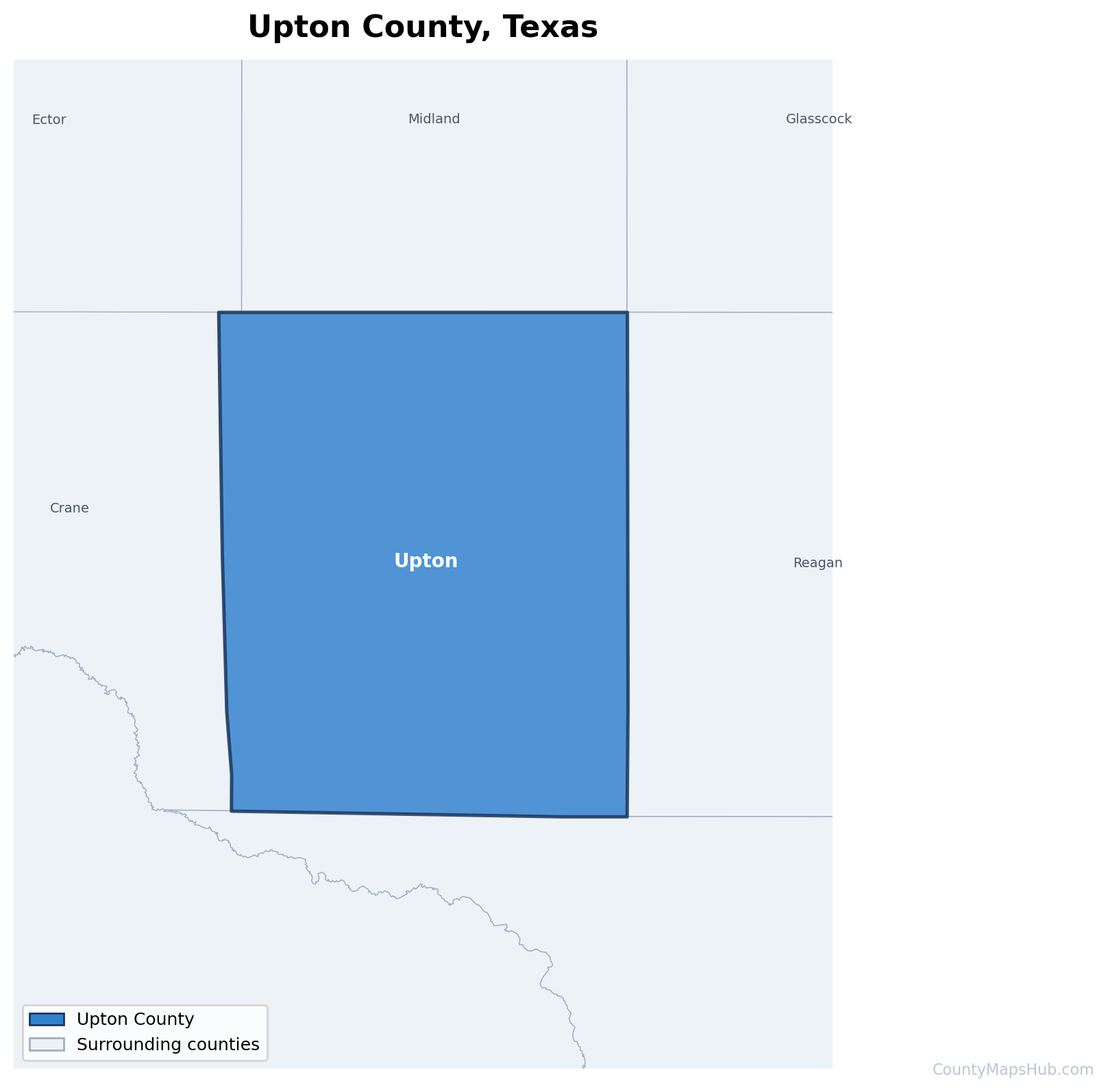
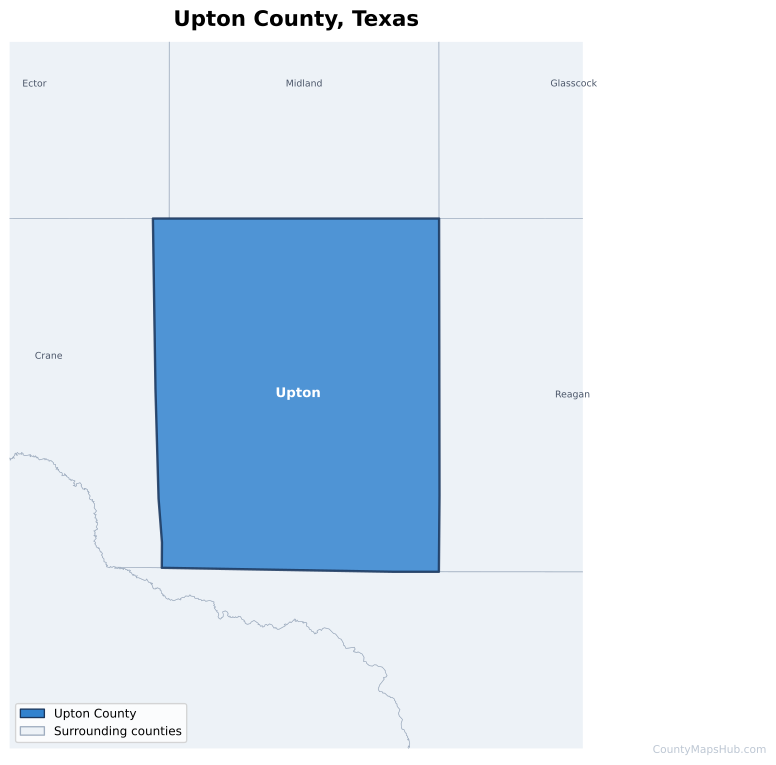
Upton County was established in 1887 and named after John Cunningham Upton, a figure significant to Texas history. The county seat is Rankin, which serves as the administrative and commercial center for this West Texas region. Like many counties in this part of Texas, the area’s development was closely tied to ranching and later to the discovery of oil and natural gas resources that transformed the local economy in the twentieth century.
The county’s formation came during a period of westward expansion in Texas, when the state was organizing its vast western territories into manageable governmental units. The landscape and climate presented challenges to early settlers, who adapted to the harsh conditions of the region. Over the decades, the county evolved from a frontier area into a community sustained by agriculture and energy production, maintaining its rural character while contributing to the broader economic development of West Texas.
Population
According to the 2020 census, Upton County has a population of 3,308 residents spread across its 1,242 square miles. This low population density reflects the rural nature of the county and the challenging environmental conditions characteristic of West Texas. The population is concentrated primarily in the county seat of Rankin, with scattered ranches and smaller settlements throughout the county. Like many rural Texas counties, the community is shaped by industries that require vast land areas but relatively few workers, including ranching and energy extraction.
Climate
Upton County experiences a semi-arid climate typical of West Texas, characterized by hot summers, mild winters, and limited annual precipitation. The region receives most of its rainfall during the spring and early summer months, though drought conditions are common and water conservation remains an important consideration for residents and industries. Temperature extremes are typical, with summer highs often exceeding 100 degrees Fahrenheit and winter nights occasionally dipping below freezing.
The semi-arid conditions have shaped both the natural vegetation and human activities in the county. Native grasses and hardy shrubs dominate the landscape, adapted to survive with minimal moisture. The climate has historically made large-scale agriculture challenging, leading residents to focus on ranching and other activities suited to the dry environment.
Tourist Attractions
Upton County offers visitors an authentic West Texas experience with its expansive landscapes and open skies. The rural character of the county appeals to those seeking solitude and a connection to the rugged beauty of the region. Outdoor enthusiasts can appreciate the wide-open spaces characteristic of this part of Texas, where the horizon stretches endlessly and the night sky reveals countless stars unobscured by urban light pollution.
The county’s heritage reflects the pioneering spirit of West Texas, and visitors interested in regional history can gain insight into how communities adapted to life in this challenging environment. The landscape itself tells the story of geological forces and human perseverance. While amenities are limited compared to urban areas, the county provides an opportunity to experience the authentic character of rural Texas, where ranching traditions continue and the pace of life remains connected to the land.
Culture
The cultural identity of Upton County is rooted in West Texas traditions of ranching, self-reliance, and community cooperation. Like other rural Texas counties, the social fabric is woven from close-knit relationships where neighbors know one another and community events bring residents together. The values of hard work and adaptability, necessary for thriving in the semi-arid environment, continue to shape local culture. Regional traditions celebrated throughout West Texas find expression here in local gatherings and seasonal observances.
The county’s culture reflects a blend of Anglo-American and Hispanic influences common throughout this region of Texas. This cultural heritage is expressed in local cuisine, music preferences, and social customs. Education and youth activities often center around school events, which serve as important gathering points for the community. The challenges of rural life have fostered a strong sense of mutual support among residents, maintaining traditions of neighborliness that define small-town Texas living.