Van Zandt County
About
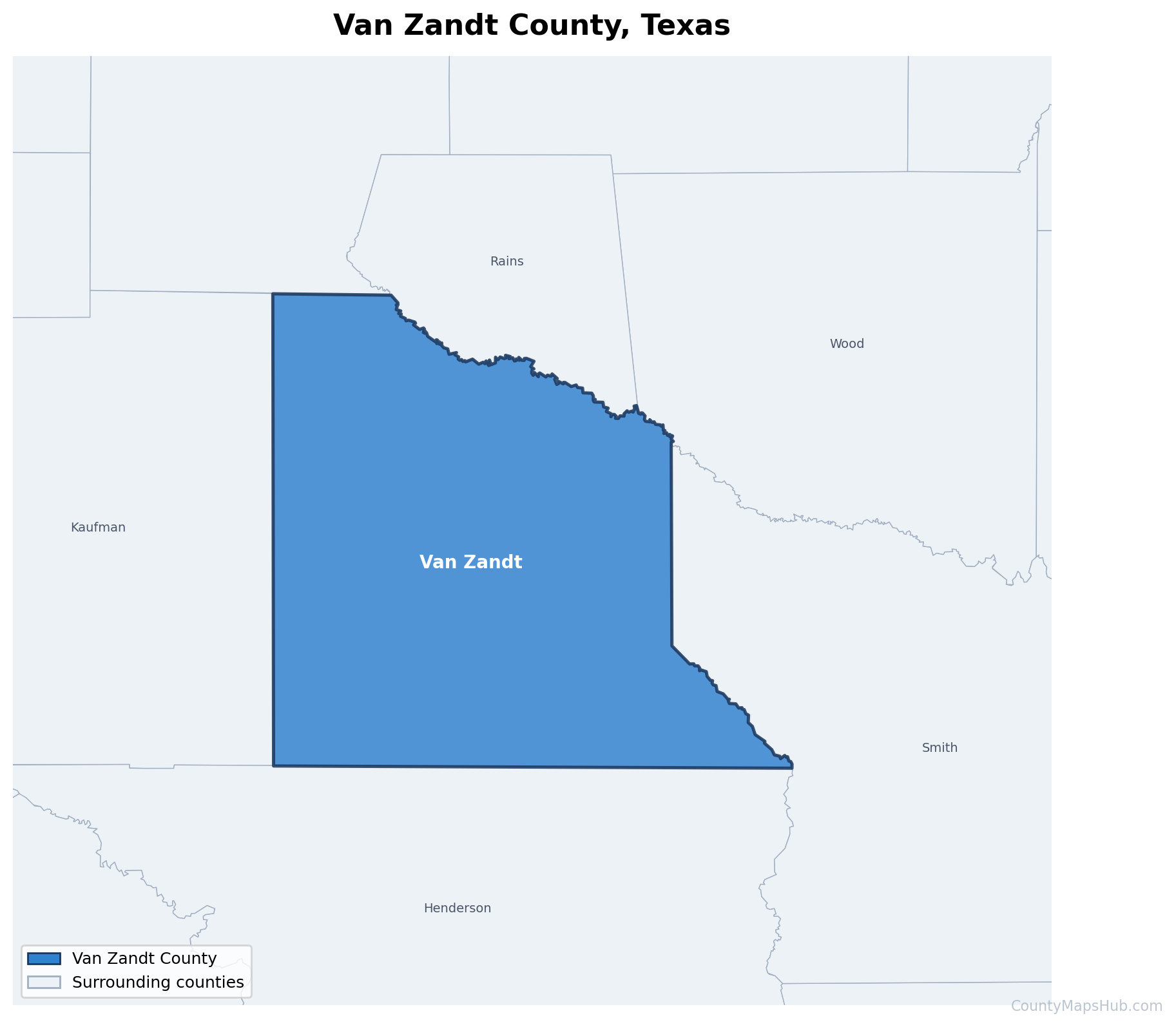
Van Zandt County was established in 1848 during a period of significant expansion in East Texas following the state’s admission to the Union. The county was named after Isaac Van Zandt, a prominent Texas statesman and diplomat who served as the Republic of Texas’s minister to the United States and played a crucial role in the annexation of Texas. Canton was designated as the county seat, serving as the governmental and commercial center for the surrounding agricultural region.
Throughout the 19th and early 20th centuries, the county developed as an agricultural community, with farming and ranching forming the backbone of the local economy. The arrival of rail lines facilitated the transport of goods and connected the county to larger markets across Texas. Over the decades, Van Zandt County has maintained its rural character while adapting to modern economic changes, balancing agricultural heritage with small-town growth and development that continues to shape the region today.
Population
According to the 2020 Census, Van Zandt County has a population of 59,541 residents spread across its 849 square miles of East Texas landscape. This population density reflects the county’s primarily rural and small-town character, with communities distributed throughout the region rather than concentrated in large urban centers. The county has experienced steady growth over recent decades as people have been attracted to the area’s affordable living, rural lifestyle, and proximity to larger metropolitan areas in the Dallas-Fort Worth region. The demographic composition reflects broader East Texas patterns, with a mix of long-established families and newer residents seeking a more relaxed pace of life while maintaining reasonable access to urban amenities.
Climate
Van Zandt County experiences a humid subtropical climate characteristic of East Texas, with hot summers and mild winters that support a long growing season. Summer temperatures regularly reach into the 90s Fahrenheit, while winter months typically see moderate conditions with occasional cold fronts bringing brief periods of cooler weather. The region receives adequate rainfall throughout the year, with higher precipitation levels in spring and fall, supporting the area’s agriculture and maintaining the lush vegetation typical of East Texas.
The climate allows for diverse outdoor activities year-round, though summer heat can be intense during midday hours. Spring and fall offer particularly pleasant conditions for exploring the countryside. The area may occasionally experience severe weather including thunderstorms and rare winter ice events, but generally enjoys a temperate climate that supports both agricultural productivity and comfortable outdoor recreation throughout much of the year.
Tourist Attractions
Van Zandt County offers visitors a glimpse into rural East Texas life, with opportunities to explore the region’s natural beauty and small-town atmosphere. The county features rolling hills, wooded areas, and scenic countryside that attract those seeking outdoor recreation including hiking, fishing, and wildlife observation. Local lakes and waterways provide settings for boating and water-based activities, while the rural landscape offers peaceful drives through agricultural areas and small communities.
Visitors to the county can experience authentic Texas small-town culture, with local events and markets that showcase regional crafts, antiques, and agricultural products. The area’s country roads wind through picturesque terrain ideal for photography and nature appreciation. Seasonal activities related to farming and ranching heritage draw visitors interested in agricultural tourism, while the proximity to larger cities makes the county an accessible day-trip or weekend destination for those seeking a respite from urban environments.
Culture
The cultural fabric of Van Zandt County reflects traditional East Texas values rooted in agricultural heritage, community bonds, and Southern hospitality. The region maintains a strong connection to its rural traditions, with local gatherings, community events, and festivals celebrating the agricultural lifestyle that has defined the area for generations. Religious institutions play a central role in community life, and the county’s cultural calendar revolves around seasonal celebrations, school activities, and civic events that bring residents together.
The county’s cultural identity blends historic Texas independence with the warmth and neighborliness characteristic of small-town life. Local traditions emphasize family, hard work, and community service, with residents taking pride in their agricultural roots and close-knit social networks. Culinary traditions feature Southern and Texas comfort foods, barbecue, and home-style cooking that reflect the region’s heritage. While the county maintains its traditional character, it also welcomes newcomers who appreciate the slower pace and strong sense of community that define life in this East Texas region.