Walker County
About
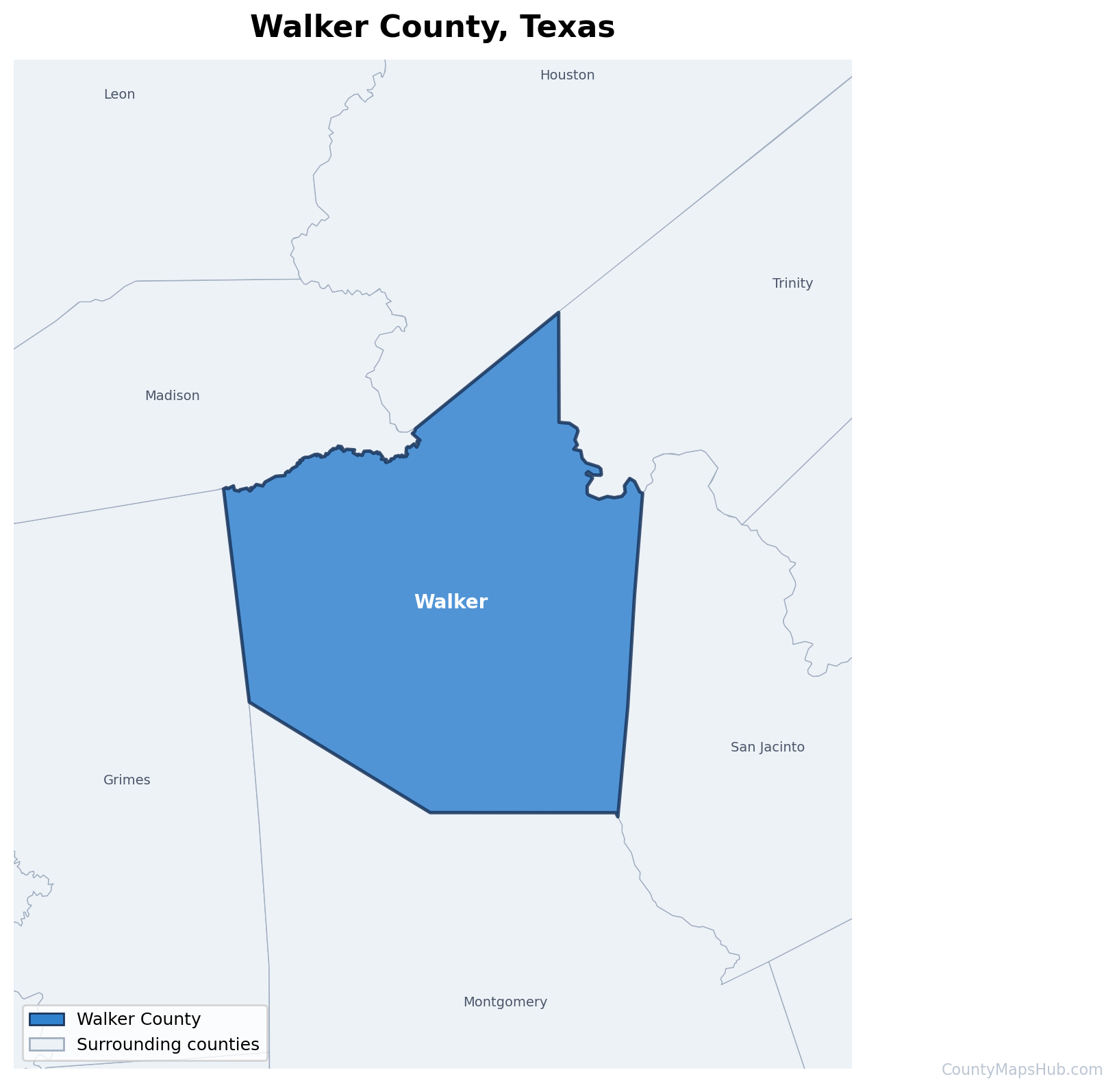
Walker County was established in 1846 during a period of significant expansion following Texas’s annexation to the United States. The county was named after Samuel H. Walker, a notable Texas Ranger and military officer who played important roles in the Texas Revolution and the Mexican-American War. Walker’s contributions to Texas history made him a fitting namesake for this East Texas county.
Huntsville, designated as the county seat, grew as a center of regional commerce and governance throughout the nineteenth century. The county’s development was shaped by its location in the Piney Woods region, where timber resources and agriculture formed the economic foundation. Over the decades, Walker County evolved from a frontier settlement into an established community that balanced traditional industries with emerging opportunities, maintaining its historical character while adapting to changing times.
Population
According to 2020 census data, Walker County is home to 76,400 residents spread across its 787 square miles. This population density reflects a mix of urban concentration in the county seat and surrounding rural areas. The county’s population has grown steadily over recent decades, supported by its location within reasonable distance of major metropolitan areas while maintaining a distinct regional identity. The demographic composition includes longtime residents with deep community ties alongside newer arrivals attracted by the area’s quality of life, educational opportunities, and economic prospects in East Texas.
Climate
Walker County experiences a humid subtropical climate characterized by hot summers and mild winters typical of East Texas. The region receives ample rainfall distributed throughout the year, supporting the lush vegetation and pine forests that define the local landscape. Summer temperatures regularly reach the 90s Fahrenheit, while winter months see moderate conditions with occasional cold fronts bringing cooler weather.
The generous precipitation and warm growing season create ideal conditions for the diverse plant life in the area. Residents experience the full progression of seasons, though winters remain relatively temperate compared to northern regions. Spring and fall offer particularly pleasant weather, with moderate temperatures and lower humidity levels that make outdoor activities enjoyable during these transitional periods.
Tourist Attractions
Visitors to Walker County can explore a variety of attractions that showcase the natural beauty and cultural heritage of East Texas. The region’s outdoor recreation opportunities include state parks and forest areas where hiking, camping, and wildlife observation allow guests to experience the Piney Woods ecosystem firsthand. Lakes and waterways provide venues for fishing, boating, and water-based activities throughout much of the year.
Cultural and historical attractions offer insights into the county’s past and present character. Museums and heritage sites preserve stories from earlier eras, while community events and festivals celebrate local traditions. The county seat serves as a hub for visitors seeking dining, shopping, and entertainment options. Educational institutions and their associated facilities contribute to the area’s cultural landscape, hosting public events and programs that enrich the community and welcome outside guests.
Culture
Walker County’s cultural identity reflects its East Texas heritage, blending Southern traditions with the pioneering spirit of rural Texas communities. The area maintains strong connections to its historical roots while embracing contemporary influences. Local culture values community involvement, with residents actively participating in civic organizations, religious congregations, and volunteer activities that strengthen social bonds across the county.
The cultural calendar features seasonal celebrations and community gatherings that bring together residents and visitors alike. Traditional Texas customs coexist with diverse cultural expressions as the population evolves. Arts and music form important parts of community life, with venues and events showcasing both regional and broader artistic traditions. Educational and cultural institutions contribute significantly to the intellectual and creative atmosphere, fostering an environment that values learning, heritage preservation, and cultural exchange throughout Walker County.