Wheeler County
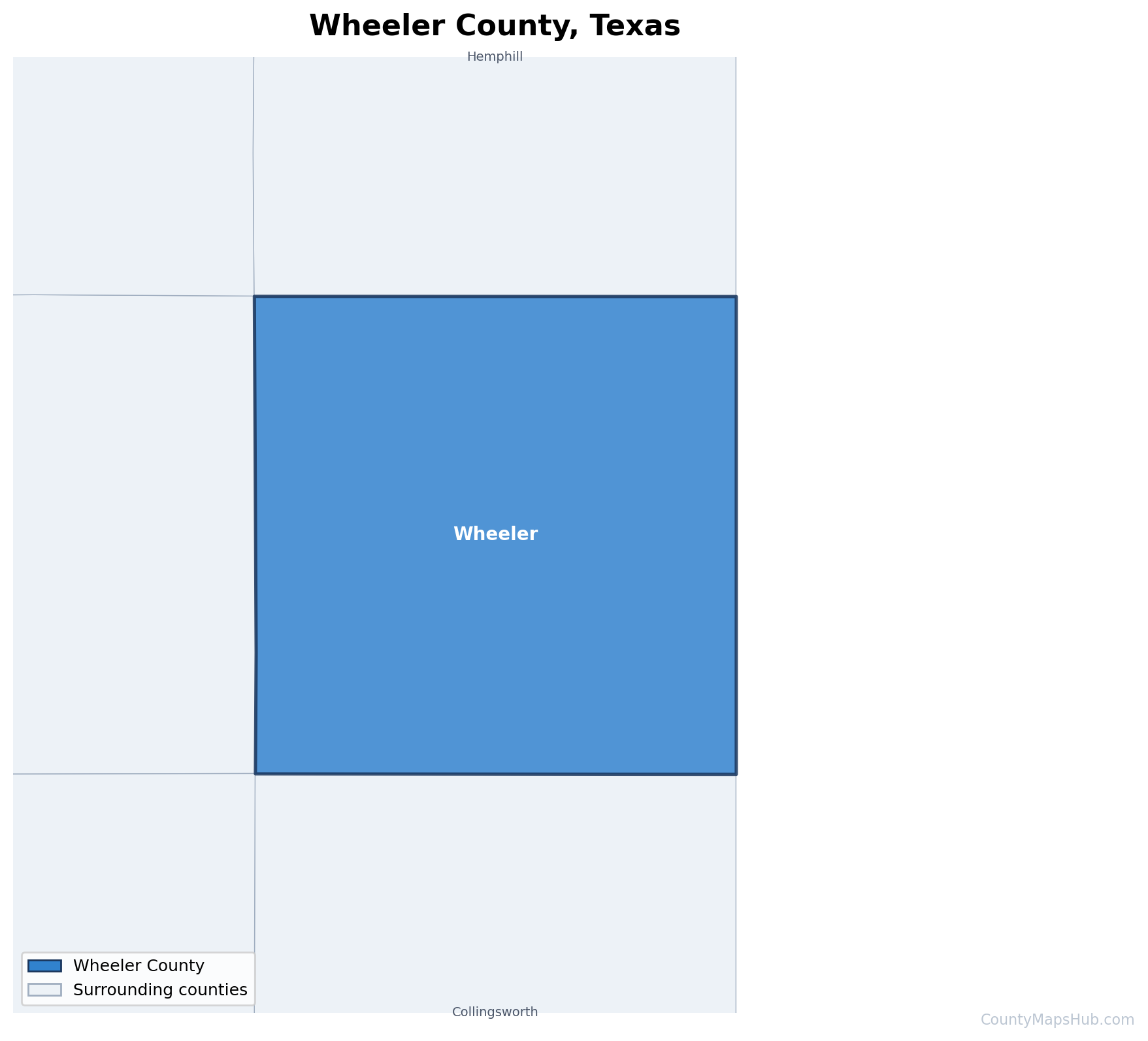
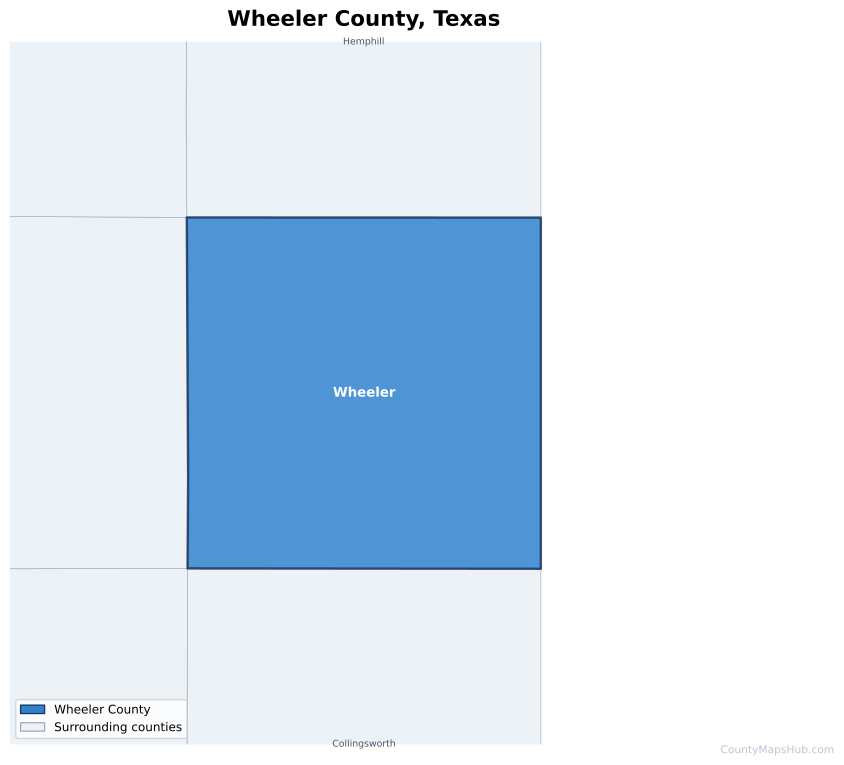
About
Wheeler County was established in 1876 during a period of westward expansion across the Texas Panhandle. The county was named in honor of Royal T. Wheeler, a chief justice of the Texas Supreme Court who served during the Republic of Texas era and contributed significantly to the state’s early judicial system. Wheeler, the county seat, became the administrative center for this region as settlers moved into the area.
Throughout its history, the county has been shaped by the cattle ranching industry and agriculture that characterized much of the Texas Panhandle. The region’s development followed patterns typical of frontier counties, with early pioneers establishing communities and adapting to the challenging environment of the southern Great Plains. Over the decades, the county has maintained its rural character while evolving with changes in agricultural practices and technology.
Population
According to the 2020 census, Wheeler County has a population of 4,980 residents spread across its 915 square miles. This relatively low population density reflects the county’s predominantly rural and agricultural character, typical of Texas Panhandle counties. The small population allows for close-knit communities where residents often know their neighbors and maintain traditional values. The county’s demographic composition has remained relatively stable over recent decades, with families often having multi-generational ties to the land and local ranching heritage.
Climate
Wheeler County experiences a semi-arid climate characteristic of the Texas Panhandle region. This climate zone features hot summers with temperatures frequently exceeding 90 degrees Fahrenheit, and cold winters that can bring occasional snow and ice. Precipitation is limited throughout the year, with most rainfall occurring during spring and early summer months. The area experiences significant temperature variations between seasons and sometimes even within a single day.
The semi-arid conditions have historically influenced land use patterns, favoring cattle ranching and drought-resistant crops. Residents must adapt to strong winds that sweep across the plains, particularly during spring months. The relatively low humidity and abundant sunshine throughout much of the year create conditions that have shaped both the natural landscape and human activities in the region.
Tourist Attractions
Wheeler County offers visitors an authentic experience of Texas Panhandle rural life and history. The landscape features characteristic plains topography with wide-open spaces that provide opportunities for outdoor activities such as hunting, birdwatching, and photography. The area’s natural environment attracts those interested in experiencing the unspoiled character of the southern Great Plains. Local historical sites provide glimpses into frontier life and the county’s ranching heritage.
Visitors interested in Western heritage and small-town Texas culture will find the county’s communities welcoming and authentic. The region’s agricultural traditions remain visible in working ranches and farms that continue to operate across the county. Those seeking a quiet retreat from urban areas can enjoy the peaceful rural atmosphere and starry night skies unobscured by city lights. The county serves as a gateway for exploring the broader Texas Panhandle region.
Culture
Wheeler County embodies traditional Texas Panhandle culture with strong ties to ranching and agricultural heritage. The community values self-reliance, neighborly cooperation, and preservation of Western traditions that have defined the region for generations. Local events throughout the year typically celebrate the area’s cowboy culture and farming heritage, bringing residents together and maintaining connections to the past. Church communities play important roles in social life, and high school sports serve as focal points for community pride.
The cultural landscape reflects a blend of frontier spirit and modern rural American life. Residents maintain traditions such as rodeo culture, livestock shows, and community gatherings that have been passed down through generations. Family ties run deep, with many current residents descended from original settlers who homesteaded the area in the late 19th and early 20th centuries. The slower pace of life and emphasis on personal relationships create a distinct cultural atmosphere different from Texas’s urban centers.