Willacy County
About
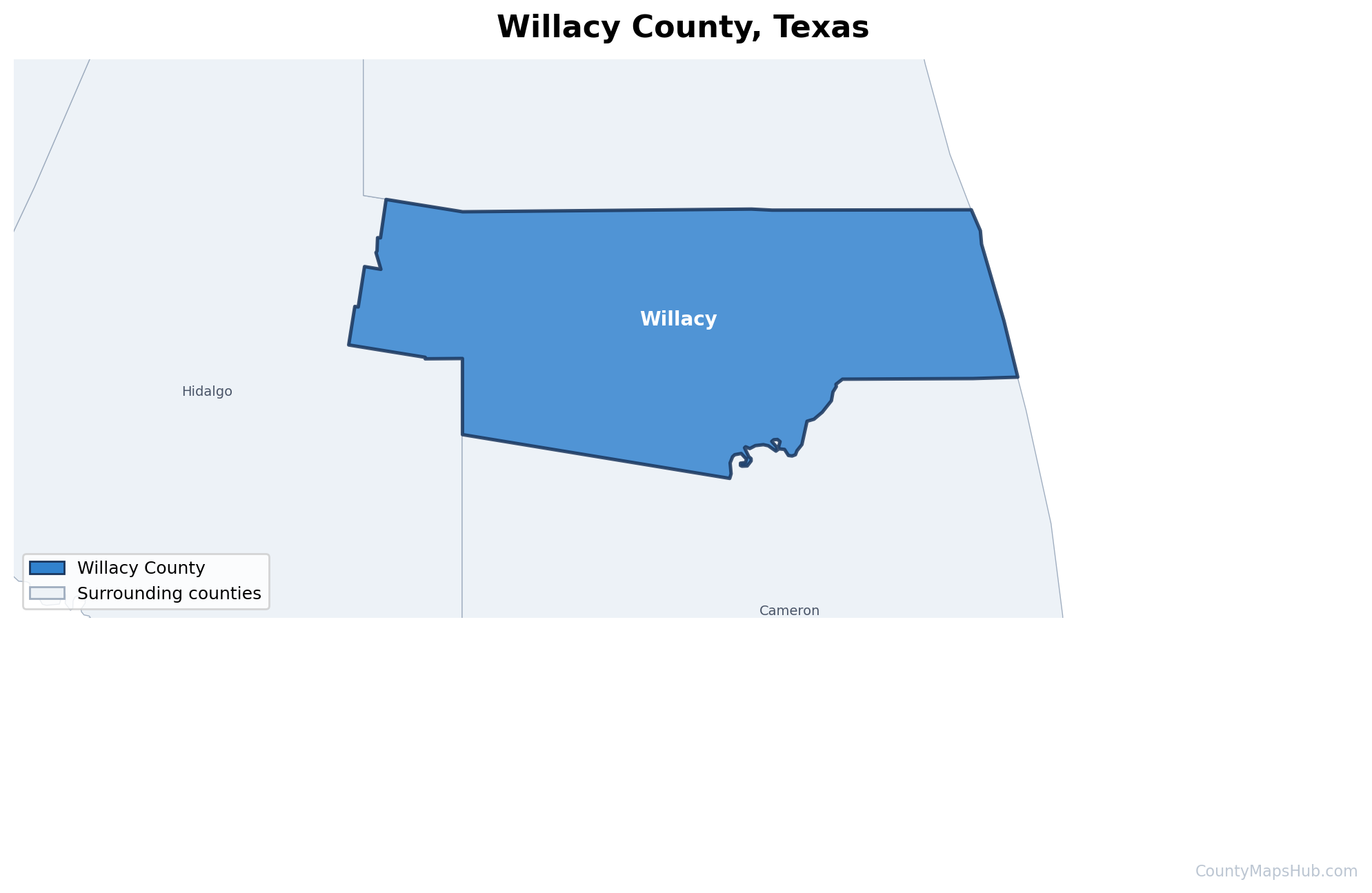
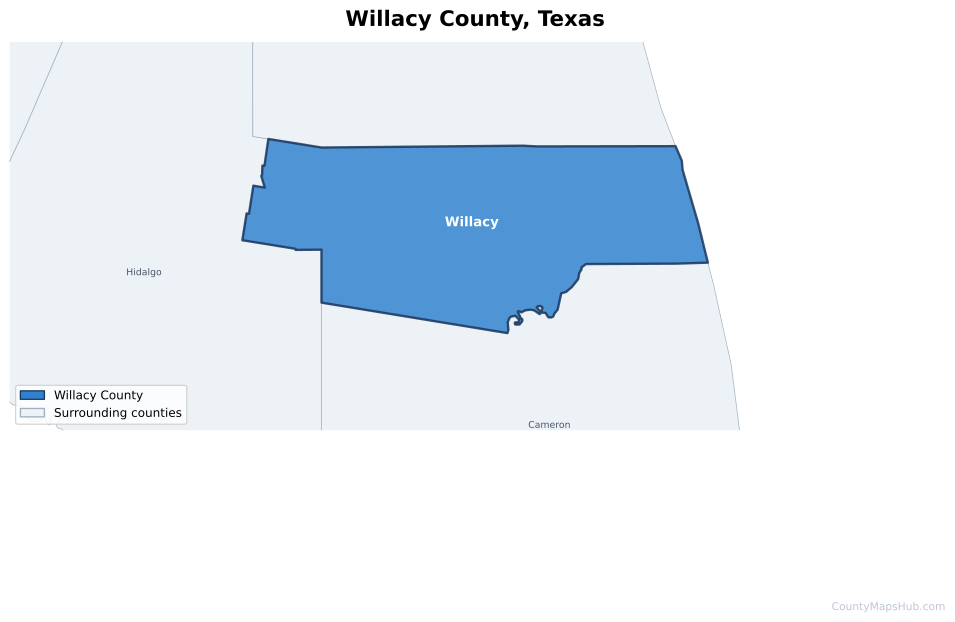
Willacy County was established in 1911, carved from portions of neighboring counties in the Lower Rio Grande Valley of Texas. The county was named after John G. Willacy, a prominent figure in the region’s development during the early twentieth century. Raymondville serves as the county seat, providing governmental and administrative services to residents across the area.
The early development of Willacy County was closely tied to agriculture, particularly cotton farming and ranching, which flourished in the fertile soils of South Texas. The arrival of railroad lines and irrigation infrastructure in the early 1900s transformed the landscape and economy, attracting settlers and investors. Throughout the twentieth century, the county evolved from a frontier ranching region into a more diversified agricultural center, adapting to changing economic conditions while maintaining its rural character and connection to the land.
Population
According to the 2020 Census, Willacy County has a population of 20,164 residents spread across its 597 square miles. This relatively low population density reflects the county’s rural character and agricultural land use patterns typical of South Texas counties. The population is concentrated primarily in and around the county seat of Raymondville, with smaller communities and rural homesteads distributed throughout the area. The demographic composition reflects the broader cultural heritage of the Rio Grande Valley, and the county continues to serve as home to families with deep roots in the region as well as newer residents drawn to the South Texas lifestyle.
Climate
Willacy County experiences a humid subtropical climate characterized by hot summers, mild winters, and year-round warmth typical of the South Texas coastal plain. Summer temperatures regularly reach into the 90s Fahrenheit, while winter months remain pleasant with daytime temperatures often in the 60s and 70s. The region receives moderate rainfall distributed throughout the year, with occasional heavy precipitation events, particularly during the late summer and early fall months.
The Gulf of Mexico’s proximity influences local weather patterns, bringing moisture-laden air and moderating temperature extremes. Residents and visitors should be aware of tropical weather systems that can affect the area during hurricane season from June through November. The mild climate supports a long growing season that has historically made agriculture a cornerstone of the local economy, while also providing comfortable conditions for outdoor activities during much of the year.
Tourist Attractions
Willacy County offers visitors a glimpse into authentic South Texas rural life and the natural landscapes of the Rio Grande Valley region. The area provides opportunities for outdoor enthusiasts to explore the unique ecosystems where coastal prairie meets agricultural lands. Birdwatching is a popular activity throughout the county, as the region lies along important migratory routes and supports diverse avian populations year-round. Nature lovers can appreciate the distinctive flora and fauna adapted to the South Texas environment.
The county’s agricultural heritage provides a window into traditional ranching and farming practices that have shaped the region for generations. Visitors interested in regional history can explore the architecture and layout of small South Texas communities that reflect early twentieth-century settlement patterns. The proximity to the broader Rio Grande Valley means travelers can easily access additional cultural and recreational opportunities in neighboring areas while using Willacy County as a base for experiencing the authentic character of rural South Texas.
Culture
Willacy County embodies the rich cultural heritage of the Rio Grande Valley, where traditions reflect the blending of influences that have shaped South Texas over centuries. The local culture is deeply rooted in agricultural traditions, with generational knowledge passed down through families engaged in farming and ranching. Community gatherings, local celebrations, and traditional practices maintain connections to the region’s historical foundations and create a strong sense of place among residents.
The cultural landscape reflects the broader patterns found throughout the Lower Rio Grande Valley, with cuisine, music, and social customs drawing from diverse traditions. Family and community ties remain central to daily life, and local institutions serve as gathering places that strengthen social bonds. The county’s relatively small population fosters close-knit communities where neighbors know one another and civic engagement remains personal and direct. This cultural continuity, combined with the area’s agricultural identity, creates a distinctive character that sets Willacy County apart as an authentic representation of rural South Texas life.