Winkler County
About
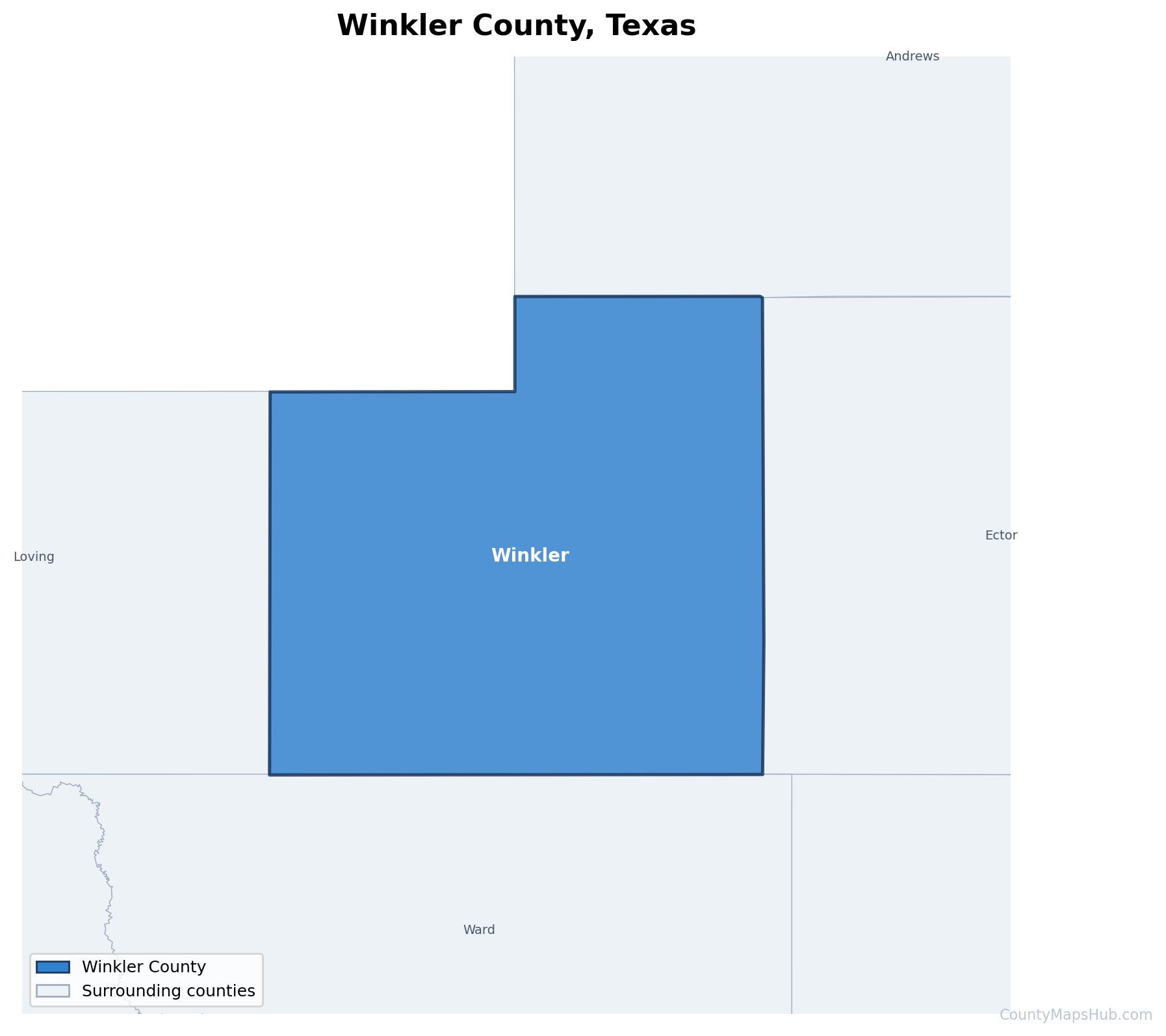
Winkler County was established in 1887 and named after Clinton McKamy Winkler, a figure whose legacy is preserved in the county’s name. The county emerged during a period of westward expansion when Texas was organizing its vast western territories into administrative units. The establishment of the county seat in Kermit provided a governmental and commercial center for the region.
Like many West Texas counties, the area’s history is intertwined with ranching, oil discovery, and the challenges of settlement in an arid environment. The late 19th and early 20th centuries saw the gradual development of communities as settlers adapted to the demanding climate and landscape. The discovery of oil resources in the Permian Basin transformed the economic landscape, bringing industrial growth and population changes that shaped the modern county.
Population
According to the 2020 Census, Winkler County has a population of 7,791 residents spread across its 841 square miles. This population density reflects the rural character typical of West Texas counties, where settlements are often centered around resource extraction industries and agriculture. The county’s population has historically fluctuated with economic conditions, particularly those related to the oil and gas sector. Residents of Winkler County have adapted to life in an arid region where community ties and resilience are valued traits.
Climate
Winkler County experiences an arid climate characteristic of West Texas, with hot summers, mild winters, and limited annual precipitation. The region receives far less rainfall than the state average, making water conservation and management critical concerns for residents and industries alike. Summer temperatures frequently exceed 90 degrees Fahrenheit, while winters are generally mild with occasional cold fronts bringing brief periods of cooler weather.
The arid conditions have shaped the natural landscape and vegetation, favoring drought-resistant plants and creating wide-open vistas typical of the high desert environment. Residents and visitors should prepare for intense sun exposure, low humidity, and the occasional dust storm that can arise from the dry soil and strong winds common to the region.
Tourist Attractions
Visitors to Winkler County can experience the authentic character of West Texas, where the landscape itself offers a sense of vastness and solitude. The county’s arid terrain provides opportunities for those interested in geology, desert ecology, and the unique adaptations of flora and fauna to harsh climates. Outdoor enthusiasts may find interest in exploring the open spaces and observing the dramatic skies that characterize this part of Texas.
The county seat of Kermit serves as a practical base for travelers passing through the region or those with business in the oil industry. While the county is more focused on industry and agriculture than tourism infrastructure, it offers an unvarnished look at working rural Texas. Visitors interested in the Permian Basin’s oil heritage or the history of westward expansion may find the county’s story representative of broader regional patterns.
Culture
Winkler County’s culture reflects the values and traditions of West Texas, where self-reliance, hospitality, and a strong work ethic are deeply ingrained. The county’s identity has been shaped by the ranching heritage of the late 19th century and the oil boom that followed, creating a blend of frontier independence and industrial pragmatism. Community events and gatherings tend to center around local institutions such as schools, churches, and civic organizations.
The population includes families with multi-generational ties to the area as well as workers drawn by employment opportunities in the energy sector. This creates a cultural mix of long-standing traditions and transient influences. The challenges of living in an arid, remote region have fostered a spirit of cooperation among residents, who understand the importance of supporting one another in an environment where resources can be scarce and the nearest larger cities are considerable distances away.