Wise County
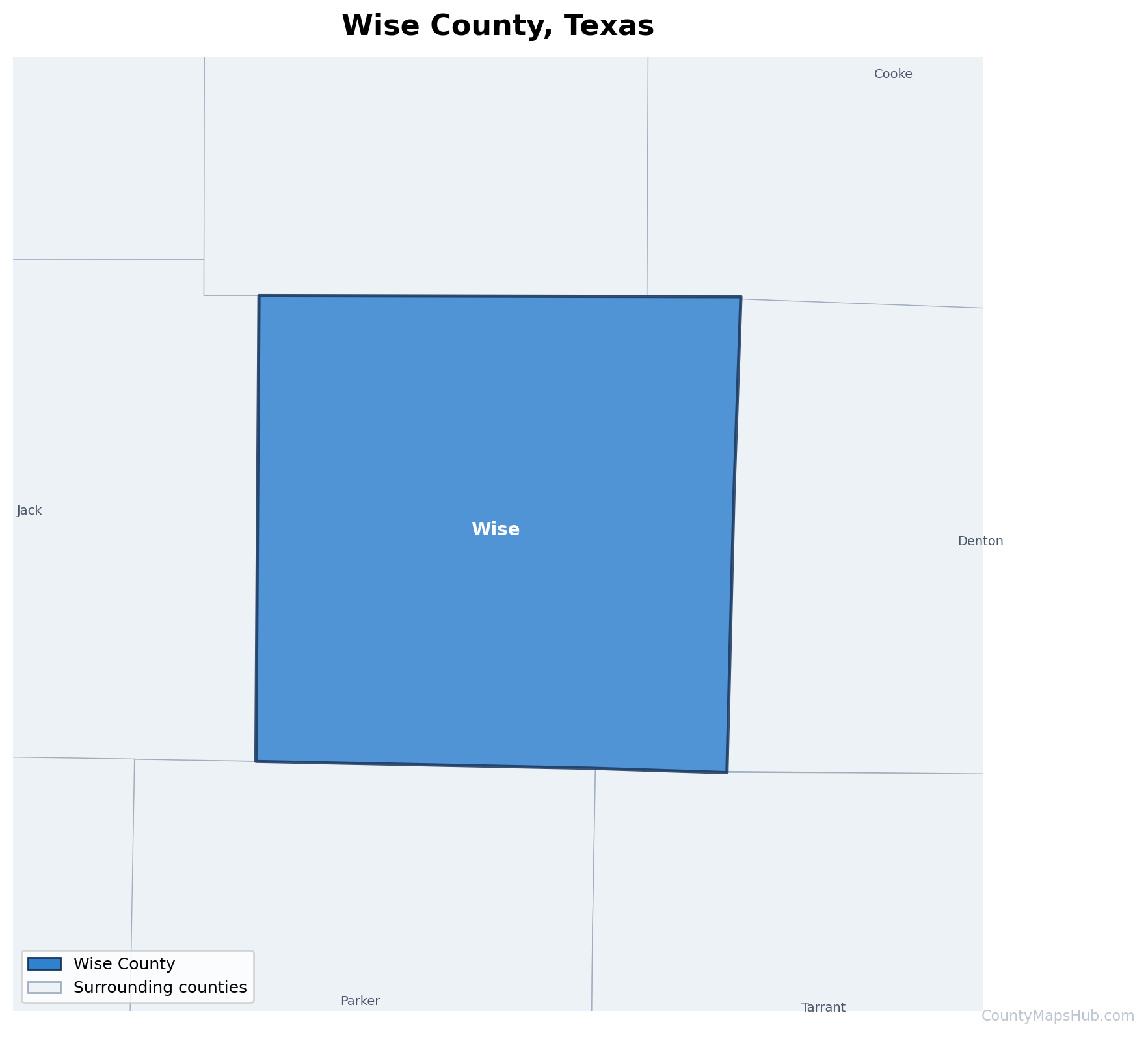
About
Wise County was established in 1856 during a period of rapid westward expansion in North Texas. The county was named after Henry A. Wise, who served as Governor of Virginia from 1856 to 1860. During its early years, the region attracted settlers seeking agricultural opportunities and played a role in the development of the Texas frontier.
The establishment of Decatur as the county seat provided a governmental and commercial center that helped anchor settlement patterns throughout the nineteenth century. Like many North Texas counties, Wise County’s history reflects the broader narrative of ranching, farming, and gradual urbanization that characterized the region. The county’s development was influenced by its position in the Cross Timbers area, where prairie met woodland, creating diverse landscapes that supported various economic activities over the generations.
Population
According to 2020 census data, Wise County has a population of 68,632 residents spread across its 905 square miles. This population density reflects a mix of small-town communities and rural areas characteristic of North Texas counties. The county has experienced steady growth in recent decades as part of the broader expansion of the Dallas-Fort Worth metropolitan region, attracting residents seeking a balance between rural character and proximity to urban amenities. The population distribution includes the county seat of Decatur along with numerous smaller communities and unincorporated areas that maintain the county’s agricultural heritage.
Climate
Wise County experiences a humid subtropical climate typical of North Central Texas, characterized by hot summers and mild to cool winters. Summer temperatures regularly reach the 90s Fahrenheit, while winter months generally see temperatures ranging from the 30s to 50s, with occasional freezing conditions. The region receives moderate rainfall distributed throughout the year, with spring typically being the wettest season.
The climate supports a diverse ecosystem where prairie grasslands meet wooded areas, creating the characteristic Cross Timbers landscape. Residents and visitors should be prepared for the possibility of severe weather during spring months, including thunderstorms and occasional tornadoes, which are common across this part of Texas. The generally mild winters and long growing season have historically supported both livestock ranching and crop cultivation throughout the county.
Tourist Attractions
Wise County offers visitors a taste of authentic North Texas heritage and rural landscapes. The county seat features historic downtown areas where visitors can explore local shops, restaurants, and architectural remnants from earlier eras. The surrounding countryside provides opportunities for outdoor recreation, including fishing, hiking, and wildlife observation in the region’s characteristic blend of prairie and woodland habitats.
Throughout the year, communities in the county host various seasonal events that celebrate local culture and heritage. Visitors interested in Texas history can explore historical markers and sites that commemorate the county’s frontier past. The county’s location makes it accessible for day trips from the Dallas-Fort Worth metropolitan area while offering a distinctly rural atmosphere. Local parks and recreational areas provide spaces for family activities, picnicking, and enjoying the natural beauty of the North Texas landscape.
Culture
The cultural character of Wise County reflects its deep roots in Texas ranching and agricultural traditions. The communities throughout the county maintain a strong connection to their frontier heritage while adapting to the gradual changes brought by proximity to major urban centers. Local residents take pride in traditions of hospitality, self-reliance, and community cooperation that have defined rural Texas life for generations. The county’s cultural identity emphasizes family values, faith communities, and civic engagement.
Throughout the year, community gatherings, livestock shows, and local celebrations bring residents together and preserve traditional customs. The county’s culture represents a blend of Old West heritage and contemporary rural Texas life, where rodeo culture, country music, and agricultural fairs remain important social institutions. Educational institutions in the area work to pass down both academic knowledge and practical skills, maintaining connections to the land and to the county’s historical identity. This cultural foundation continues to shape the county’s character even as demographic changes gradually influence the region.