Wood County
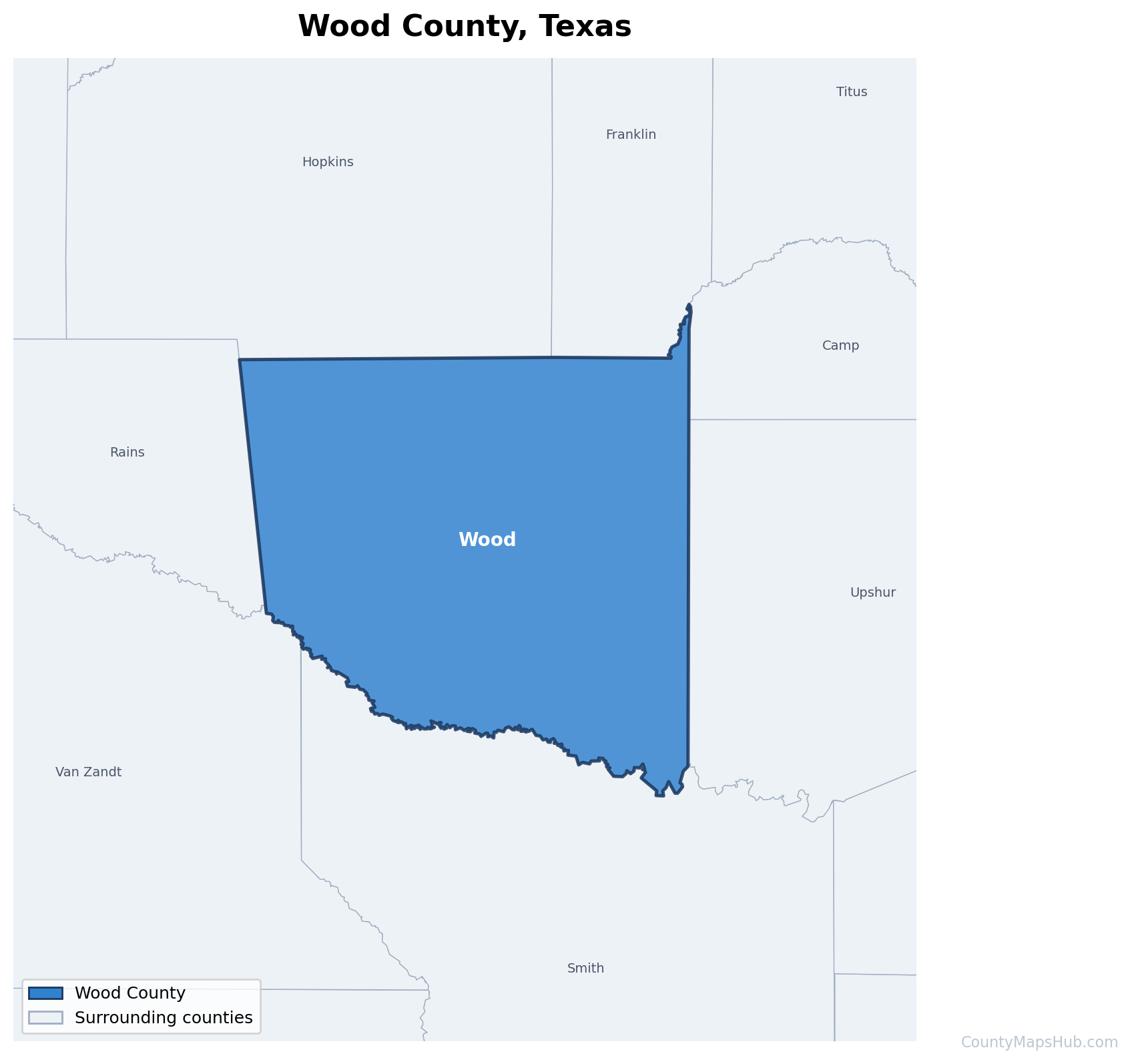
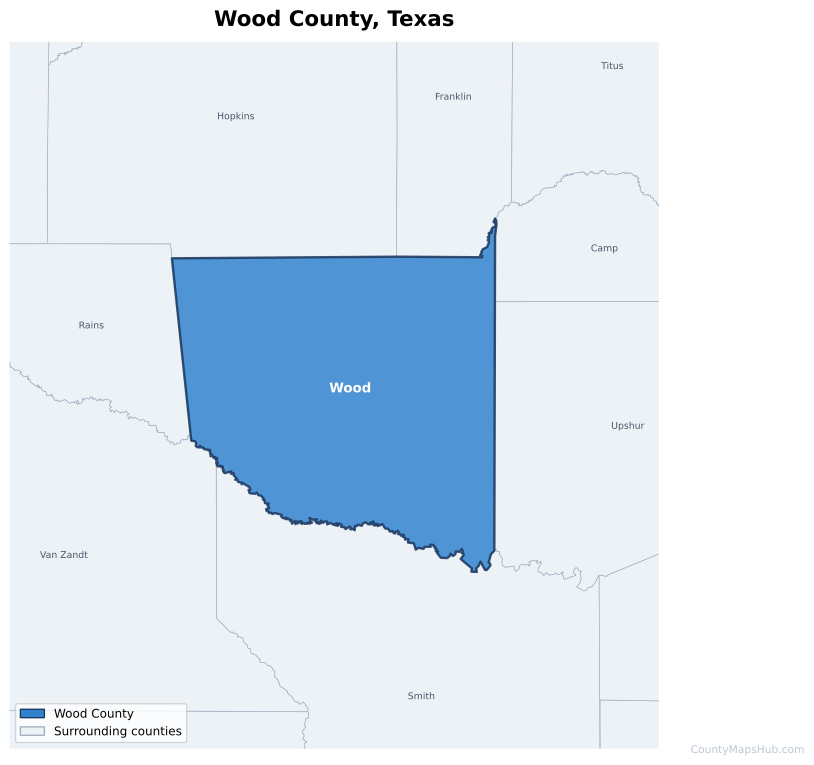
About
Wood County was established in 1850, marking its place as part of the organized territory of Texas during the mid-19th century expansion period. The county was named after George T. Wood, who served as the second governor of Texas from 1847 to 1849. During the antebellum period, the region saw agricultural development as settlers moved into Northeast Texas, establishing communities and farms across the rolling landscape.
The county seat was designated in Quitman, which became the administrative and commercial center for the surrounding rural areas. Throughout the late 19th and early 20th centuries, Wood County’s economy relied primarily on agriculture, with cotton, timber, and livestock production forming the backbone of local livelihoods. The arrival of rail connections helped link the county to broader markets, facilitating trade and modest population growth.
In more recent decades, Wood County has maintained its agricultural heritage while also adapting to modern economic changes. The county has preserved its small-town character and rural identity while benefiting from its proximity to larger urban centers in Northeast Texas. Today, the county reflects a blend of its historical roots and contemporary rural Texas life.
Population
As of the 2020 census, Wood County has a population of 45,539 residents spread across its 651 square miles. This population density reflects the county’s predominantly rural character, with communities dispersed throughout the landscape. The county seat of Quitman serves as the primary population center, providing essential services, retail, and administrative functions for residents across the county. The population includes a mix of long-established families with generational ties to the area and newer residents attracted by the county’s rural lifestyle and relative affordability compared to larger metropolitan areas.
Climate
Wood County experiences a humid subtropical climate, characterized by hot summers and mild to cool winters typical of Northeast Texas. Summer temperatures regularly climb into the 90s Fahrenheit, with high humidity levels that can make conditions feel warmer. The region receives moderate to abundant rainfall distributed fairly evenly throughout the year, supporting the agricultural activities and lush vegetation found across the county.
Winters are generally mild with occasional cold fronts that can bring brief periods of freezing temperatures and rare winter precipitation. Spring and fall serve as transitional seasons with pleasant temperatures and occasional severe weather, including thunderstorms. The humid subtropical climate creates favorable conditions for a variety of crops and supports the county’s forested areas, making it well-suited for the traditional agricultural and timber-related activities that have long defined the local economy.
Tourist Attractions
Wood County offers visitors a glimpse into rural Texas life and the natural beauty of the Northeast Texas region. The area features opportunities for outdoor recreation, including fishing, hunting, and hiking in the county’s woodlands and around its lakes and waterways. Nature enthusiasts appreciate the diverse ecosystems that thrive in the humid subtropical environment, with opportunities for wildlife observation and photography throughout the changing seasons.
The county seat of Quitman serves as a focal point for visitors interested in exploring small-town Texas culture and architecture. Historic downtown areas in the county feature traditional storefronts and local businesses that reflect the region’s heritage. Seasonal community events bring together residents and visitors to celebrate local traditions, agricultural heritage, and regional culture. Antique shops, local eateries serving traditional Texas cuisine, and community festivals provide authentic experiences for those seeking to understand life in rural Northeast Texas.
Culture
Wood County embodies the cultural traditions of rural Northeast Texas, where agricultural heritage and small-town values remain central to community identity. The social fabric is woven around church communities, school activities, and civic organizations that bring residents together for shared purposes. Local gatherings often center on agricultural themes, reflecting the importance of farming and ranching to the area’s historical and contemporary identity. Residents take pride in their county’s history and maintain traditions passed down through generations.
The cultural landscape reflects a blend of Southern hospitality and Texas independence, with strong emphasis on neighborliness and self-reliance. Community events throughout the year celebrate local heritage and provide opportunities for social connection in a predominantly rural setting. High school sports, particularly football, serve as important community gathering points that unite towns and foster local pride. The pace of life in Wood County tends to be slower and more deliberate than in urban areas, appealing to those who value close-knit communities and connection to the land.