Zavala County
About
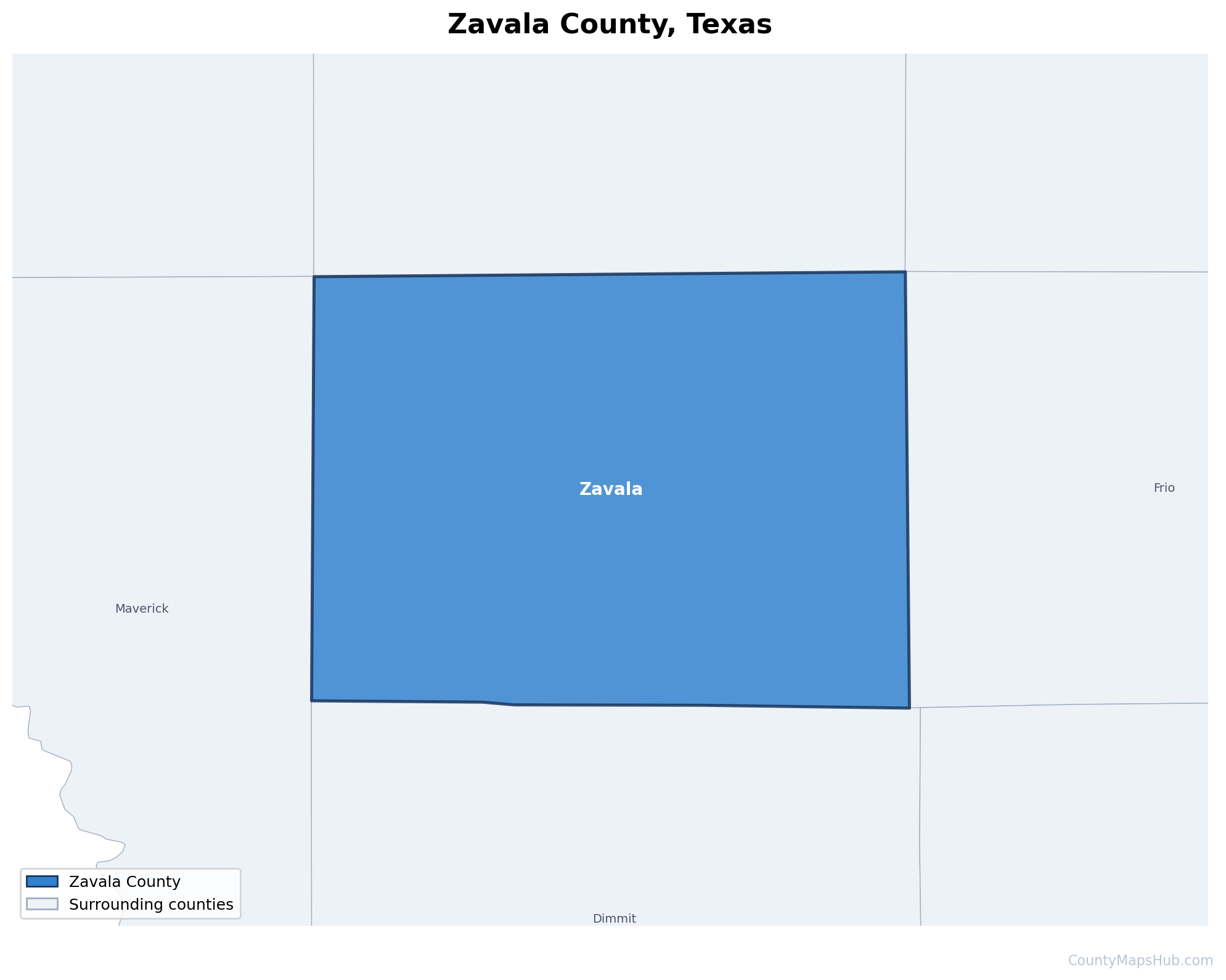
Zavala County was established in 1858 and named after Lorenzo de Zavala, a prominent statesman who played a significant role in Texas history as a signer of the Texas Declaration of Independence and the first vice president of the Republic of Texas. The county’s formation came during a period of expansion and organization in South Texas, as the region transitioned from frontier territory to organized governance.
Crystal City serves as the county seat, anchoring the administrative and civic functions of the county. Throughout its history, the county has been shaped by its position in South Texas, with development influenced by agriculture, ranching, and the broader economic patterns of the region. The county’s establishment in the mid-19th century placed it within the context of Texas’s growth following independence and statehood, contributing to the settlement and development of South Texas.
Population
According to the 2020 Census, Zavala County has a population of 9,670 residents spread across its 1,297 square miles. This population density reflects the rural character typical of many South Texas counties, where communities are often separated by agricultural lands and ranch properties. The county seat of Crystal City serves as the primary population center, providing essential services, employment, and community gathering spaces for residents throughout the county. The relatively modest population size creates a close-knit community atmosphere where residents often know their neighbors and participate in shared civic life.
Climate
Zavala County experiences a semi-arid climate characteristic of the South Texas region, with hot summers and mild winters. The semi-arid classification indicates limited annual rainfall, requiring residents and agricultural operations to adapt water management strategies accordingly. Summer temperatures regularly climb into the upper 90s and above, while winters remain generally temperate with only occasional freezing temperatures.
The climate influences both lifestyle and economic activities in the county. The warm, dry conditions create a growing season suitable for drought-resistant crops and support ranching operations that have historically dominated the local economy. Residents should prepare for intense summer heat and occasional drought conditions, while also enjoying the benefits of mild winter weather that rarely brings severe cold or snow.
Tourist Attractions
Zavala County offers visitors an authentic South Texas experience with its rural landscapes and small-town atmosphere. The region’s semi-arid environment creates distinctive scenery characterized by native brush, mesquite, and open spaces that showcase the natural beauty of South Texas. Outdoor enthusiasts may find opportunities for activities such as hunting, birdwatching, and exploring the unique ecosystems adapted to the area’s climate conditions.
Visitors to the county seat of Crystal City can experience local hospitality and small-town charm while exploring the civic and commercial heart of the county. The surrounding countryside provides glimpses into South Texas ranch life and agricultural traditions. Those interested in Texas history may appreciate the county’s 19th-century origins and its connection to Lorenzo de Zavala, an important figure in Texas independence. The region serves as a gateway for understanding the cultural and historical development of South Texas.
Culture
Zavala County’s culture reflects the broader heritage of South Texas, where Anglo-American and Hispanic traditions have blended to create a distinctive regional identity. The county’s proximity to the Mexican border and its history of settlement have contributed to a bicultural atmosphere evident in local customs, cuisine, and community celebrations. Spanish language and bilingual communication remain common throughout the region, reflecting the area’s demographic composition and cultural ties.
Community life in the county centers around local institutions, schools, and civic organizations that bring residents together for various events throughout the year. The rural character of the county fosters values of self-reliance, neighborliness, and connection to the land. Agricultural and ranching traditions continue to influence the local way of life, even as the county adapts to modern economic realities. Family ties and multigenerational connections to the land remain important aspects of social structure, creating continuity between past and present in this South Texas county.