Bailey County
About
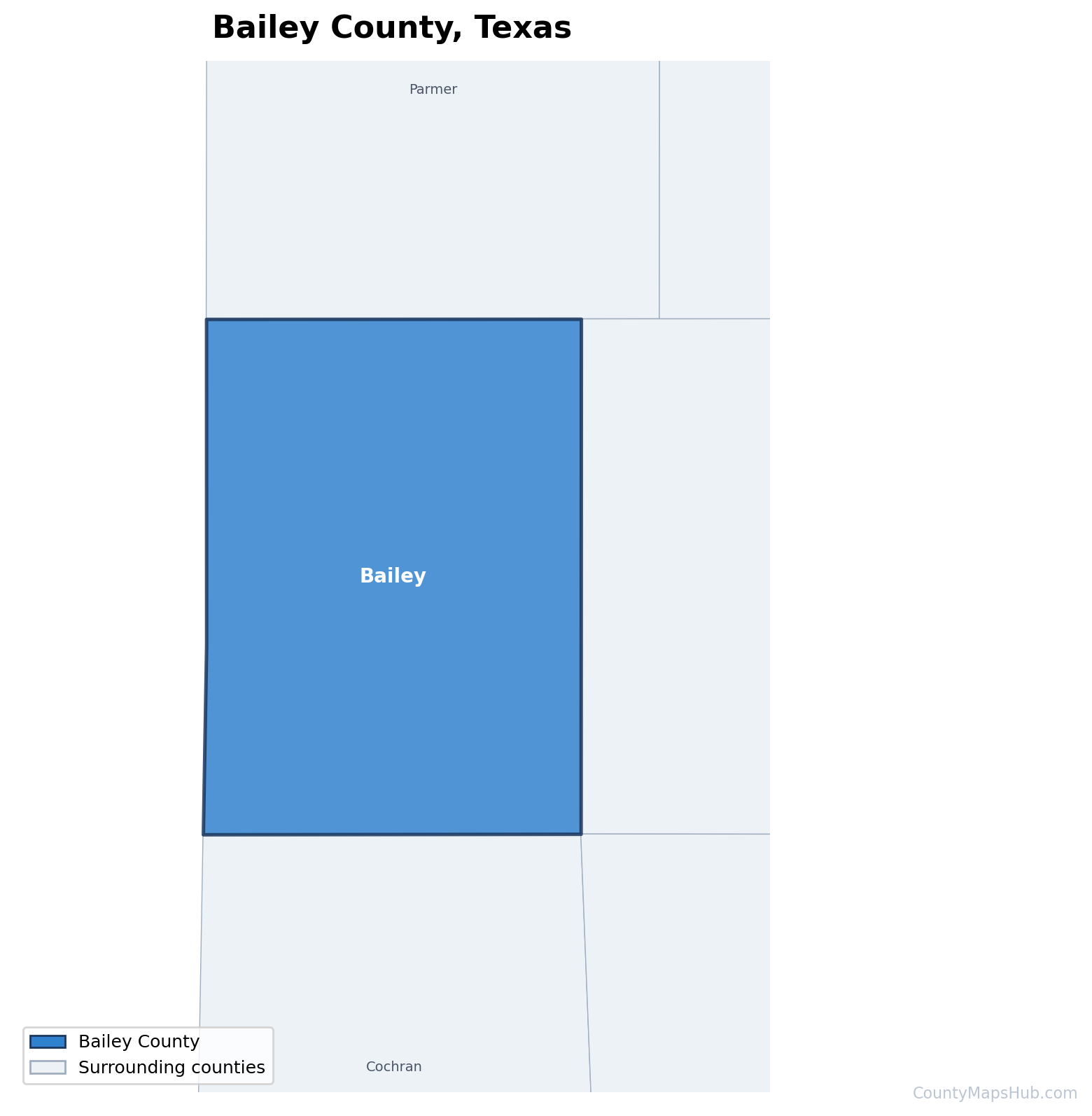
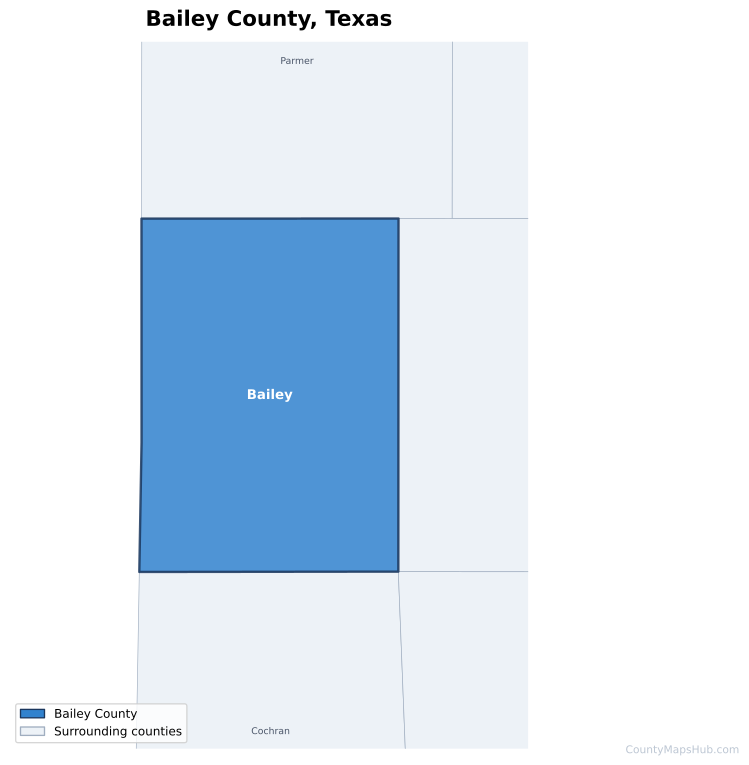
Bailey County was established in 1876 and named after Peter James Bailey, a defender of the Alamo who perished during the famous 1836 battle. The county is located in the Texas High Plains, a region that saw gradual settlement throughout the late 19th and early 20th centuries as ranching and eventually agriculture became the economic foundation of the area. The establishment of the county seat in Muleshoe provided a central hub for government services and commerce.
Like many counties in the Texas Panhandle and High Plains, Bailey County’s development was shaped by the challenges and opportunities of the semi-arid environment. Early settlers adapted to limited rainfall by developing irrigation techniques that tapped into the Ogallala Aquifer, transforming the landscape into productive farmland. The arrival of the railroad further connected the county to regional markets, facilitating the growth of agricultural industries that remain central to the local economy today.
Population
According to the 2020 census, Bailey County has a population of 6,904 residents spread across its 827 square miles. This relatively low population density reflects the county’s character as a rural agricultural region where wide open spaces and farming operations dominate the landscape. The population has remained modest over the decades, consistent with demographic trends in many rural Texas High Plains counties where agriculture remains the primary economic driver and small communities maintain close-knit social networks.
Climate
Bailey County experiences a semi-arid climate typical of the Texas High Plains, characterized by low annual precipitation, wide temperature variations, and abundant sunshine throughout the year. Summers are warm with temperatures frequently rising into the 90s Fahrenheit, while winters can be cold with occasional freezing conditions and light snowfall. The region receives limited rainfall, generally ranging from 15 to 20 inches annually, with most precipitation occurring during the late spring and summer months.
The semi-arid conditions have historically posed challenges for agriculture, leading to the development of sophisticated irrigation systems that draw from underground aquifers. Strong winds are common, particularly in spring, and the area experiences low humidity year-round. The climate supports the cultivation of drought-resistant crops and has shaped the lifestyle and agricultural practices of county residents for generations.
Tourist Attractions
Bailey County offers visitors an authentic experience of rural Texas High Plains culture and landscape. The county’s wide open spaces and expansive skies provide opportunities for outdoor activities such as bird watching, photography, and experiencing the unique ecology of the semi-arid plains. Agricultural heritage is on display throughout the region, where visitors can observe working farms and ranches that have sustained the local economy for generations.
The county seat serves as the primary destination for those exploring the area, offering small-town charm and local hospitality. Visitors interested in history can explore the legacy of the region’s settlement era and learn about the challenges faced by early pioneers who established communities in this demanding environment. The county’s proximity to other High Plains communities allows tourists to experience a broader understanding of Texas Panhandle culture and history.
Culture
Bailey County’s cultural identity is deeply rooted in its agricultural heritage and the values of rural Texas communities. The population reflects the multicultural history of the Texas High Plains, where Anglo, Hispanic, and other cultural traditions have blended over generations. Community life centers around local institutions, seasonal events tied to the agricultural calendar, and the strong sense of mutual support that characterizes small rural towns across the region.
Family traditions, hard work, and resilience in the face of environmental challenges are defining characteristics of the county’s cultural fabric. Local cuisine reflects the agricultural abundance of the region and the diverse cultural influences that have shaped the area. Religious institutions play an important role in community life, providing social connections and cultural continuity. The county maintains the independent spirit and neighborly values typical of rural Texas, where residents take pride in their heritage and their ability to thrive in the distinctive High Plains environment.