Bandera County
About
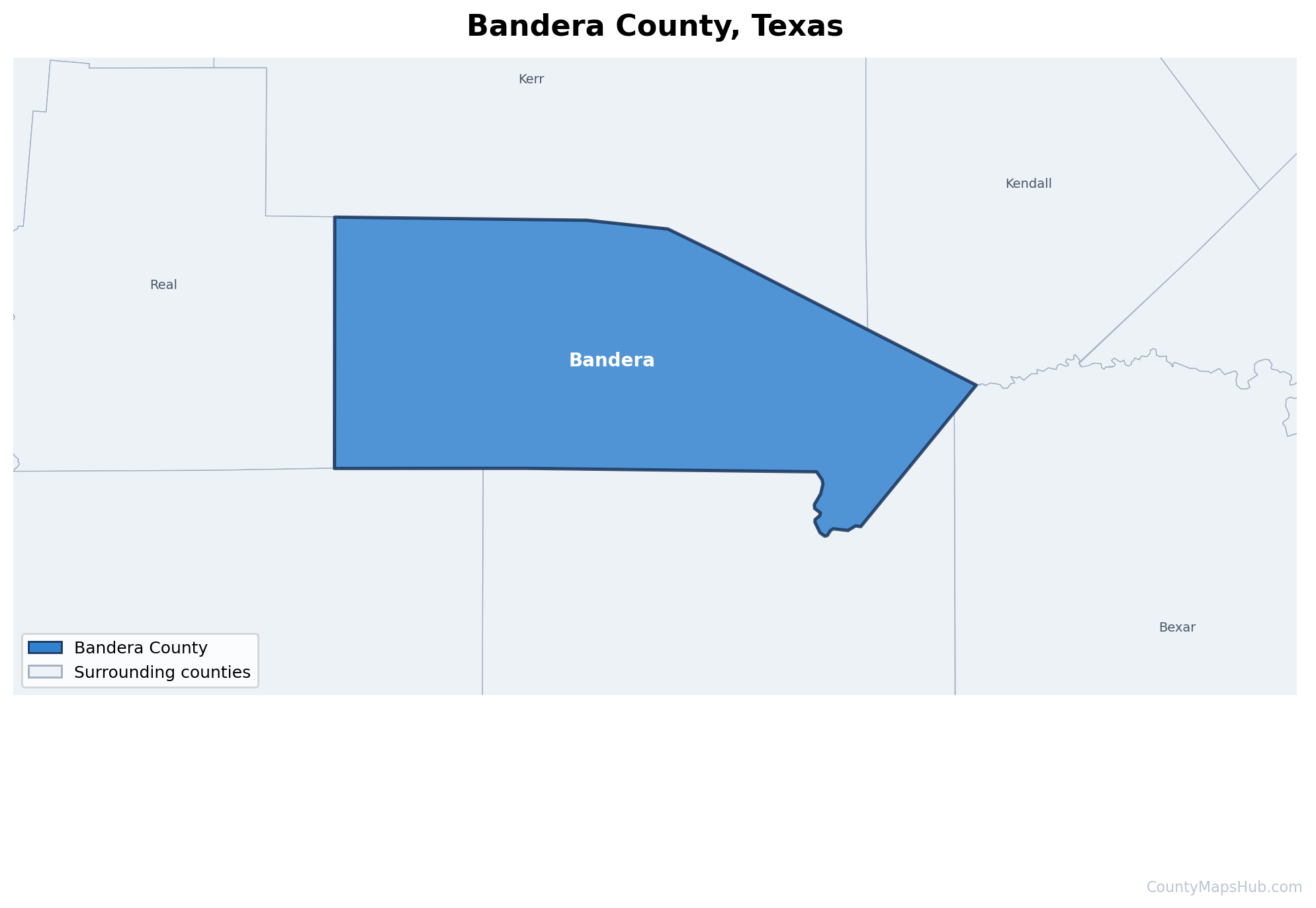
Bandera County was established in 1856 and named after Bandera Pass, a significant geographical landmark in the region. The area’s early development was shaped by its location in the Texas Hill Country, where settlers were drawn to the terrain’s natural resources and strategic position. During the mid-19th century, the county became part of the expanding frontier, with ranching and agriculture forming the backbone of its economy.
The county seat, Bandera, emerged as the governmental and commercial center of the region. Throughout the late 1800s and early 1900s, the county’s identity was forged through the challenges and opportunities of frontier life. The traditions established during this formative period continue to influence the community’s character today, as the county maintains connections to its ranching heritage while adapting to modern development patterns in the Texas Hill Country.
Population
According to the 2020 Census, Bandera County has a population of 20,851 residents spread across its 792 square miles. This population density reflects the county’s character as a rural Hill Country community, balancing small-town atmosphere with access to the amenities of larger Texas metropolitan areas. The county seat of Bandera serves as the primary population center, providing essential services and maintaining the county’s administrative functions. Population growth in recent decades has been influenced by the area’s appeal to those seeking a quieter lifestyle while remaining within reach of urban employment centers, as well as retirees attracted to the region’s natural beauty and outdoor recreation opportunities.
Climate
Bandera County experiences a humid subtropical climate characterized by hot summers and mild winters typical of the Texas Hill Country region. Summer temperatures regularly climb into the 90s Fahrenheit, with occasional triple-digit heat during peak months, while winter temperatures generally remain moderate, rarely dipping below freezing for extended periods. The area receives variable precipitation throughout the year, with spring and fall typically bringing the most rainfall, supporting the diverse vegetation of the Hill Country ecosystem.
The climate supports a mix of grasslands, oak woodlands, and riparian areas that define the local landscape. Residents and visitors should be prepared for rapid weather changes common to Central Texas, including the possibility of severe thunderstorms during spring months. The generally pleasant weather conditions make outdoor activities feasible year-round, contributing to the county’s appeal for those who enjoy spending time in natural settings.
Tourist Attractions
Bandera County offers visitors a authentic Texas Hill Country experience with opportunities for outdoor recreation and rural exploration. The landscape features rolling hills, scenic vistas, and waterways that attract nature enthusiasts and those seeking respite from urban environments. Outdoor activities include hiking, camping, and wildlife observation in various natural settings throughout the county’s 792 square miles of diverse terrain.
The county’s ranching heritage provides a foundation for agritourism and Western-themed experiences that showcase traditional Texas culture. Visitors can explore small-town atmospheres, local shops, and establishments that reflect the region’s history and character. The area serves as a gateway for exploring the broader Hill Country region, with its combination of natural beauty and authentic rural Texas atmosphere appealing to those interested in experiencing a slower-paced lifestyle and the traditions that have shaped this part of the state.
Culture
Bandera County’s cultural identity is deeply rooted in its ranching heritage and frontier history dating back to its establishment in 1856. The traditions of cattle ranching, horsemanship, and Western lifestyles continue to influence community values and local customs. This heritage manifests in various aspects of daily life, from architectural styles to community gatherings that celebrate the county’s connection to its past. The small-town atmosphere centered around the county seat of Bandera fosters a close-knit community where traditional values and neighborly connections remain important.
The county reflects broader Texas Hill Country culture, characterized by appreciation for outdoor living, self-reliance, and preservation of historical traditions. Local culture emphasizes connection to the land and respect for the natural environment that has sustained the community for generations. While the county maintains its rural character, residents also participate in contemporary Texas culture, balancing preservation of heritage with adaptation to changing times. Community events, civic organizations, and local institutions serve to maintain social cohesion and pass cultural traditions to new generations.