Bee County
About
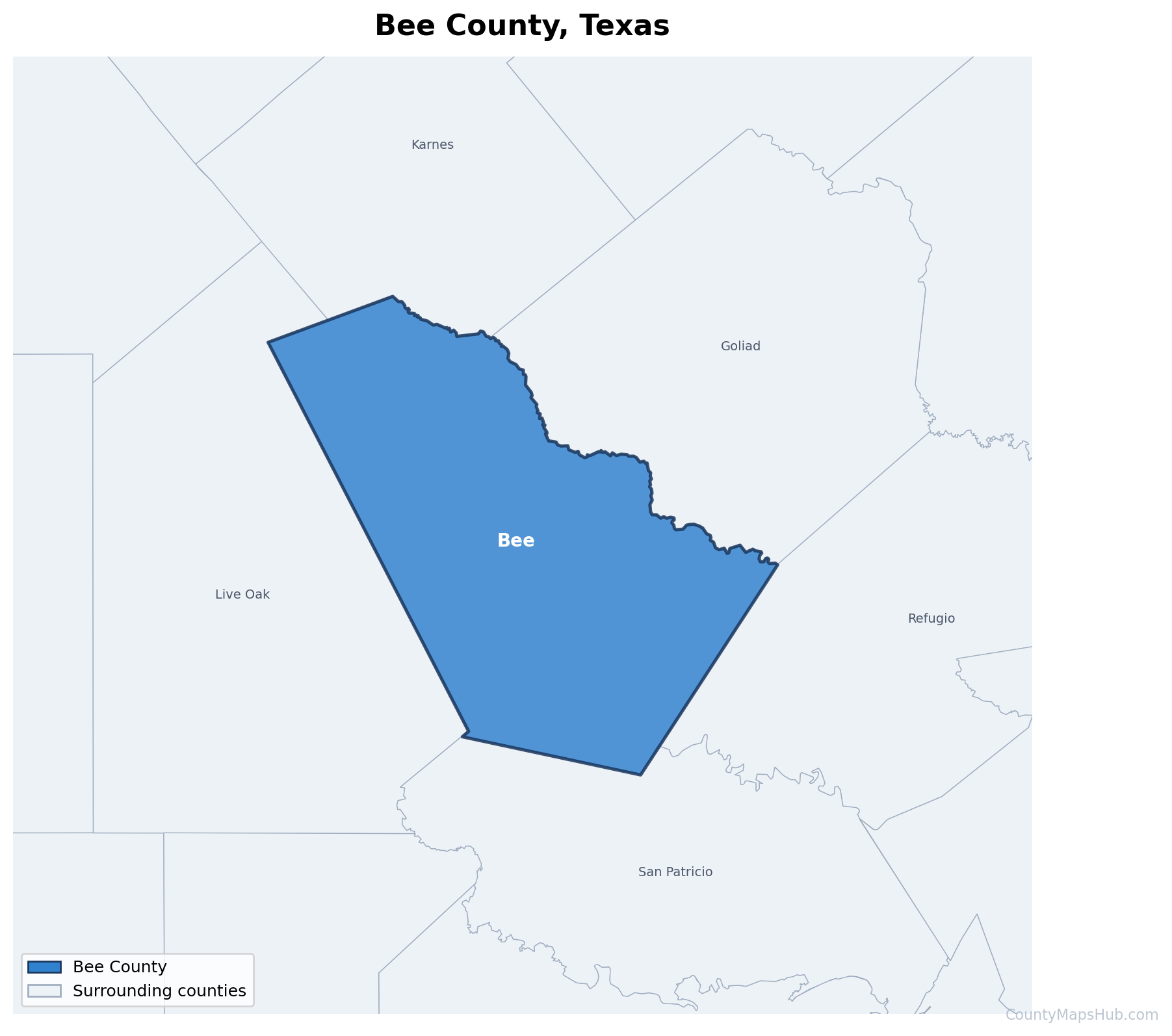
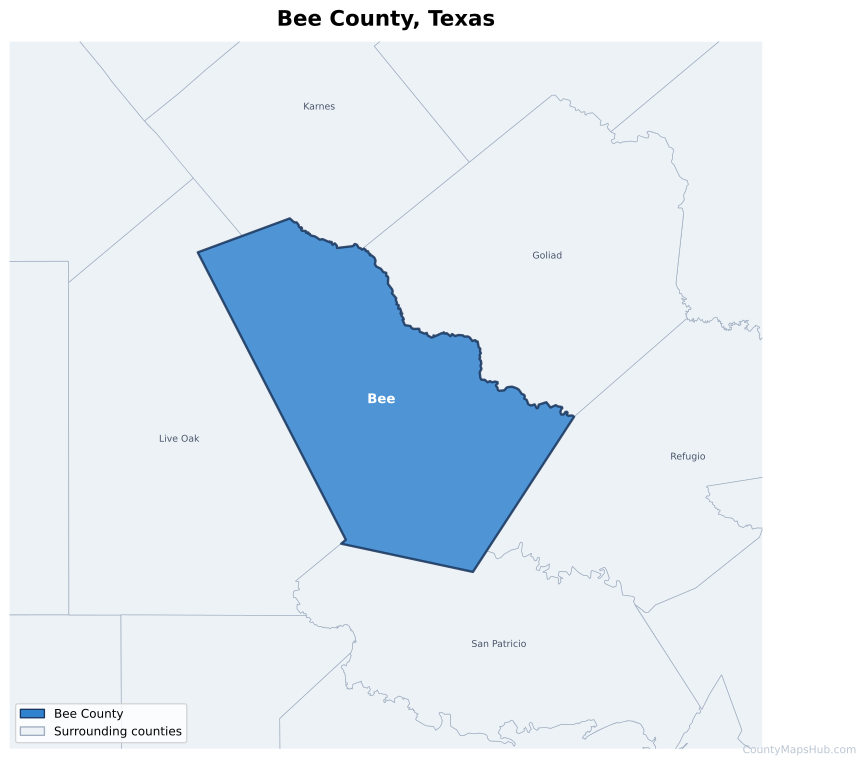
Bee County was established in 1857 in the heart of South Texas, carved from territory as the region developed during the mid-19th century. The county was named after Barnard E. Bee Sr., a prominent figure in Texas history who served as Secretary of State and Secretary of War for the Republic of Texas. His contributions to the early governance and development of Texas made him a fitting namesake for this South Texas county.
The county seat, Beeville, became the administrative and commercial center of the region, serving the needs of ranchers, farmers, and settlers who moved into the area during the latter half of the 1800s. Throughout its history, the county has been shaped by the agricultural and ranching traditions common to South Texas, with the land supporting cattle operations and crop cultivation that remain important to the local economy today.
Population
According to the 2020 Census, Bee County has a population of 31,047 residents spread across its 880 square miles of South Texas territory. This population density reflects the county’s blend of small-town living centered around Beeville and the rural communities that dot the surrounding countryside. The county serves as home to families with deep roots in the region as well as newcomers drawn to the area’s affordable living and connection to Texas heritage. The population represents the diverse cultural makeup typical of South Texas counties, contributing to a community that balances tradition with gradual growth.
Climate
Bee County experiences a humid subtropical climate characteristic of the Texas Coastal Bend region. Summers are typically long, hot, and humid, with temperatures regularly climbing into the 90s Fahrenheit, while winters remain mild with occasional cool fronts bringing brief periods of cooler weather. The area receives moderate rainfall distributed throughout the year, supporting the agricultural activities that have long been central to the county’s economy.
The humid subtropical conditions create a landscape of grasslands and scattered trees, with vegetation adapted to both the heat of summer and the periodic droughts that can affect South Texas. Residents and visitors should be prepared for warm weather most of the year, with the most comfortable outdoor conditions typically occurring in spring and fall when temperatures moderate and humidity levels drop slightly.
Tourist Attractions
Bee County offers visitors an authentic South Texas experience with opportunities to explore the region’s natural and cultural heritage. The area features outdoor recreation opportunities including hunting, fishing, and birdwatching in the diverse ecosystems of the Coastal Bend region. Local parks and natural areas provide spaces for hiking and wildlife observation, with the county’s position between the coast and inland Texas creating habitat for various species.
Visitors interested in Texas history can explore local museums and historical markers that tell the story of the county’s development from its 1857 establishment through the present day. The county seat offers small-town charm with local shops, restaurants serving traditional Texas and Tex-Mex cuisine, and community events that reflect the region’s heritage. The surrounding countryside provides scenic drives through working ranches and farmland that showcase the agricultural character that has defined the county for generations.
Culture
Bee County’s culture reflects the traditions of South Texas, where Anglo, Hispanic, and other influences have blended over generations to create a distinctive regional identity. The community celebrates its heritage through local festivals, rodeos, and events that honor both cowboy culture and the contributions of Hispanic settlers and their descendants. Traditional music, dance, and cuisine play important roles in community gatherings, with Tex-Mex food and barbecue being staples of local dining.
Family and community connections remain strong in Bee County, with many residents tracing their roots back multiple generations. The county maintains the small-town values of neighborliness and mutual support while adapting to contemporary life. Religious institutions, particularly Christian churches, serve as important community centers. The area’s culture emphasizes hard work, land stewardship, and pride in Texas heritage, creating a welcoming environment for those who appreciate the slower pace and traditional values of rural South Texas life.