Blanco County
About
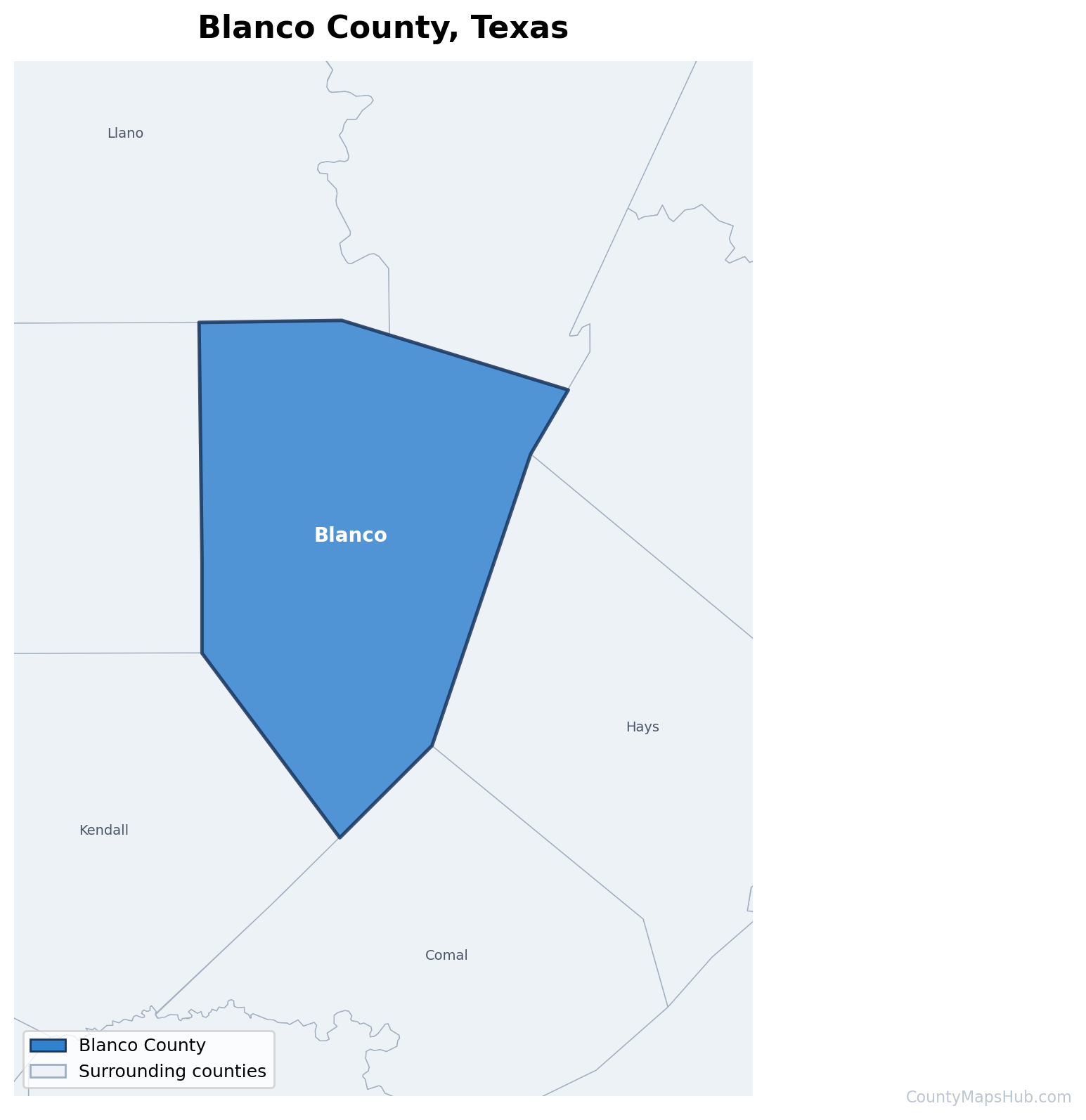
Blanco County was established in 1858 in the heart of the Texas Hill Country. Named after the Blanco River, which flows through the region, the county’s name reflects the Spanish word for “white,” likely referencing the white limestone bluffs that characterize the area’s landscape. Johnson City serves as the county seat, providing administrative and commercial services to residents throughout the region.
The county’s development followed patterns typical of central Texas counties in the mid-19th century, with early settlement driven by ranching and agriculture. The area’s geography, positioned in the transition zone between the Edwards Plateau and the Colorado River basin, offered diverse opportunities for those seeking to establish homesteads. Over the decades, Blanco County has maintained its rural character while adapting to the economic and demographic changes affecting the Texas Hill Country region.
Population
According to the 2020 Census, Blanco County has a population of 11,931 residents spread across its 711 square miles. This relatively modest population density reflects the county’s continued rural character and appeal to those seeking a less urbanized lifestyle. The population has experienced gradual changes over recent decades, influenced by the broader trends affecting central Texas, including the region’s growing reputation for scenic beauty and quality of life. Johnson City, as the county seat, serves as the primary population center, providing essential services and serving as a hub for the surrounding rural areas.
Climate
Blanco County experiences a humid subtropical climate typical of the Texas Hill Country region. This climate pattern brings hot summers with temperatures often reaching the 90s Fahrenheit, while winters remain relatively mild with occasional cold fronts that can bring brief periods of cooler weather. The area receives moderate rainfall distributed throughout the year, with spring months typically seeing increased precipitation.
The humid subtropical conditions support the diverse vegetation characteristic of the Hill Country, including native grasses, live oak, cedar, and other drought-adapted species. Seasonal variations create distinct changes in the landscape, from the vibrant wildflower displays of spring to the golden hues of late summer grasses. The climate influences both agricultural practices and outdoor recreational opportunities available throughout the year.
Tourist Attractions
Blanco County’s position in the Texas Hill Country makes it an attractive destination for visitors seeking natural beauty and outdoor recreation. The region’s rolling terrain, river access, and scenic landscapes provide opportunities for hiking, fishing, birdwatching, and nature photography. The area’s limestone formations and spring-fed waterways create distinctive geological features that draw nature enthusiasts throughout the year.
Visitors to the county can explore various recreational areas, historic sites, and local attractions that showcase the Hill Country’s unique character. The region’s small-town atmosphere and rural landscapes offer a contrast to urban environments, appealing to those interested in agritourism, weekend getaways, and exploration of central Texas culture. Seasonal activities and community events provide additional opportunities for visitors to experience local traditions and hospitality.
Culture
The cultural landscape of Blanco County reflects its Hill Country heritage and the traditions of rural Texas communities. The area’s history of ranching and agriculture continues to influence local identity, with many residents maintaining connections to the land and traditional ways of life. Community gatherings, seasonal celebrations, and civic activities help maintain social bonds in this relatively small and spread-out population.
The county’s cultural character combines elements of German and Anglo settlement patterns that shaped much of the Hill Country region, visible in local architecture, cuisine, and community traditions. Small-town values emphasizing self-reliance, neighborly cooperation, and connection to place remain important aspects of local culture. The area’s proximity to larger urban centers allows residents to balance rural lifestyle preferences with access to broader cultural and economic opportunities, creating a distinctive quality of life that appeals to both longtime residents and newcomers seeking Hill Country living.