Borden County
About
Borden County was established in 1876 and named after Gail Borden Jr., the inventor and entrepreneur best known for developing condensed milk and founding what would become a major dairy company. The county’s formation came during a period of westward expansion in Texas, when the state organized vast stretches of its western territory into administrative units. Gail serves as the county seat, providing governmental services for this sparsely populated region.
The county’s development reflected the challenges and opportunities of the West Texas frontier. Early settlement patterns were shaped by ranching and agriculture adapted to the semi-arid environment. The landscape and climate demanded resilience from those who chose to make this region their home, and the county’s history reflects the resourcefulness characteristic of rural Texas communities during the late nineteenth and early twentieth centuries.
Population
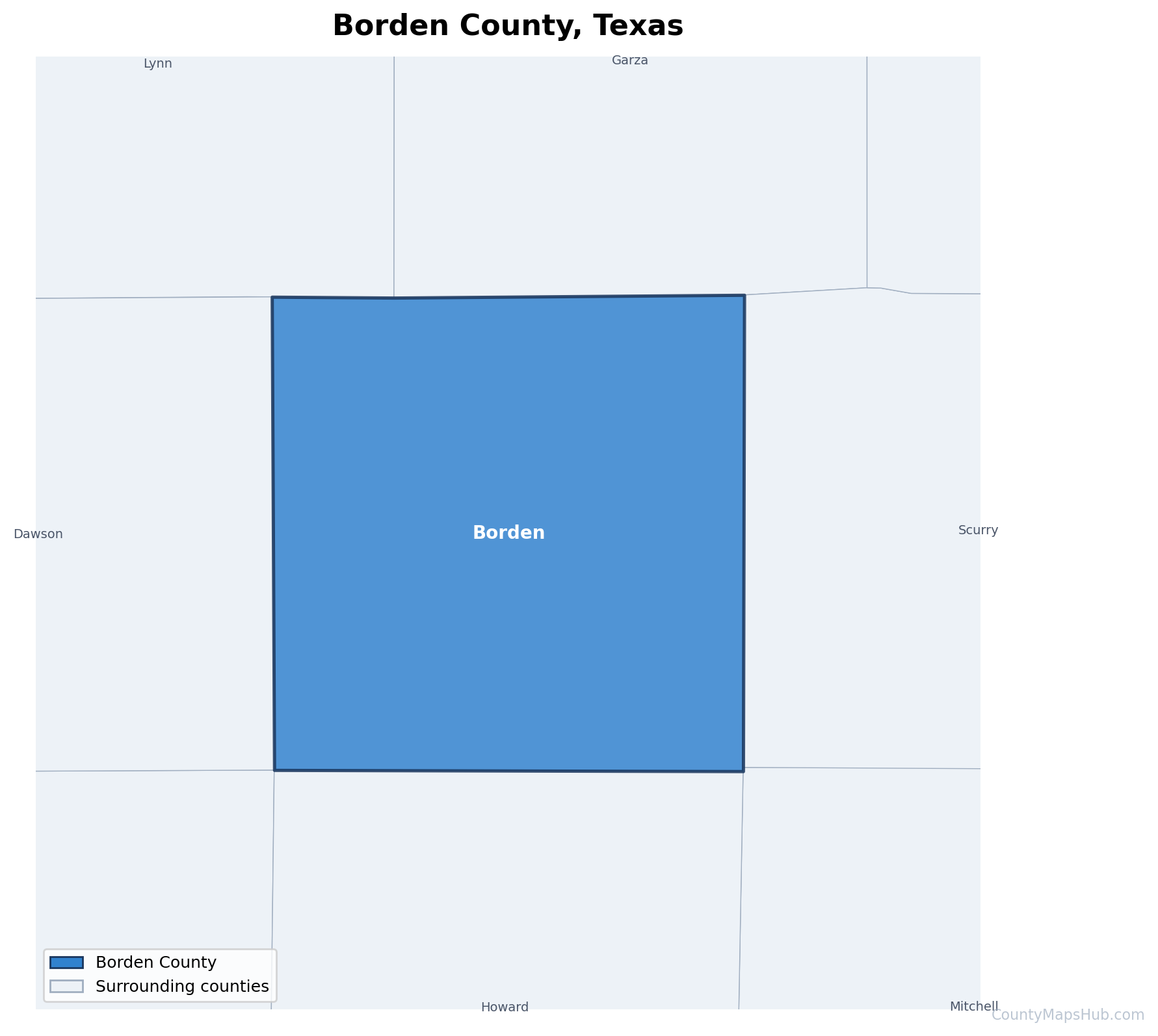
According to the 2020 census, Borden County has a population of 631 residents, making it one of the least populous counties in Texas. Spread across 899 square miles, the county exhibits an extremely low population density typical of rural West Texas counties. This small population reflects the area’s agricultural economy and limited urban development. The county seat of Gail and surrounding communities maintain a tight-knit rural character where residents often know their neighbors personally and community bonds remain strong across generations.
Climate
Borden County experiences a semi-arid climate characteristic of the West Texas region. This climate zone features hot summers with temperatures frequently exceeding ninety degrees, while winters are generally mild to cool with occasional cold fronts bringing freezing temperatures. Precipitation is limited throughout the year, with most rainfall occurring during spring and early summer months when thunderstorms develop across the plains.
The semi-arid conditions significantly influence land use and daily life in the county. Vegetation consists primarily of drought-resistant grasses and scattered shrubs adapted to low moisture conditions. The wide-open skies and relatively low humidity create dramatic temperature swings between day and night, particularly during spring and fall. Wind is a constant presence across the flat to gently rolling terrain, shaping both the natural environment and human activities in the region.
Tourist Attractions
Borden County offers visitors an authentic experience of rural West Texas, where wide horizons and open landscapes dominate the scenery. The region appeals to those interested in experiencing small-town life and observing the agricultural traditions that continue to sustain communities across the Texas plains. Travelers passing through can appreciate the stark beauty of the semi-arid environment and the sense of solitude that comes with exploring one of the state’s most sparsely populated areas.
Outdoor enthusiasts may find opportunities for activities suited to the open terrain and clear skies. The county’s rural character provides settings for stargazing, wildlife observation, and photography of expansive landscapes. Local community events, when they occur, offer glimpses into the traditions and values of West Texas ranch country. Visitors should come prepared for limited services and amenities, as the county’s small population means resources are concentrated in the county seat and surrounding areas.
Culture
The cultural fabric of Borden County reflects its ranching heritage and the values of self-reliance, neighborliness, and perseverance that characterize rural West Texas communities. Social life often revolves around schools, churches, and community gatherings where residents maintain traditions passed down through generations. The small population fosters close relationships among families, many of whom have resided in the area for decades or longer.
Agricultural practices and the rhythms of ranch life continue to shape daily routines and annual calendars. Community celebrations and gatherings, though modest in scale, serve as important occasions for strengthening social bonds and maintaining cultural continuity. The region’s isolation has helped preserve traditional values while residents adapt to modern challenges facing rural America, including economic changes and population decline in agricultural areas.