Bosque County
About
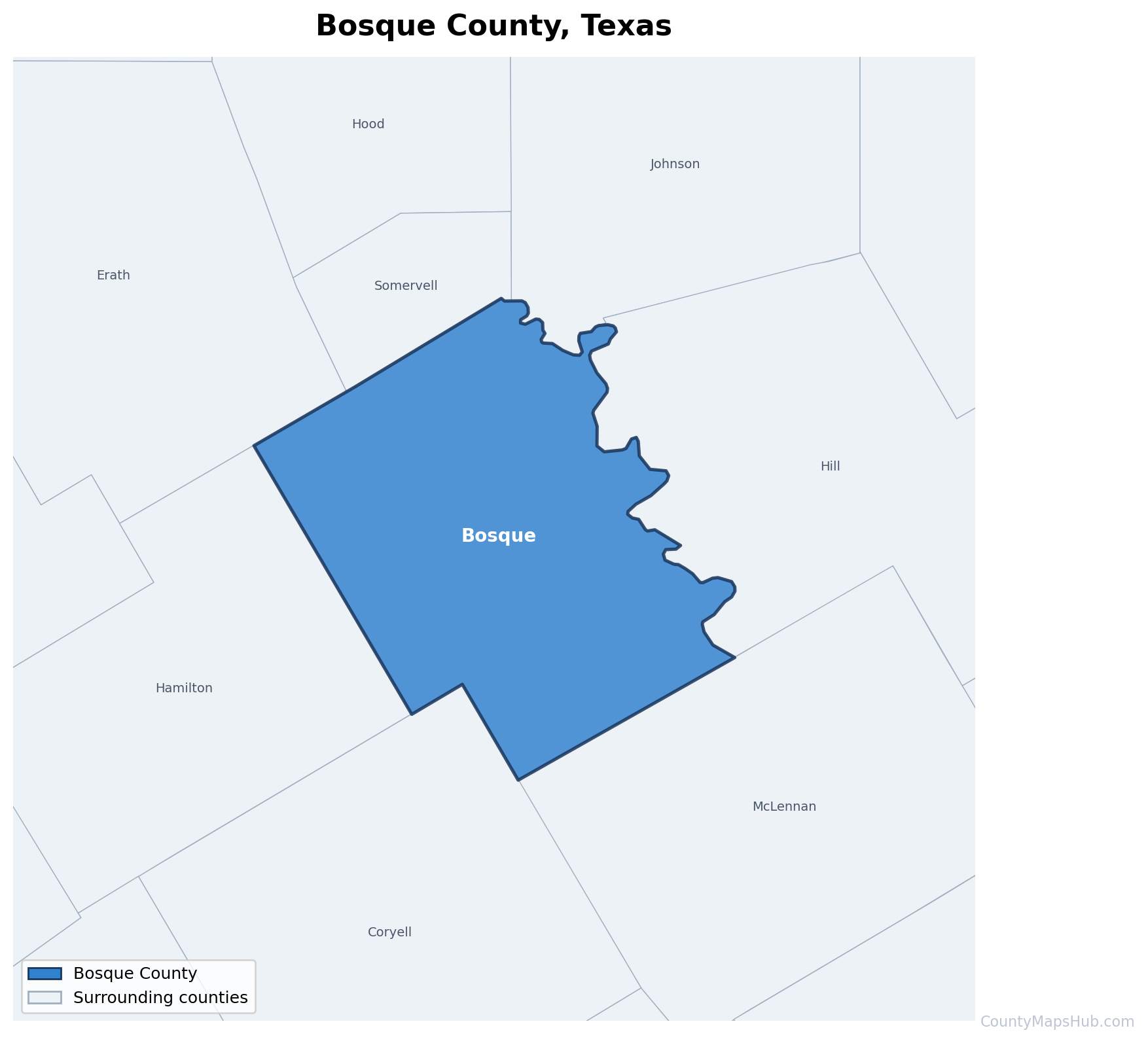
Bosque County was established in 1854 in the heart of Central Texas, taking its name from the Bosque River that flows through the region. The name “Bosque” comes from the Spanish word for “forest” or “woods,” reflecting the tree-lined waterways that characterized the area when early settlers arrived. The county seat of Meridian has served as the governmental center since the county’s formation, providing administrative services to the surrounding communities.
During its early years, the county developed as part of the broader settlement patterns of Central Texas in the mid-nineteenth century. The region attracted farmers and ranchers drawn to the fertile river valleys and rolling terrain. Like many Texas counties of this era, Bosque County’s development was shaped by the challenges and opportunities of frontier life, including interactions with Native American populations and the establishment of transportation routes that would connect it to larger markets and urban centers across the state.
Population
According to the 2020 Census, Bosque County has a population of 18,212 residents spread across its 989 square miles. This population density reflects the county’s predominantly rural character, with communities distributed across agricultural lands and small towns. The county seat of Meridian serves as a primary population center, providing essential services and economic activity for surrounding areas. The population represents a mix of long-established families with deep roots in the region and newer residents attracted to the county’s rural lifestyle and proximity to larger Texas metropolitan areas.
Climate
Bosque County experiences a humid subtropical climate typical of Central Texas, characterized by hot summers and mild to cool winters. The climate supports a diverse range of vegetation, from grasslands to the wooded areas along the Bosque River and its tributaries that gave the county its name. Rainfall is generally adequate to support agricultural activities, though like much of Texas, the county can experience periodic drought conditions.
The humid subtropical climate allows for a relatively long growing season, which has historically supported the county’s agricultural economy. Seasonal temperature variations bring warm to hot conditions during summer months, while winter temperatures typically remain moderate, with occasional cold fronts moving through the region. This climate pattern influences both the natural ecosystems and human activities throughout the county.
Tourist Attractions
Bosque County offers visitors opportunities to experience the natural beauty and rural character of Central Texas. The county’s landscape features rolling hills, river valleys, and wooded areas that provide settings for outdoor recreation. Visitors can enjoy activities such as hiking, fishing, and wildlife observation in the various natural areas throughout the region. The rural roads and scenic vistas attract those seeking a peaceful retreat from urban environments.
The county seat of Meridian and surrounding communities preserve elements of small-town Texas heritage, with historic architecture and local establishments that reflect the area’s agricultural traditions. Visitors interested in regional history can explore the architectural legacy of nineteenth and early twentieth-century settlement patterns. The county’s location in Central Texas also makes it accessible for day trips or weekend getaways for those exploring the broader region between major metropolitan areas.
Culture
The cultural character of Bosque County reflects its roots as a rural agricultural community in Central Texas. Local traditions center around ranching and farming heritage, with seasonal rhythms tied to agricultural cycles. Community gatherings and local events typically celebrate this heritage, bringing together residents from across the county’s dispersed population centers. The small-town atmosphere fosters close-knit communities where neighbors often have multi-generational connections to the land.
The county’s cultural identity is shaped by broader Central Texas regional influences, including a blend of Southern and Western traditions common to this part of the state. Local institutions, including schools and community organizations, serve as gathering points for cultural activities and civic engagement. The naming of the county after the Bosque River reflects an early Spanish influence in the region’s history, though the cultural makeup has been primarily shaped by Anglo-American settlement patterns beginning in the mid-nineteenth century.