Brazos County
About
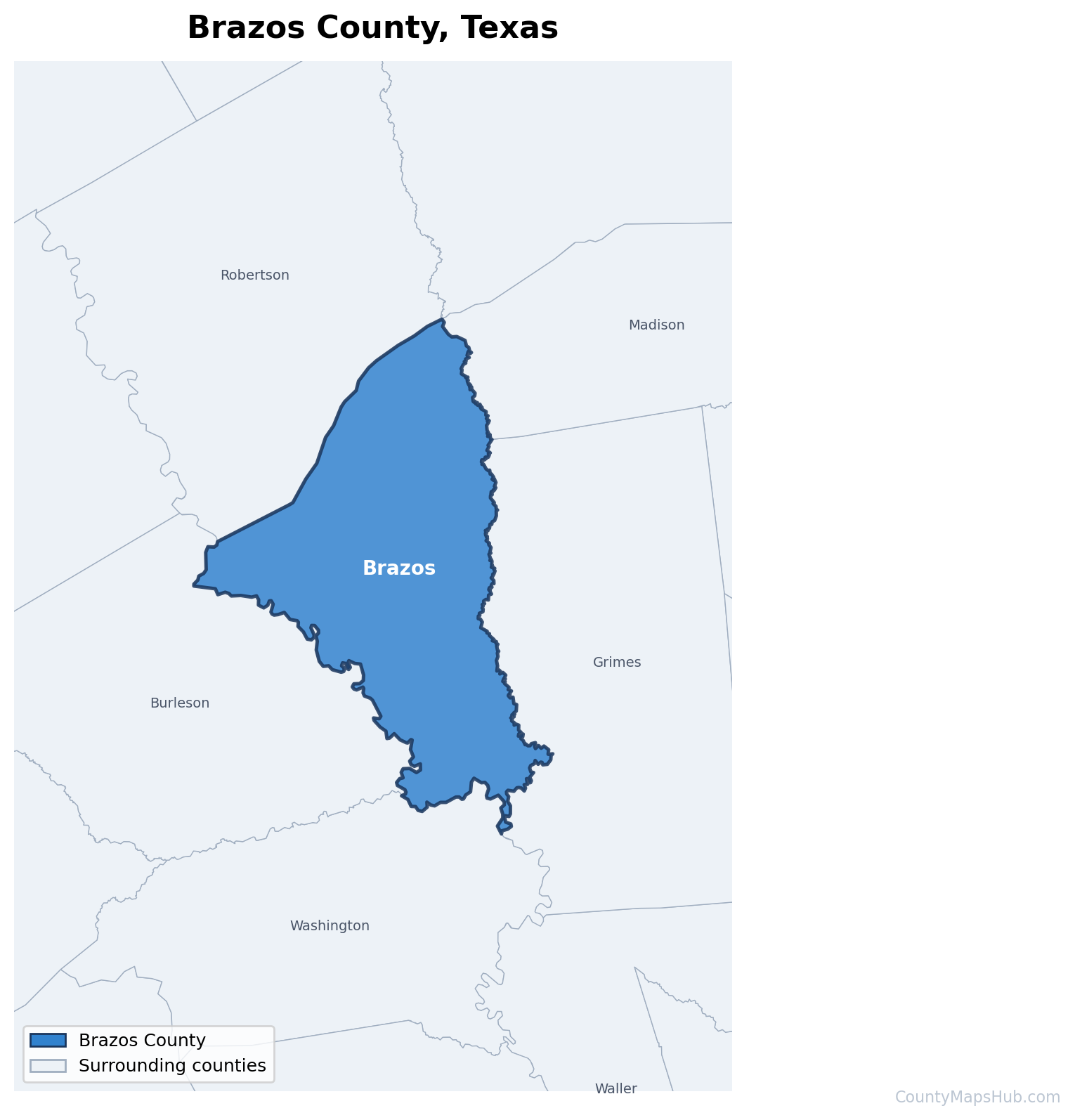
Brazos County was established in 1841, making it one of the earlier counties formed during the Republic of Texas era. Named after the Brazos River, which flows through the region, the county’s identity has been closely tied to this significant waterway that played a crucial role in early settlement and development. The river provided essential resources for agriculture, transportation, and commerce during the formative years of Texas statehood.
Bryan serves as the county seat and has been the administrative center since the county’s establishment. The region developed primarily as an agricultural area during the nineteenth century, with the fertile lands near the river supporting farming and ranching operations. Over subsequent decades, the county evolved from its rural agricultural roots, experiencing growth and diversification that reflected broader patterns of development across Central Texas.
Population
According to the 2020 Census, Brazos County has a population of 233,849 residents living within its 586 square miles. This population density reflects a mix of urban development centered around the county seat of Bryan and surrounding communities, along with less densely populated rural areas. The county has experienced steady demographic growth over recent decades, driven by economic development, educational institutions, and the region’s position within the growing Central Texas corridor. The population demonstrates the county’s evolution from its nineteenth-century agricultural heritage to a more diverse modern economy.
Climate
Brazos County experiences a humid subtropical climate, characterized by hot summers and mild winters typical of Central Texas. Summer temperatures regularly climb into the 90s Fahrenheit, with high humidity levels influenced by Gulf Coast moisture patterns. Winters are generally moderate, with occasional cold fronts bringing cooler temperatures but rarely sustained freezing conditions.
The area receives moderate rainfall distributed throughout the year, with somewhat higher precipitation during the spring and fall months. Residents should be prepared for the possibility of severe weather during spring, when the region can experience thunderstorms. The humid subtropical climate supports diverse vegetation and makes the region suitable for various agricultural activities that have historically been important to the local economy.
Tourist Attractions
Brazos County offers visitors a variety of recreational and cultural experiences reflecting its Central Texas location. The region features outdoor activities including parks, nature trails, and opportunities to explore the natural landscapes along the Brazos River corridor. Visitors can enjoy hiking, birdwatching, and experiencing the diverse ecosystems that characterize this part of Texas.
The county provides access to local museums and historical sites that showcase the area’s heritage from its establishment in 1841 through present day. Cultural attractions include community theaters, art galleries, and venues for music and performing arts. Annual community events and festivals celebrate the region’s traditions and bring together residents and visitors. The county’s location in Central Texas also makes it a convenient base for exploring the broader region’s attractions.
Culture
The cultural character of Brazos County reflects its deep Texas roots combined with influences from educational institutions and modern development. The county maintains connections to traditional Texas culture, including agricultural heritage, rodeo traditions, and Southern hospitality. This foundation blends with the cultural diversity brought by residents from various backgrounds who have settled in the area over the years.
The community values education, civic engagement, and preservation of local history while embracing growth and change. Local cultural life includes a mix of traditional Texas celebrations and contemporary arts programming. The county’s residents enjoy access to libraries, community centers, and recreational facilities that support quality of life. Religious institutions, service organizations, and community groups contribute to the social fabric, creating a welcoming environment that honors both the region’s historical legacy and its ongoing evolution.