Brewster County
About
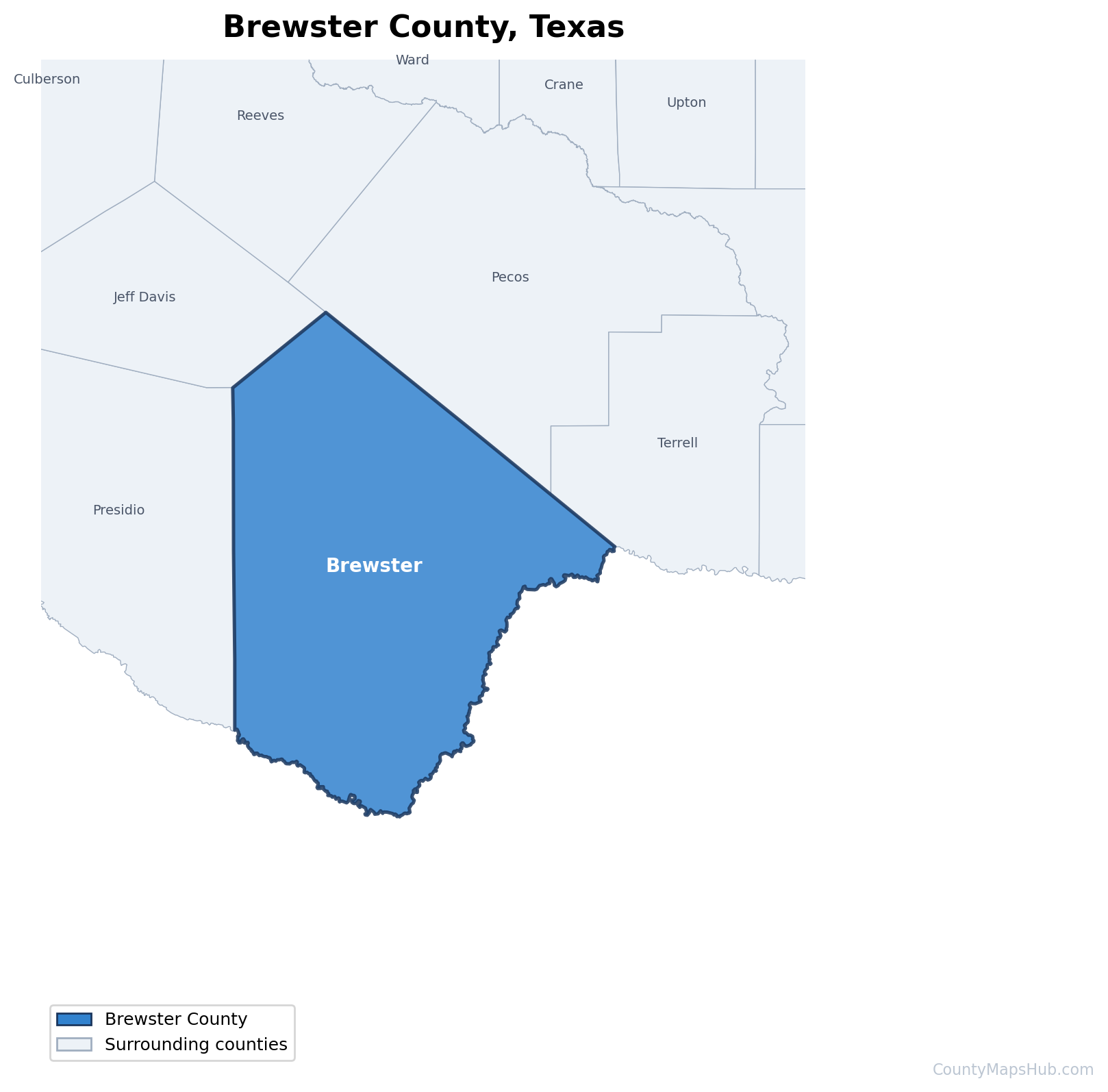
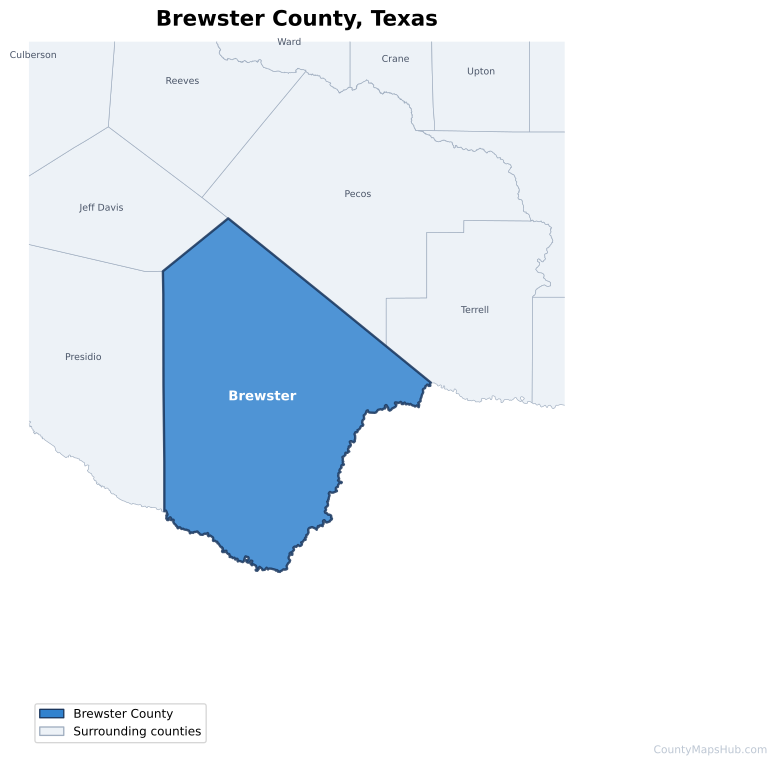
Brewster County was established in 1887 and named after Henry Percy Brewster, honoring his contributions to the region. The county’s formation came during a period of westward expansion in Texas, when the vast territories of West Texas were being organized into administrative units. As one of the largest counties in Texas by area, Brewster County encompasses a significant portion of the Trans-Pecos region.
The county’s development was shaped by its remote location and challenging terrain. Early settlement patterns followed water sources and transportation routes, with communities forming around ranching, mining, and later railroad operations. The establishment of Alpine as the county seat provided a central hub for government services and commerce in this expansive territory. Over the decades, the county’s economy evolved from primarily extractive industries to include tourism and education, reflecting broader changes in the American West.
Population
According to the 2020 Census, Brewster County has a population of 9,203 residents spread across its vast 6,193 square miles, making it one of the most sparsely populated counties in Texas. This low population density reflects the county’s rugged terrain and arid climate, which have historically limited large-scale settlement. Alpine serves as the county seat and primary population center, providing essential services, educational institutions, and commercial activities for residents throughout the region. The dispersed population includes ranchers, small business owners, artists, retirees, and others drawn to the area’s natural beauty and isolated character.
Climate
Brewster County experiences an arid climate typical of the Chihuahuan Desert region of West Texas. Rainfall is sparse throughout the year, with the area receiving significantly less precipitation than the state average. Summer temperatures can be intense, particularly in lower elevations, though mountainous areas provide some relief with cooler temperatures and slightly increased moisture.
The arid conditions create dramatic daily temperature swings, with warm days often followed by surprisingly cool nights. Clear skies are common throughout most of the year, contributing to exceptional stargazing opportunities. Winter months bring cooler temperatures and occasional freezes, particularly at higher elevations. The limited rainfall supports desert vegetation adapted to harsh conditions, creating distinctive landscapes that define the visual character of the region.
Tourist Attractions
Brewster County’s vast landscapes and remote character attract visitors seeking natural beauty and outdoor recreation. The region offers opportunities for hiking, camping, and wildlife observation across its diverse terrain, which ranges from desert valleys to mountain peaks. Photography enthusiasts are drawn to the area’s dramatic vistas, geological formations, and exceptional night skies with minimal light pollution.
Visitors can explore various natural landmarks and scenic areas throughout the county. The region’s geological diversity provides insight into millions of years of Earth history, with exposed rock formations and fossil deposits. Outdoor enthusiasts enjoy activities such as bird watching, stargazing, and exploring backcountry areas. Local museums and cultural centers in Alpine provide context about regional history, while small galleries showcase work by artists inspired by the dramatic landscapes. The county’s remote location and authentic Western character appeal to travelers seeking experiences off the beaten path.
Culture
Brewster County’s culture reflects its heritage as a ranching community combined with influences from artists, writers, and others drawn to the region’s isolation and natural beauty. The county embodies the independent spirit often associated with West Texas, where self-reliance and neighborly cooperation remain important values. Ranch culture continues to influence local traditions, though the community has diversified to include creative professionals and retirees seeking a quieter pace of life.
The arts community has grown significantly in recent decades, with galleries, studios, and cultural events enriching the local scene. Music, visual arts, and literary activities contribute to a vibrant cultural calendar despite the small population. The blend of long-time ranching families, Hispanic heritage dating back centuries, and newer arrivals creates a unique cultural mix. Educational institutions in Alpine serve as cultural anchors, hosting lectures, performances, and community gatherings. The combination of frontier heritage, artistic expression, and appreciation for the natural environment defines the county’s distinctive cultural identity.