Brooks County
About
Brooks County was established in 1911, making it one of the early twentieth-century counties formed in the South Texas region. The county was named after James Abijah Brooks, honoring his contributions to the area’s development. Located in the heart of South Texas, the region’s history reflects the broader patterns of ranching, agriculture, and cultural exchange that characterized the borderlands during this period.
The establishment of Falfurrias as the county seat provided a governmental and commercial center for the surrounding agricultural communities. Throughout the twentieth century, the county developed alongside the ranching industry that dominated much of South Texas, with the semi-arid climate shaping both economic activities and settlement patterns. The county’s history remains intertwined with the larger narrative of Texas’s southern frontier and its evolution from rural rangeland to organized civil administration.
Population
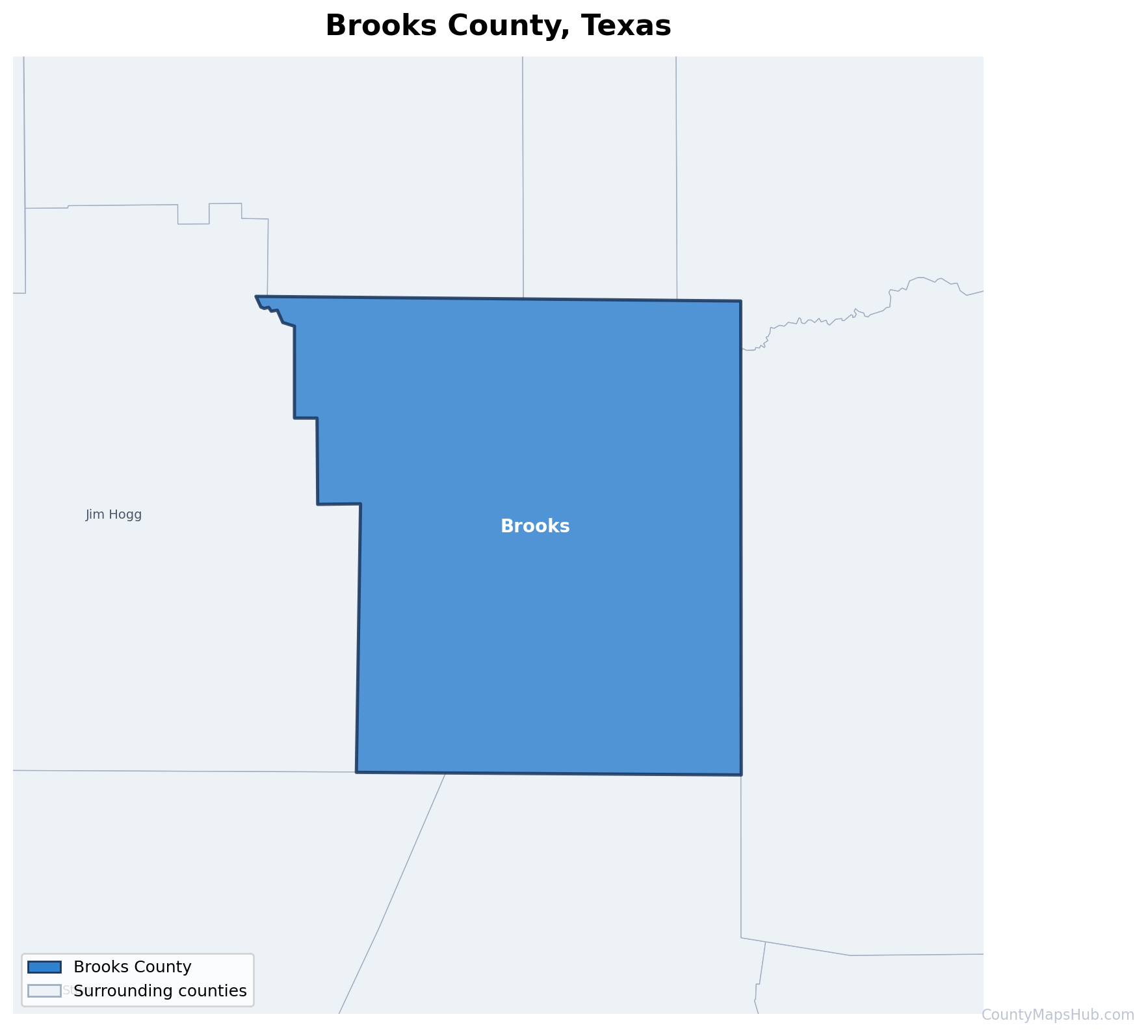
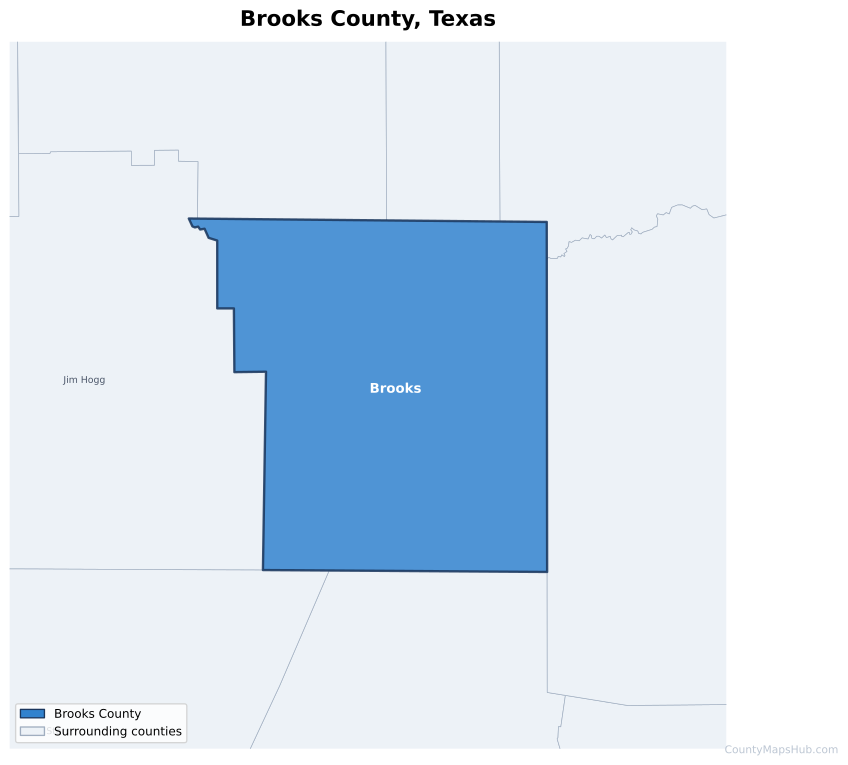
According to the 2020 census, Brooks County has a population of 7,076 residents spread across its 943 square miles. This relatively low population density reflects the county’s rural character and agricultural economy. The county seat of Falfurrias serves as the primary population center, providing essential services and commerce for residents throughout the region. The demographic composition reflects the broader South Texas pattern, with deep historical roots in both ranching culture and cross-border heritage that has shaped communities throughout the area for generations.
Climate
Brooks County experiences a semi-arid climate typical of the South Texas region, characterized by hot summers, mild winters, and limited annual precipitation. The semi-arid conditions create a landscape dominated by drought-resistant vegetation and require careful water management for both agricultural and residential purposes. Temperatures during summer months can be quite high, while winter conditions remain generally temperate compared to northern parts of the state.
The climate significantly influences land use patterns throughout the county, favoring ranching operations over intensive crop cultivation in many areas. Periodic drought conditions are a natural feature of the semi-arid environment, shaping both historical settlement patterns and contemporary water conservation strategies. Residents and agricultural operations have adapted to these climatic realities through generations of experience with the region’s weather patterns.
Tourist Attractions
Brooks County offers visitors a glimpse into authentic South Texas ranch country and rural heritage. The landscape itself provides opportunities for those interested in experiencing the semi-arid environment characteristic of this region, with wide-open spaces and distinctive local flora and fauna. Visitors interested in agricultural tourism can explore the ranching culture that has defined the area since its early settlement days.
The county seat of Falfurrias serves as a gateway for travelers exploring South Texas, offering local amenities and a window into small-town life in this part of the state. The surrounding area provides opportunities for outdoor activities suited to the semi-arid environment, including wildlife observation and photography. Those interested in Texas history and frontier heritage will find the county’s early twentieth-century origins and ranching traditions worthy of exploration.
Culture
Brooks County’s culture reflects its position in South Texas, where ranching traditions and borderland heritage create a distinctive regional identity. The community maintains strong connections to the cattle industry and agricultural practices that have sustained the area since the county’s establishment in 1911. Local culture emphasizes values of self-reliance, community cooperation, and respect for the challenging environment that shapes daily life in this semi-arid region.
The cultural landscape reflects the broader South Texas experience, with influences from multiple heritages blending over generations. Community gatherings and local traditions often center around agricultural cycles and ranching activities that remain central to the county’s economy and identity. The small-town atmosphere of Falfurrias and surrounding communities fosters close-knit relationships and a shared appreciation for the region’s history and rural character that distinguishes this part of Texas.