Burnet County
About
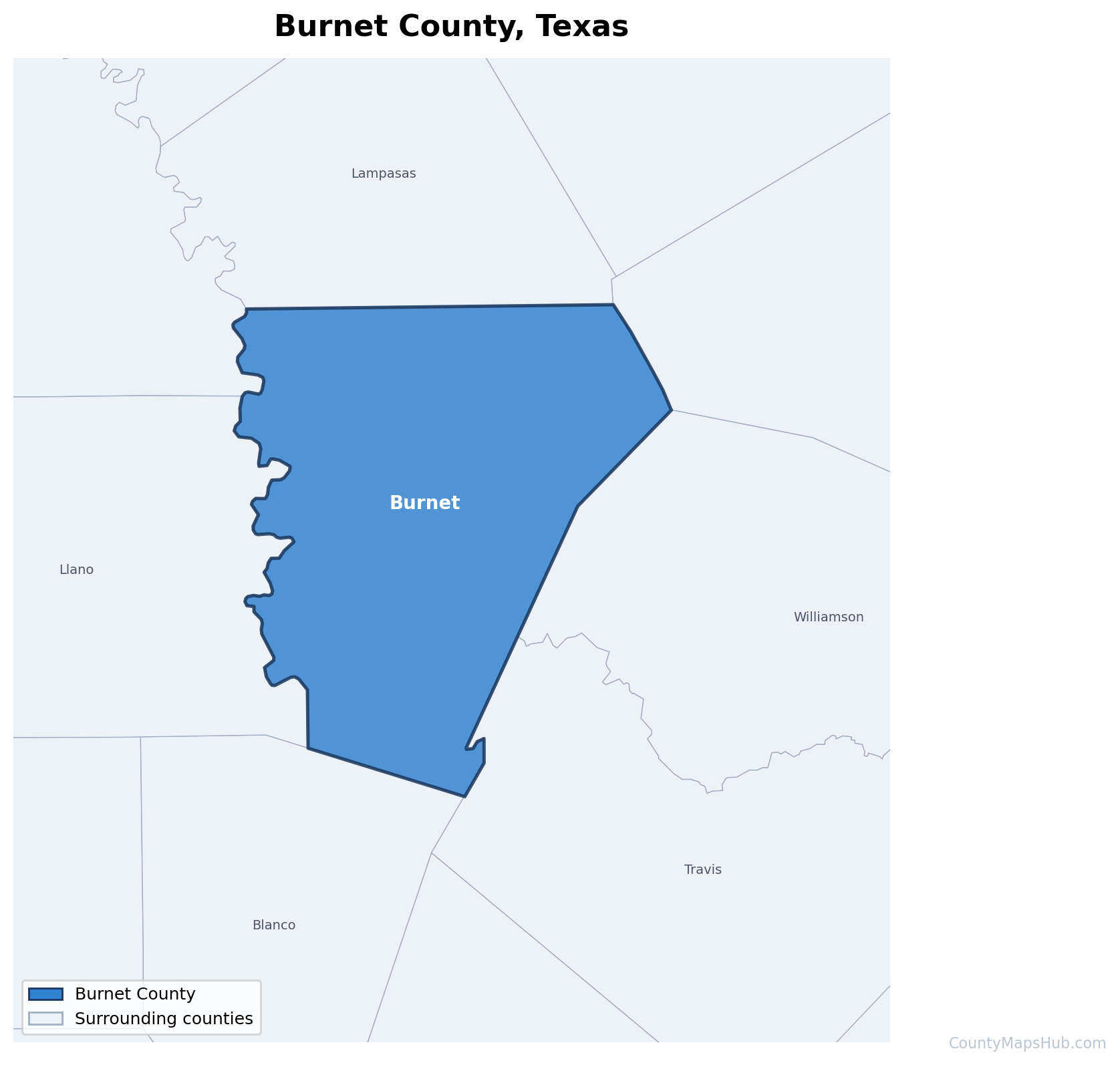
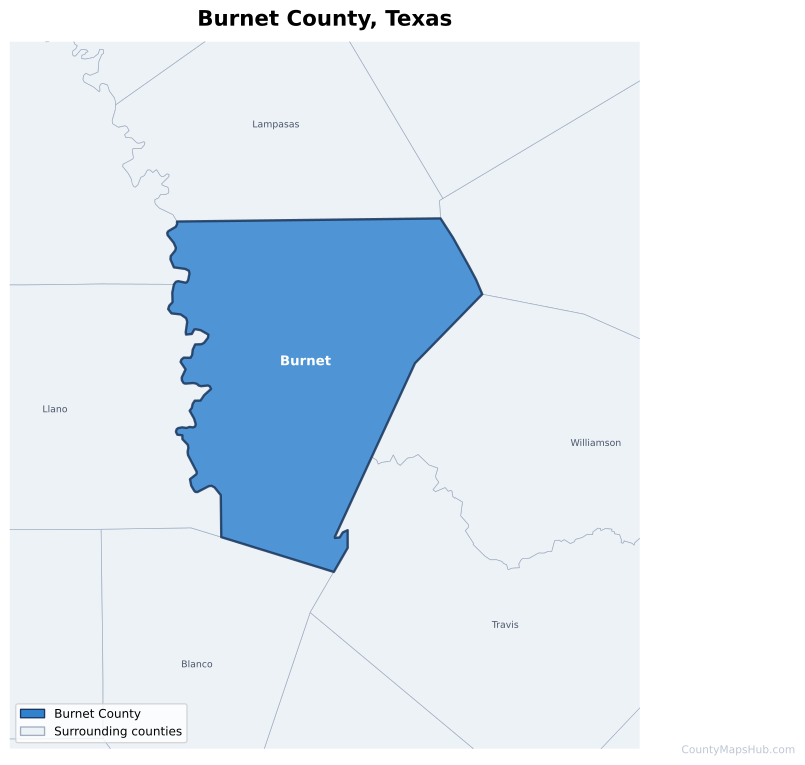
Burnet County was established in 1852 and named after David Gouverneur Burnet, an early Texas political figure who served as interim president of the Republic of Texas. The county’s formation came during a period of significant westward expansion in Texas, when the state was organizing its growing territories into administrative units. Located in the Texas Hill Country, the region that became Burnet County had been inhabited by various Native American groups before European settlement began in earnest during the mid-19th century.
Throughout its history, the county developed as part of the broader Central Texas region, with its economy initially centered on ranching and agriculture. The county seat, Burnet, became the administrative and commercial hub for the surrounding area. Over the decades, the county experienced the typical patterns of Texas development, including periods of agricultural expansion, the challenges of the Civil War and Reconstruction era, and gradual modernization through the 20th century. Today, the county maintains connections to its historical roots while adapting to contemporary Texas growth patterns.
Population
According to the 2020 Census, Burnet County recorded a population of 49,130 residents. This population is distributed across the county’s 994 square miles, creating a moderate density that reflects the county’s character as part of the Texas Hill Country region. The population has grown over recent decades as the area has attracted residents drawn to the natural beauty and quality of life found in Central Texas. The demographic composition includes a mix of long-time residents with deep roots in the area and newer arrivals seeking the lifestyle opportunities the region offers. The county balances its historical agricultural heritage with evolving residential and commercial development patterns typical of growing Texas counties.
Climate
Burnet County experiences a humid subtropical climate, characteristic of Central Texas and the broader Hill Country region. This climate zone brings hot summers with temperatures regularly reaching the 90s Fahrenheit, while winters remain relatively mild with occasional cold fronts that can bring brief periods of cooler weather. The area receives moderate rainfall distributed throughout the year, though spring and early summer typically see increased precipitation. Late summer and early fall can bring drier conditions.
The climate supports the region’s distinctive vegetation, including native grasses, cedar, oak, and other Hill Country plant species. Residents and visitors enjoy a climate that allows for year-round outdoor activities, though summer heat requires appropriate precautions. The seasonal variations, while less dramatic than in northern states, still provide recognizable changes throughout the year that influence agricultural activities and recreational opportunities in the region.
Tourist Attractions
The Texas Hill Country region where Burnet County is located offers numerous opportunities for outdoor recreation and natural beauty exploration. Visitors to the area can enjoy activities such as hiking, camping, water sports, and wildlife observation. The county’s landscapes feature the characteristic rolling hills, rocky outcrops, and waterways that define the Hill Country aesthetic. Local parks and natural areas provide access to these scenic environments, while the region’s lakes and rivers attract those interested in fishing, boating, and swimming during the warmer months.
Cultural and historical attractions in the area include local museums that preserve regional heritage, historic buildings and sites that reflect the county’s 19th-century origins, and community events that celebrate local traditions. The county seat offers shopping and dining opportunities, while the surrounding countryside provides scenic drives through quintessential Hill Country terrain. Seasonal festivals and community gatherings throughout the year showcase local culture and provide entertainment for both residents and visitors interested in experiencing authentic Central Texas community life.
Culture
Burnet County’s culture reflects the broader traditions of the Texas Hill Country and Central Texas region. The area maintains strong connections to ranching and agricultural heritage, which continue to influence local identity and community values. This rural character coexists with growing suburban influences as the region experiences population growth. Community events, local traditions, and social organizations help preserve historical connections while welcoming newcomers into the county’s social fabric.
The cultural landscape includes influences from various groups that have settled in Central Texas over generations, creating a regional identity that blends Southern traditions with distinctive Texas characteristics. Local institutions such as schools, churches, and civic organizations serve as important centers of community life. The county participates in the broader Texas culture that values independence, hospitality, and connection to the land, while also embracing the opportunities and challenges that come with being part of a dynamic and growing state.