Callahan County
About
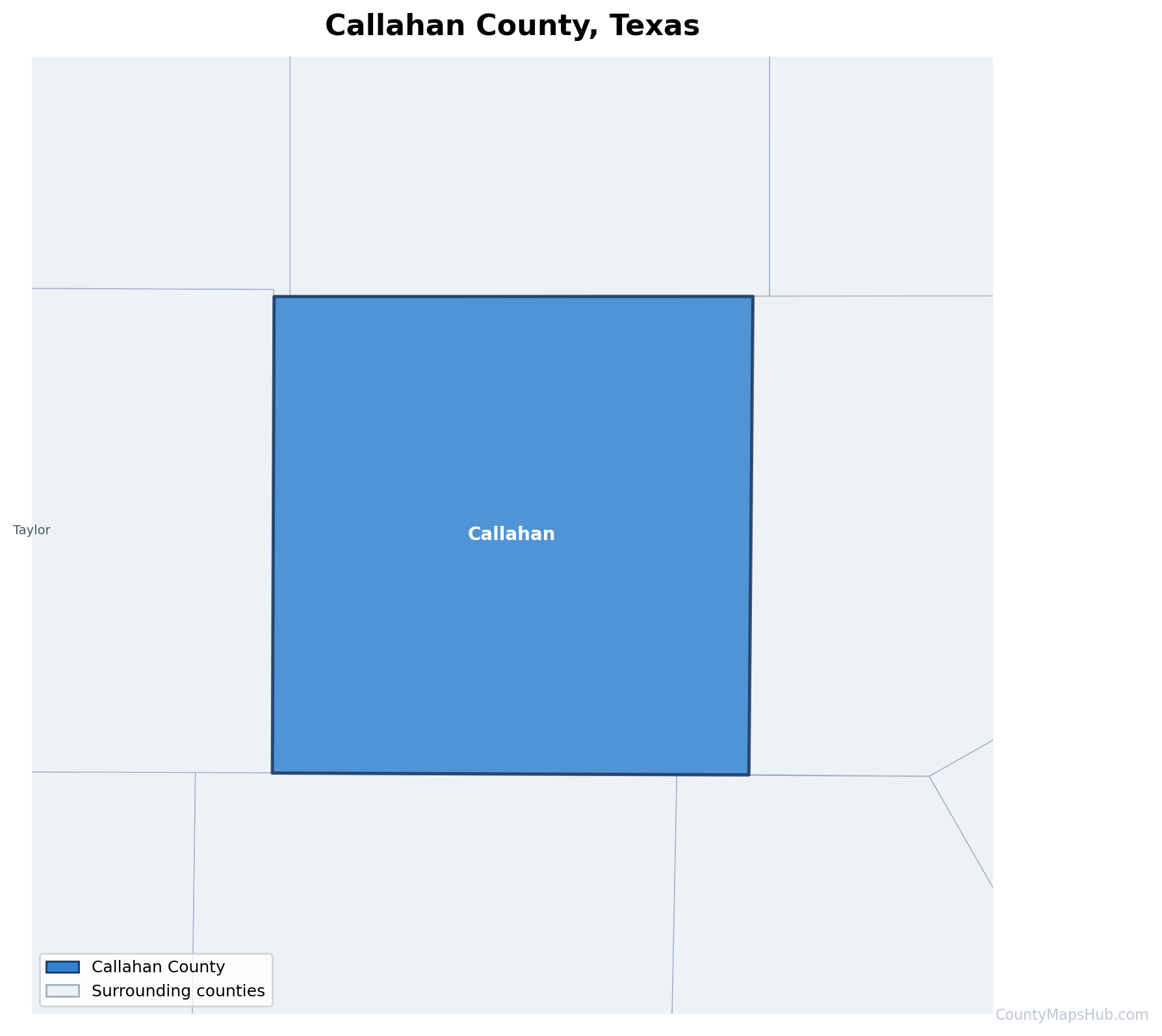
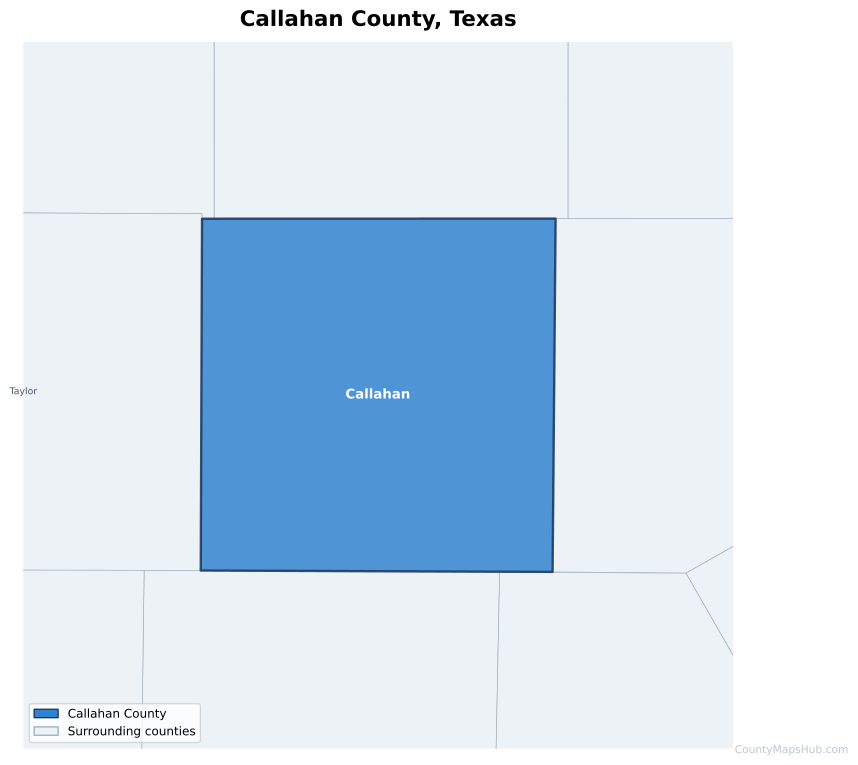
Callahan County was established in 1858 during a period of westward expansion in Texas. The county was named after James Hughes Callahan, a notable figure in Texas history. Its formation represented the continued settlement and organization of the West Texas frontier during the mid-19th century.
The county seat, Baird, has served as the administrative center since the county’s establishment. Throughout its history, the region developed as part of the broader settlement patterns of West Central Texas, with early residents engaged in ranching, agriculture, and related frontier activities. The county’s development reflected the challenges and opportunities characteristic of Texas counties established during this era.
Over the decades, Callahan County has maintained its character as a West Texas community, adapting to economic changes while preserving its small-town identity. The region’s history is intertwined with the broader narrative of Texas development, from its frontier origins through the modern era.
Population
According to the 2020 census, Callahan County has a population of 13,709 residents spread across its 899 square miles of territory. This translates to a relatively low population density typical of West Central Texas counties, where communities tend to be smaller and more dispersed than in major urban areas. The population represents a mix of longstanding families with deep roots in the region and newer residents attracted to the area’s rural character and quality of life. The county seat of Baird serves as the primary population center and hub for county services and commerce.
Climate
Callahan County experiences a humid subtropical climate, characterized by hot summers and mild to cool winters typical of West Central Texas. The region receives variable precipitation throughout the year, with spring and early summer generally bringing the most rainfall. Summer temperatures can be quite warm, while winter months are generally moderate with occasional cold fronts bringing cooler conditions.
The climate supports both agricultural activities and the natural vegetation patterns common to this part of Texas. Residents experience the full range of seasons, though winters are typically less severe than in northern states. The weather patterns contribute to the area’s character and influence local economic activities, outdoor recreation opportunities, and the rhythm of daily life in this rural Texas county.
Tourist Attractions
Callahan County offers visitors an authentic West Texas experience with opportunities to explore the region’s natural landscapes and small-town atmosphere. The area features outdoor recreation possibilities including hunting, fishing, and wildlife observation in the rolling terrain characteristic of West Central Texas. Visitors can experience the quiet charm of rural communities and gain insight into traditional Texas ranching culture.
The county’s location in West Texas provides access to scenic drives through open country and opportunities to observe the region’s distinctive flora and fauna. Local historical sites and community events offer glimpses into the area’s frontier heritage and ongoing traditions. Those interested in authentic rural Texas experiences will find the county a refreshing alternative to more heavily touristed destinations, with opportunities for photography, birdwatching, and exploring the unhurried pace of small-town life.
Culture
Callahan County reflects the cultural traditions of West Central Texas, where ranching heritage and small-town values shape community life. The region maintains a strong connection to its frontier past while adapting to contemporary life. Local residents typically exhibit the independence, hospitality, and work ethic associated with rural Texas communities. Community gatherings, seasonal celebrations, and civic events provide opportunities for residents to maintain social connections in this sparsely populated area.
The cultural landscape is characterized by the values and lifestyle common to agricultural and ranching communities, where family ties, community cooperation, and connection to the land remain important. Religious institutions, civic organizations, and school activities serve as focal points for community engagement. The county’s culture emphasizes self-reliance and neighborly cooperation, traits that have been passed down through generations and continue to define the character of this West Texas county.