Cameron County
About
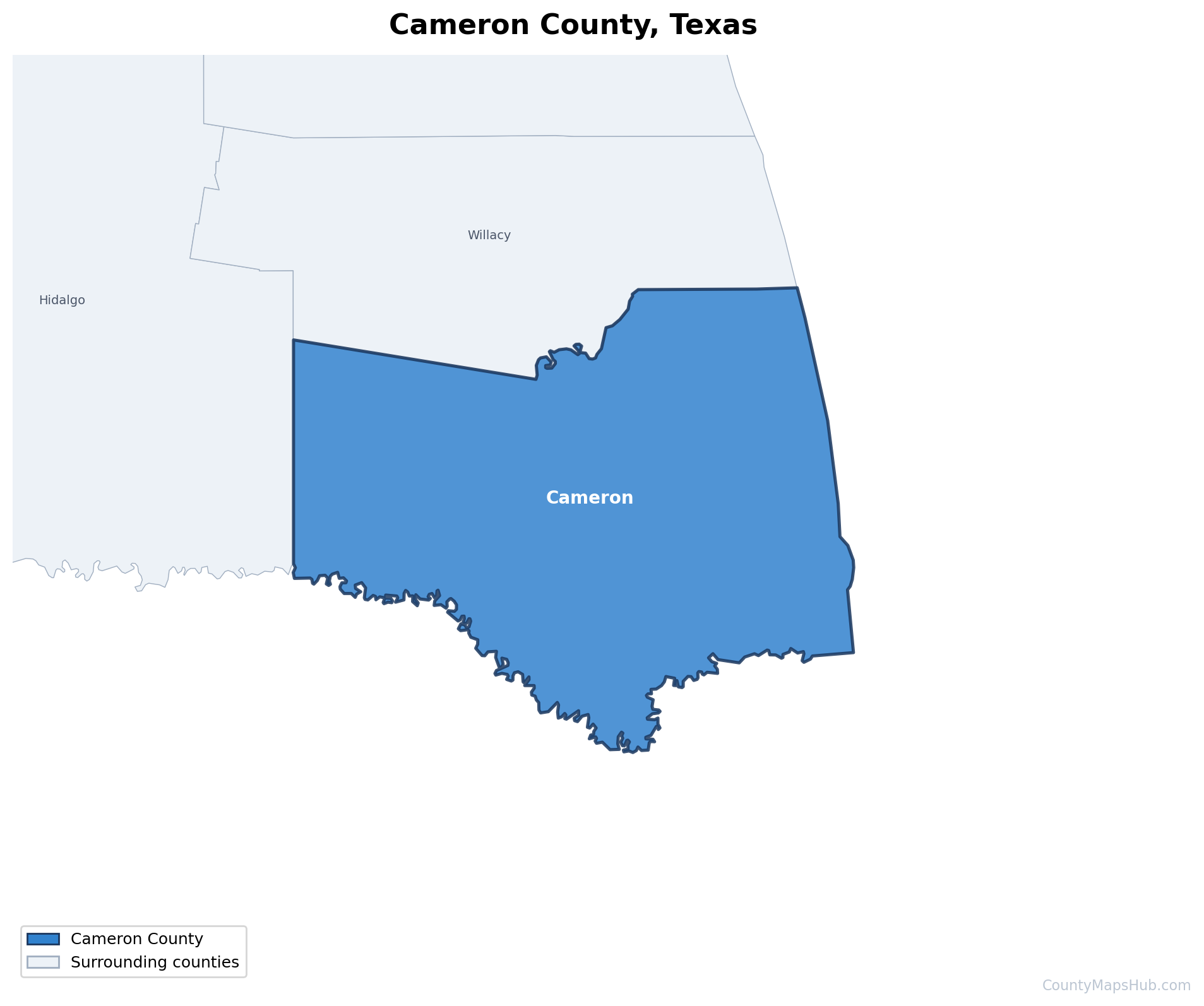
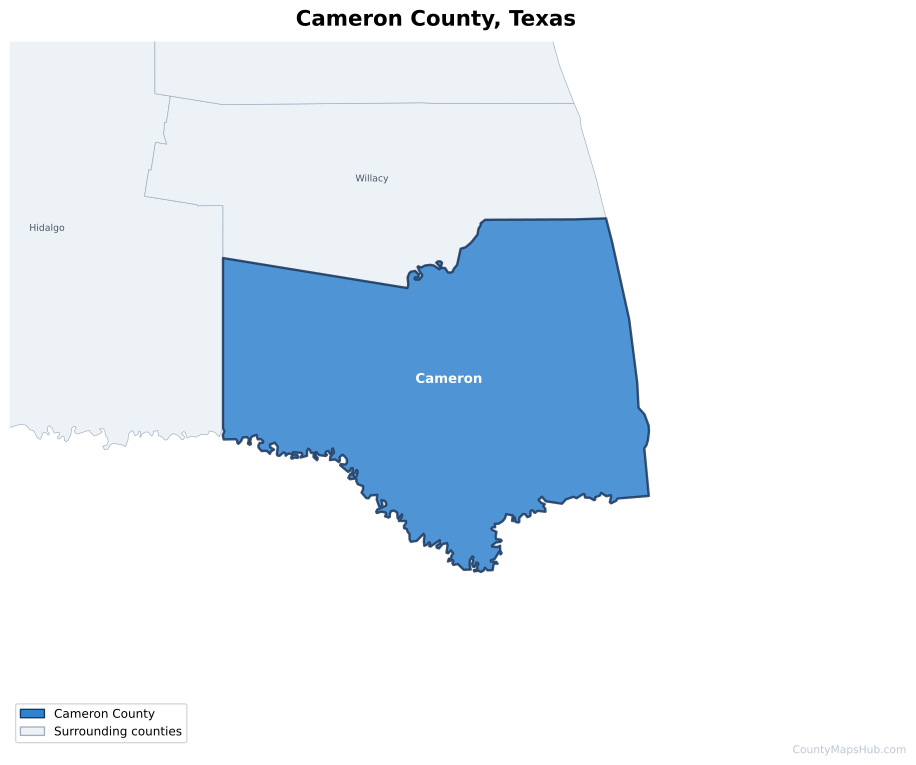
Cameron County was established in 1848, named after Ewen Cameron, a figure from the Texas Revolution era. The county’s creation came in the aftermath of the Mexican-American War, as Texas was solidifying its territorial boundaries and establishing governmental structures in its southernmost regions. Located along the Rio Grande, the area became a strategic point for trade and cultural exchange between the United States and Mexico.
Throughout the 19th and 20th centuries, the county developed as an important agricultural and commercial center. The construction of transportation infrastructure, including railroads and port facilities, helped facilitate the movement of goods and people. Brownsville, designated as the county seat, grew into a significant border city that served as a gateway between two nations, shaping the region’s economic and cultural identity for generations.
Population
According to 2020 census data, Cameron County had a population of 421,017 residents, making it one of the more populous counties along the Texas-Mexico border. The population is concentrated primarily in urban centers, with Brownsville serving as the largest city and county seat. The demographic composition reflects the region’s border location, with strong cultural ties to both the United States and Mexico. Population growth over recent decades has been driven by factors including economic opportunities, family migration patterns, and the county’s strategic location for trade and commerce.
Climate
Cameron County experiences a humid subtropical climate characterized by hot summers and mild winters. The region benefits from its proximity to the Gulf of Mexico, which moderates temperature extremes while contributing to higher humidity levels throughout much of the year. Summer temperatures regularly reach into the 90s Fahrenheit, while winter months typically see daytime highs in the 60s and 70s.
Rainfall is distributed somewhat unevenly across the year, with periods of higher precipitation often occurring during spring and fall months. The county’s location makes it susceptible to tropical weather systems during hurricane season, which residents monitor closely. The warm climate supports a long growing season and has historically made agriculture an important component of the local economy.
Tourist Attractions
The county’s position along the Gulf Coast and the Rio Grande provides visitors with diverse recreational opportunities. Coastal areas offer beach access where visitors can enjoy water activities, fishing, and wildlife observation. The subtropical environment supports unique ecosystems that attract nature enthusiasts interested in birding and experiencing flora and fauna not commonly found elsewhere in the continental United States.
Cultural tourism plays a significant role in the region, with the border location creating a distinctive blend of traditions, cuisines, and historical narratives. Visitors often explore local museums, historic districts, and cultural centers that tell the story of the region’s development. The proximity to Mexico also makes the area a natural starting point for international travelers seeking to experience both American and Mexican border culture in a single visit.
Culture
Cameron County’s culture reflects its position as a border region where American and Mexican influences intermingle. The population maintains strong ties to Hispanic heritage, evident in daily life through language, cuisine, music, and family traditions. Bilingualism is common, and many residents navigate fluidly between English and Spanish in their personal and professional lives. This cultural duality creates a unique identity that distinguishes the region from other parts of Texas.
Local festivals and celebrations often honor both American and Mexican traditions, creating a calendar rich with cultural events throughout the year. Traditional foods reflect cross-border culinary influences, with Tex-Mex cuisine being particularly prominent. The arts community draws inspiration from the region’s multicultural heritage, and local crafts, music, and visual arts often incorporate themes that speak to the area’s history and contemporary border experience. Family and community values remain central to social life in the county.