Camp County
About
Camp County was established in 1874 and named in honor of John Lafayette Camp, a prominent figure in Texas history. The county was carved out of Upshur County during the post-Civil War Reconstruction era, a period of significant political and social reorganization across Texas. Its formation reflected the growing population and economic development of East Texas during the late 19th century.
The county seat, Pittsburg, became the governmental and commercial center of the region. Throughout the late 1800s and early 1900s, the area’s economy developed around agriculture, timber, and later the discovery of oil in East Texas. The railroad’s arrival further stimulated growth and connected Camp County to broader markets. Over the decades, the county has maintained its character as a rural East Texas community while adapting to changing economic conditions and modern infrastructure improvements.
Population
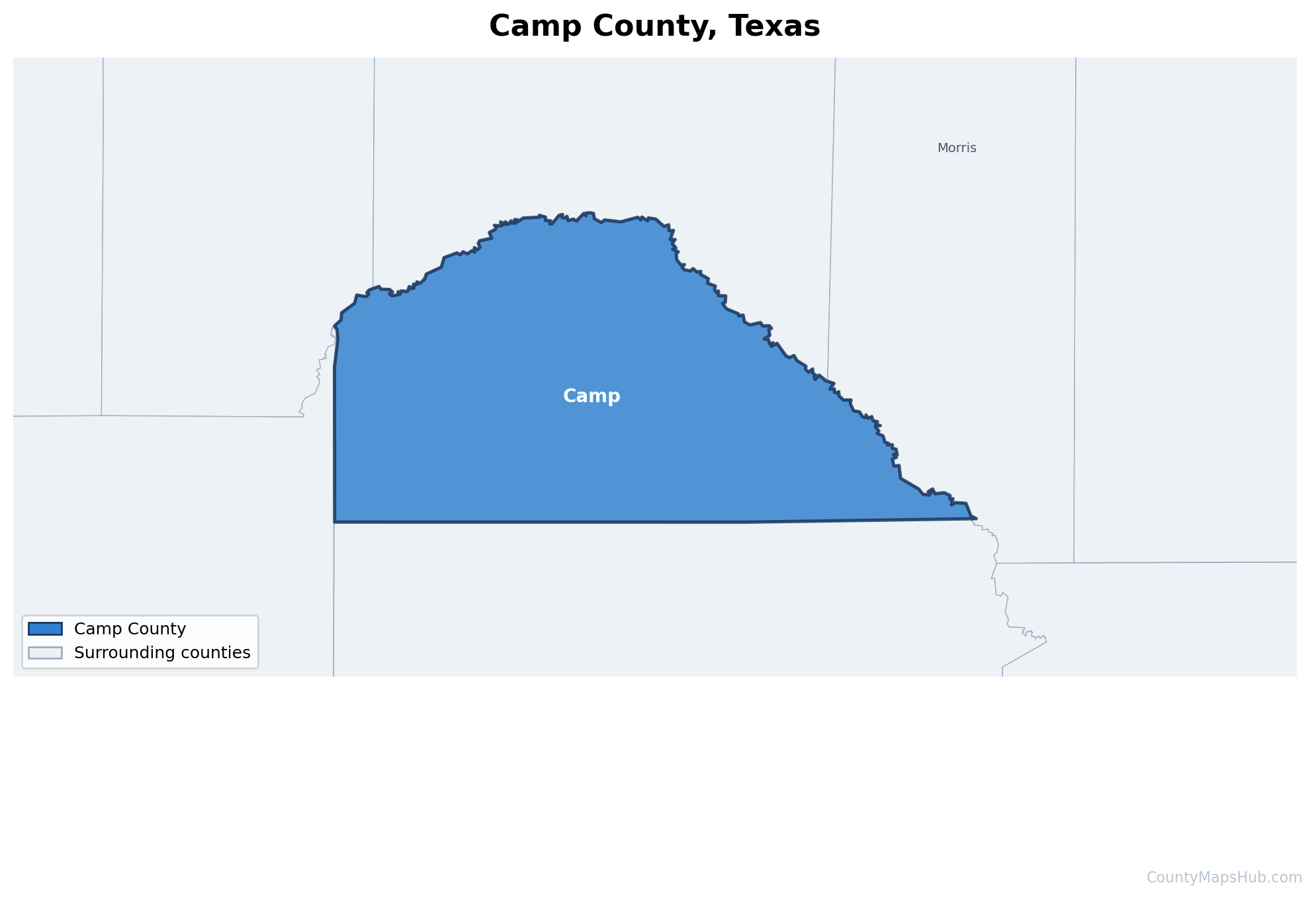
According to the 2020 Census, Camp County has a population of 12,464 residents distributed across its 198 square miles. This population density reflects the county’s predominantly rural character typical of East Texas counties. The population is centered primarily around the county seat and smaller communities scattered throughout the area. Over the years, the county has experienced modest population changes reflective of broader rural demographic trends in Texas, with residents drawn to the area’s small-town atmosphere, lower cost of living, and proximity to larger regional employment centers.
Climate
Camp County experiences a humid subtropical climate, characteristic of East Texas. This climate pattern brings hot, humid summers with temperatures frequently reaching the 90s Fahrenheit, while winters are generally mild with occasional cold fronts bringing brief periods of cooler weather. The region receives ample rainfall throughout the year, typically ranging from 40 to 50 inches annually, supporting the area’s lush vegetation and agricultural activities.
Spring and fall are particularly pleasant seasons, with moderate temperatures and colorful seasonal transitions. The area can experience severe weather including thunderstorms, occasional tornadoes, and rare winter ice storms. The humid subtropical conditions support the growth of pine and hardwood forests typical of the region, creating a verdant landscape that defines the East Texas character.
Tourist Attractions
Camp County offers visitors a glimpse into authentic East Texas rural life and natural beauty. The area features opportunities for outdoor recreation including fishing, hunting, and wildlife observation in the piney woods environment. Local parks and natural areas provide settings for picnicking, hiking, and enjoying the region’s flora and fauna. The county’s small-town atmosphere appeals to those seeking a quieter, more relaxed pace away from urban centers.
History enthusiasts can explore the architectural heritage of the county seat and surrounding communities, where historic buildings reflect the area’s late 19th and early 20th-century development. Local museums and historical markers help tell the story of East Texas settlement and growth. Seasonal events and community festivals celebrate regional traditions and provide opportunities for visitors to experience local hospitality. Antique shops and local businesses offer unique shopping experiences that reflect the county’s character and heritage.
Culture
Camp County embodies the traditional values and lifestyle of rural East Texas. The community maintains strong ties to its agricultural heritage, and family farms continue to play a role in the local economy and cultural identity. Church congregations serve as important social centers, reflecting the region’s deep religious roots and community-oriented values. High school sports, particularly football, generate significant community pride and bring residents together throughout the year.
The cultural fabric of the county reflects a blend of Southern traditions and Texas independence. Local cuisine features Southern comfort food and Texas barbecue, with family recipes passed down through generations. Community events often center around homecoming celebrations, agricultural fairs, and holiday observances that strengthen neighborhood bonds. The slower pace of life and emphasis on neighborliness create a welcoming environment where longtime residents and newcomers alike can appreciate the enduring qualities of small-town Texas living.