Chambers County
About
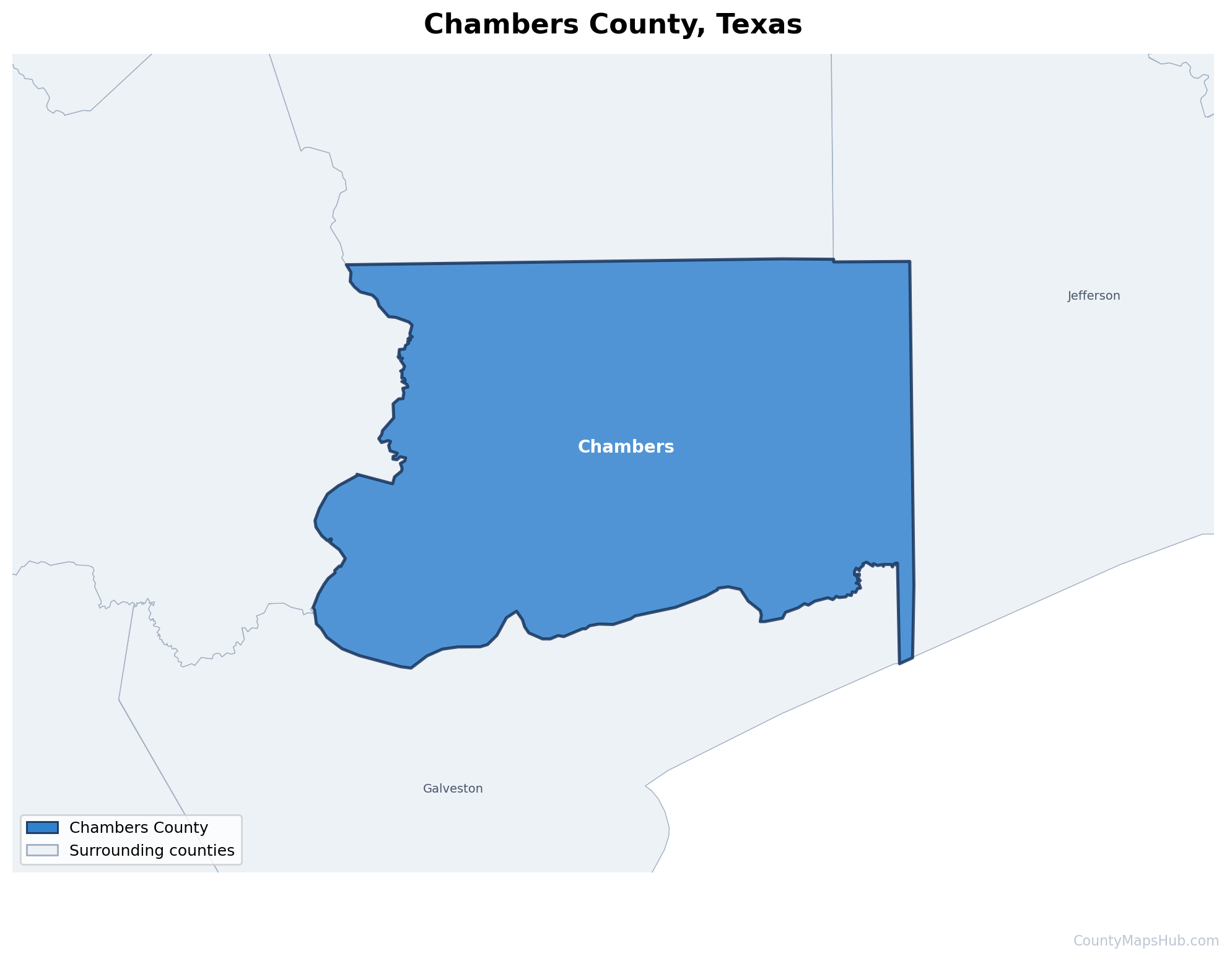
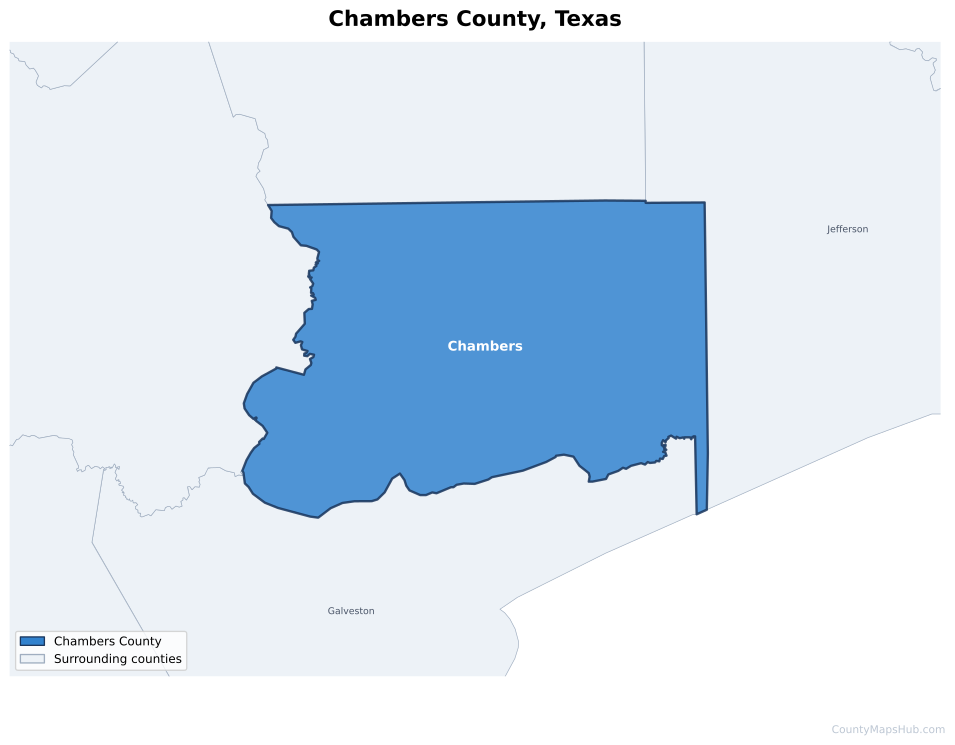
Chambers County was established in 1858 and named after Thomas Jefferson Chambers, a prominent figure in early Texas history. The county seat is Anahuac, which has served as the administrative center since the county’s formation. Located in the Gulf Coast region of Texas, the area’s history reflects the broader patterns of settlement and development typical of southeastern Texas counties during the mid-19th century.
The region’s development has been shaped by its proximity to the Gulf of Mexico and the various waterways that flow through the area. Throughout its history, the county has evolved from an economy centered on agriculture and ranching to one that includes industrial and petrochemical activities common to the Texas Gulf Coast. The county’s heritage reflects the diverse cultural influences that have characterized southeastern Texas, including Spanish colonial legacies, early American settlement, and subsequent waves of migration that contributed to the region’s growth.
Population
According to the 2020 Census, Chambers County has a population of 46,571 residents. This population is distributed across the county’s 599 square miles, creating a mix of residential patterns that range from more densely settled areas to rural landscapes. The county’s demographic composition reflects the broader trends of the Gulf Coast region, with communities that balance traditional rural character with proximity to larger metropolitan areas. Population growth and distribution have been influenced by the county’s location along important transportation corridors and its access to employment opportunities in nearby industrial centers.
Climate
Chambers County experiences a humid subtropical climate, characteristic of the Texas Gulf Coast region. This climate zone brings hot, humid summers and mild winters, with temperatures rarely dropping to freezing levels. The area receives substantial rainfall throughout the year, with peak precipitation typically occurring during the spring and fall months. Humidity levels remain high year-round due to the county’s proximity to the Gulf of Mexico.
The coastal location also means residents should be aware of tropical weather systems that can affect the region during hurricane season, which runs from June through November. The mild winters make outdoor activities feasible throughout much of the year, while summer heat and humidity are defining characteristics of daily life in the county.
Tourist Attractions
Chambers County offers visitors opportunities to experience the natural beauty and outdoor recreation typical of the Texas Gulf Coast. The area features access to coastal ecosystems, waterways, and wildlife habitats that attract nature enthusiasts and bird watchers. Fishing, boating, and water-based recreational activities are popular pursuits given the county’s geography and connection to bay systems and coastal waters.
Visitors can explore the region’s natural landscapes through various outdoor venues and wildlife areas that showcase the diverse ecosystems of southeastern Texas. The county’s position along the Gulf Coast provides opportunities for experiencing both freshwater and saltwater environments. Local heritage sites and community events throughout the year offer glimpses into the area’s history and cultural traditions, making the county an interesting destination for those seeking to understand the character of coastal Texas communities.
Culture
The cultural identity of Chambers County reflects the traditions of the Texas Gulf Coast, where maritime heritage blends with ranching and agricultural roots. Community life in the county revolves around family-oriented values, outdoor lifestyles, and a connection to the natural environment. Local celebrations and gatherings often center on seasonal activities, regional cuisine, and traditions that have been passed down through generations of Gulf Coast residents.
The county’s cuisine showcases the flavors of southeastern Texas, with seafood playing a prominent role alongside traditional Texan fare. Cultural influences from various ethnic groups have contributed to the area’s character over time. Community institutions, including schools, civic organizations, and houses of worship, serve as anchors for social life in the county. The slower pace of life compared to major urban centers appeals to residents who value a blend of rural character and accessibility to regional amenities.