Cherokee County
About
Cherokee County was established in 1846 and named after the Cherokee Nation, reflecting the significant Native American presence in East Texas during the early 19th century. The Cherokee people had settled in the region during the 1820s, establishing communities before the Republic of Texas era. The county’s formation came shortly after Texas joined the United States, as settlers moved into the piney woods region seeking farmland and timber resources.
The county seat of Rusk developed as the administrative and commercial center of the region. Throughout the 19th and early 20th centuries, the area’s economy centered on agriculture, timber harvesting, and later oil and gas production. The discovery of petroleum resources transformed the local economy and brought new waves of development. Cherokee County’s location in East Texas positioned it as part of the broader cultural and economic patterns of the piney woods region, with deep roots in both Native American and early Texan frontier history.
Population
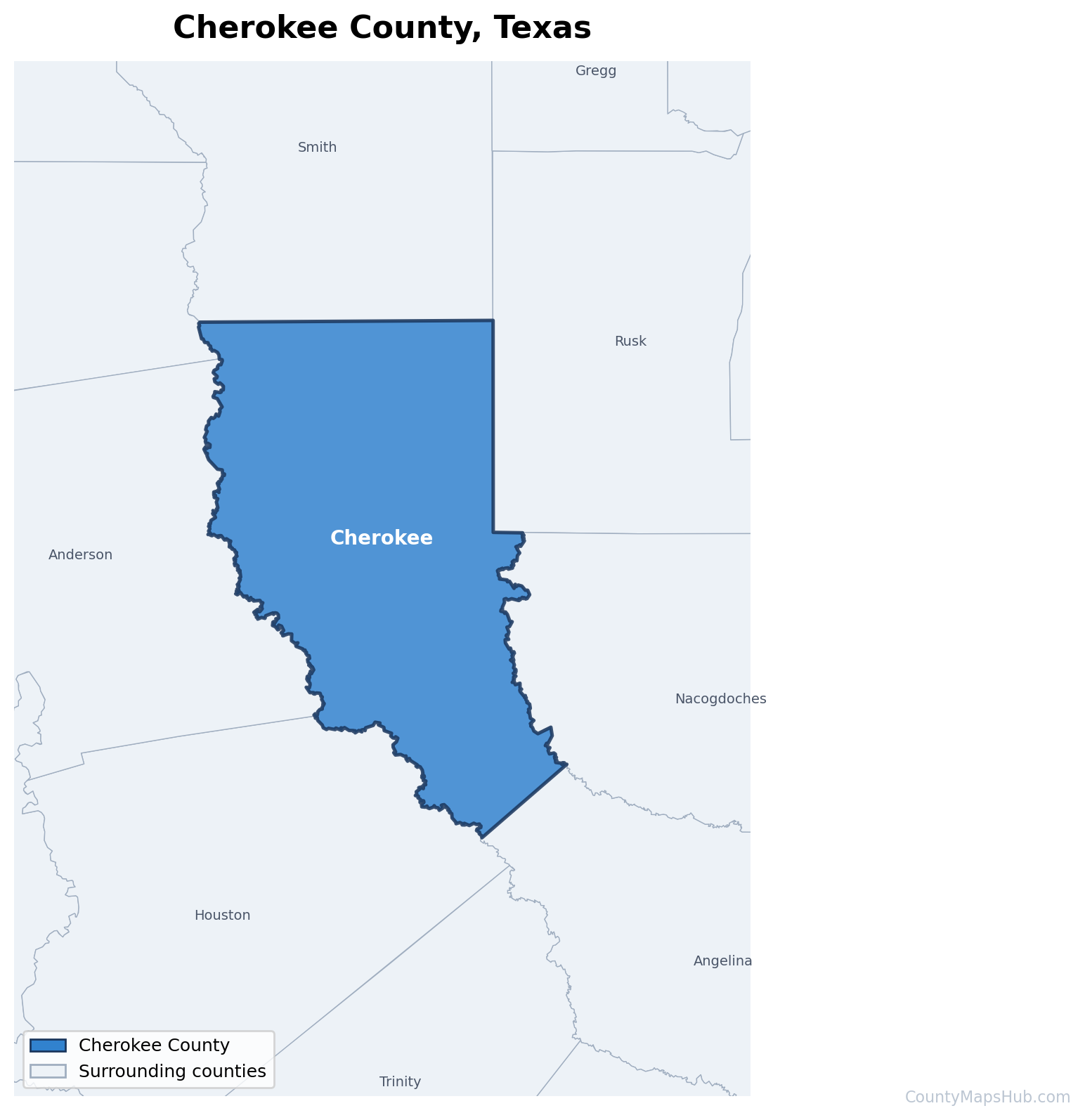
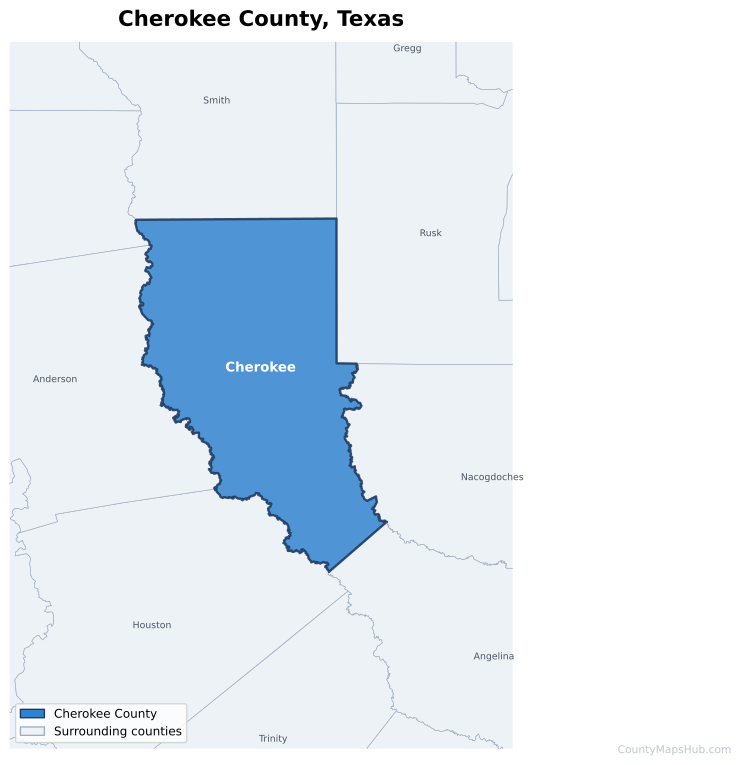
According to 2020 census data, Cherokee County has a population of 50,412 residents spread across 1,052 square miles. This population density reflects the county’s mixed character, combining small-town communities with rural agricultural and forested lands. The county seat of Rusk serves as one of the primary population centers, providing governmental services and serving as a hub for surrounding communities. The population distribution typical of East Texas counties shows concentrations in incorporated areas with more dispersed settlement patterns in the countryside, where timber operations, ranching, and farming remain part of the local landscape and economy.
Climate
Cherokee County experiences a humid subtropical climate characterized by hot summers and mild winters typical of East Texas. The region receives substantial rainfall throughout the year, supporting the lush pine forests that define much of the landscape. Summer temperatures regularly climb into the 90s Fahrenheit, while winter months see moderate conditions with occasional cold fronts bringing brief periods of freezing temperatures.
The abundant precipitation and warm growing season create ideal conditions for both native vegetation and agricultural activities. The climate supports diverse ecosystems including pine and hardwood forests, which have historically been important to the local timber industry. Residents experience the full range of seasons, with colorful autumn foliage, occasional winter frost, vibrant springs, and long, warm summers that define life in this part of Texas.
Tourist Attractions
Cherokee County offers visitors opportunities to explore the natural beauty and cultural heritage of East Texas. The region’s extensive pine forests provide settings for outdoor recreation including hiking, fishing, and wildlife observation. Local lakes and waterways attract anglers and boaters seeking peaceful natural environments away from urban centers. The piney woods landscape creates scenic drives and opportunities to experience the distinctive ecosystems of East Texas.
Visitors interested in history can explore sites related to the county’s 19th-century heritage and the broader story of East Texas settlement. Small-town architecture and historic districts preserve elements of the region’s past. Community events throughout the year celebrate local traditions and bring together residents and visitors. The county’s location makes it accessible for those exploring the cultural and natural attractions of East Texas, offering an authentic experience of this distinctive region.
Culture
The culture of Cherokee County reflects its East Texas heritage, blending Southern traditions with the distinctive character of the piney woods region. The county’s name honors the Cherokee Nation, acknowledging the Native American history that preceded Anglo settlement. Local culture emphasizes small-town values, community connections, and an appreciation for the natural environment that surrounds residents. Traditional Southern foodways, music, and social customs remain important parts of daily life.
The economy historically centered on agriculture, timber, and natural resource extraction continues to influence local identity and values. Residents take pride in the region’s forests, waterways, and rural landscapes. Community gatherings, religious institutions, and local traditions help maintain social bonds in a largely rural county. The cultural landscape reflects generations of families who have worked the land, managed forests, and built communities in this part of Texas, creating a distinct regional identity that honors both heritage and the natural environment.