Coke County
About
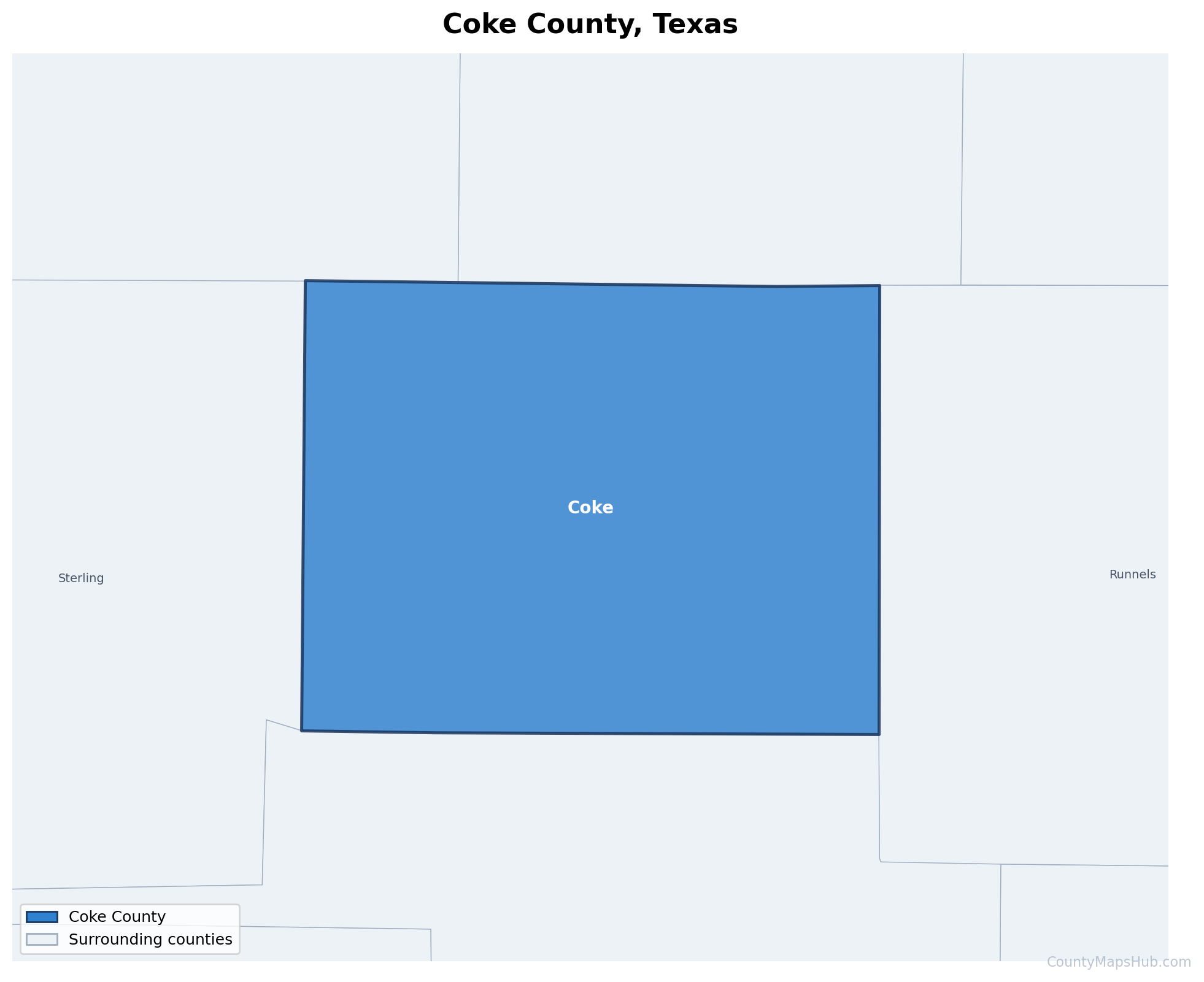
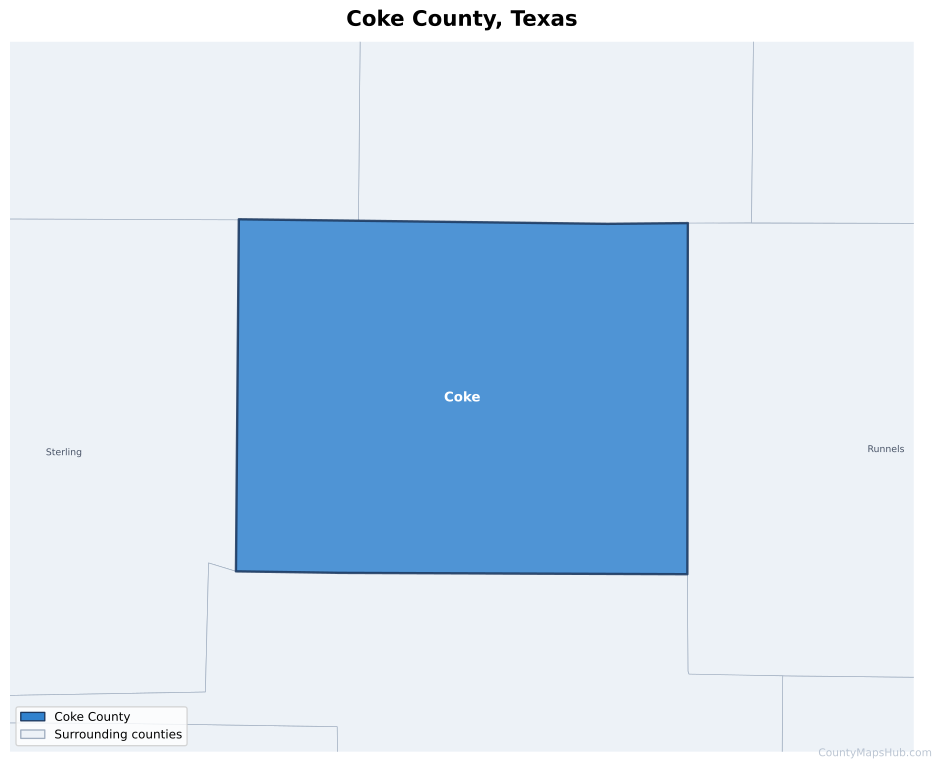
Coke County was established in 1889 in the heart of West Texas, named in honor of Richard Coke, a prominent Texas governor and United States senator who served during the Reconstruction era. The county’s formation coincided with the broader settlement patterns of the region during the late nineteenth century, as ranching and agriculture began to take root in the semi-arid landscapes of West Central Texas. Robert Lee, the county seat, became the administrative and commercial center for the surrounding rural communities.
Throughout its history, the county has been shaped by the challenges and opportunities of life in the Texas interior. Early settlers adapted to the demanding climate and terrain, developing ranching operations suited to the grasslands and rugged topography. The county’s heritage reflects the resilience of frontier communities and the evolution of rural Texas from its territorial days through the modern era, maintaining its agricultural character while adapting to changing economic conditions.
Population
According to the 2020 census, Coke County has a population of 3,211 residents spread across its 910 square miles, making it one of the more sparsely populated counties in Texas. This low population density is characteristic of many West Texas counties, where wide-open spaces and ranching traditions dominate the landscape. The small population reflects the county’s rural character and its economy centered on agriculture and livestock rather than urban development. Robert Lee serves as the primary population center, providing essential services and serving as a gathering place for the county’s residents.
Climate
Coke County experiences a semi-arid climate typical of West Central Texas, characterized by hot summers, mild winters, and limited annual precipitation. The region receives most of its rainfall during the spring and early summer months, with periodic dry spells common throughout the year. Temperature variations between seasons can be significant, with summer highs often exceeding ninety degrees Fahrenheit and winter temperatures occasionally dipping below freezing.
The semi-arid conditions have shaped the local ecology and land use patterns, favoring drought-resistant vegetation and ranching operations adapted to periodic water scarcity. Residents and visitors should be prepared for intense sunshine, low humidity, and the occasional strong wind common to the Texas plains. These climatic conditions have influenced settlement patterns and continue to define the agricultural practices that sustain the local economy.
Tourist Attractions
Visitors to Coke County can experience authentic West Texas rural landscapes and the quiet charm of small-town life. The county offers opportunities for outdoor recreation suited to its semi-arid environment, including birdwatching, photography of wide-open vistas, and exploration of the region’s natural terrain. The surrounding countryside features rolling hills, grasslands, and geological formations characteristic of the Edwards Plateau region, appealing to those seeking solitude and natural beauty away from urban centers.
Those interested in Texas frontier heritage will find the county’s small communities and historic architecture reflective of late nineteenth and early twentieth-century settlement patterns. Local landmarks and community gathering places provide glimpses into the area’s ranching traditions and the enduring spirit of rural Texas. Visitors should come prepared for limited services and amenities, as the county’s remote character is part of its appeal for travelers seeking an off-the-beaten-path experience in the Lone Star State.
Culture
Coke County’s culture is rooted in the traditions of rural West Texas, where ranching heritage, self-reliance, and community bonds remain central to daily life. The values of hard work, neighborliness, and connection to the land continue to shape social interactions and local customs. Residents maintain traditions associated with agricultural life, including livestock management practices, seasonal activities tied to the ranching calendar, and community events that bring together families from across the county’s wide geographic area.
The cultural landscape reflects a blend of frontier heritage and modern rural living, where traditional skills and knowledge are passed down through generations while communities adapt to contemporary challenges. Social life often centers around schools, civic organizations, and informal gatherings that reinforce the tight-knit character of small-town Texas. The county’s remote location and sparse population have helped preserve a distinct regional identity that honors the past while navigating the realities of twenty-first-century rural America.