Colorado County
About
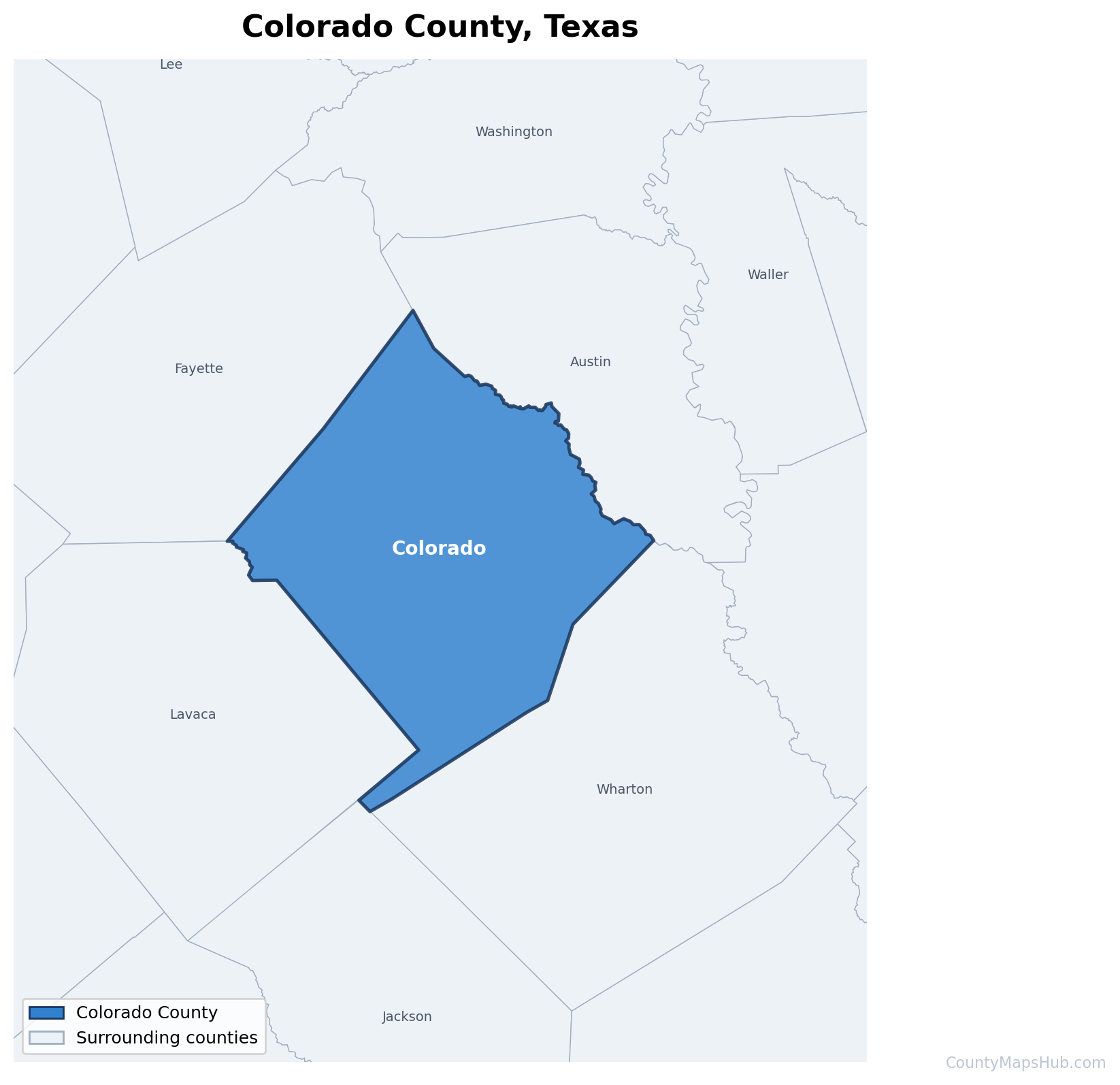
Colorado County was established in 1836, making it one of the original counties formed during the Republic of Texas era. Named after the Colorado River, which flows through the region, the county reflects the geographic significance of this major waterway in shaping early settlement patterns and transportation routes. The county seat of Columbus served as an important crossing point along the river and became a focal point for agricultural development and commerce in the decades following Texas independence.
Throughout the 19th century, the county developed as an agricultural center, with fertile bottomlands along the river supporting diverse farming operations. The arrival of railroad lines in the latter half of the 1800s connected the area to broader markets and spurred economic growth. The county’s location between major Texas cities positioned it as part of the important corridor linking the Gulf Coast to interior regions, contributing to its steady development through the territorial period, statehood, and into the modern era.
Population
According to the 2020 Census, Colorado County has a population of 20,577 residents spread across its 978 square miles of territory. This population density reflects a mix of small-town communities and rural agricultural areas that characterize much of the Texas coastal plain region. The county maintains a stable demographic profile typical of rural Texas counties, with residents engaged in agriculture, small business, and regional services. Population distribution tends to be concentrated in incorporated communities while substantial portions of the county remain devoted to farming, ranching, and open space that preserves the area’s historical character.
Climate
Colorado County experiences a humid subtropical climate characterized by hot summers, mild winters, and substantial rainfall distributed throughout the year. Summer temperatures regularly reach into the 90s Fahrenheit, while winter months typically see daytime highs in the 60s with occasional cooler periods. The region receives ample precipitation, supporting the agricultural activities that have long defined the local economy.
The climate patterns are influenced by the county’s position in the Texas coastal plain, where Gulf of Mexico moisture contributes to humidity levels and periodic thunderstorm activity. Seasonal variation brings occasional severe weather including heavy rainfall events and the possibility of tropical systems moving inland from the Gulf. The growing season is long, typically extending from early spring through late fall, which has historically made the area suitable for diverse crops and livestock operations.
Tourist Attractions
Visitors to Colorado County can explore the historic character of its communities, where 19th-century architecture and small-town atmospheres provide glimpses into Texas heritage. The county seat offers opportunities to discover local history through preserved buildings and community museums that document the region’s development from frontier settlement to modern times. The surrounding countryside features scenic rural landscapes typical of the Texas coastal plain, with opportunities for outdoor recreation along waterways and in natural areas.
The region’s location along the Colorado River provides access to water-based activities and nature observation. Local parks and recreational facilities offer spaces for family outings, while annual community events celebrate the area’s agricultural heritage and cultural traditions. Travelers passing through the county on major highways often stop to experience authentic small-town Texas hospitality and sample regional cuisine that reflects the area’s diverse cultural influences.
Culture
Colorado County’s cultural identity is rooted in its agricultural heritage and the blending of influences from the various groups who settled the region over nearly two centuries. The area reflects the broader cultural patterns of Southeast Texas, where European, Mexican, and African American traditions have contributed to local customs, cuisine, and community celebrations. Churches, civic organizations, and schools serve as anchors of community life in towns throughout the county, maintaining traditions while adapting to contemporary rural life.
Local cultural expression includes appreciation for traditional Texas foodways, country and Western music heritage, and festivals that mark seasonal changes and agricultural cycles. The county’s communities maintain a strong sense of place connected to the land and the river that gives the county its name. Respect for history, family connections spanning multiple generations, and pride in the region’s role in Texas history characterize the social fabric of Colorado County, creating a distinctive identity within the broader tapestry of Texas culture.