Comal County
About
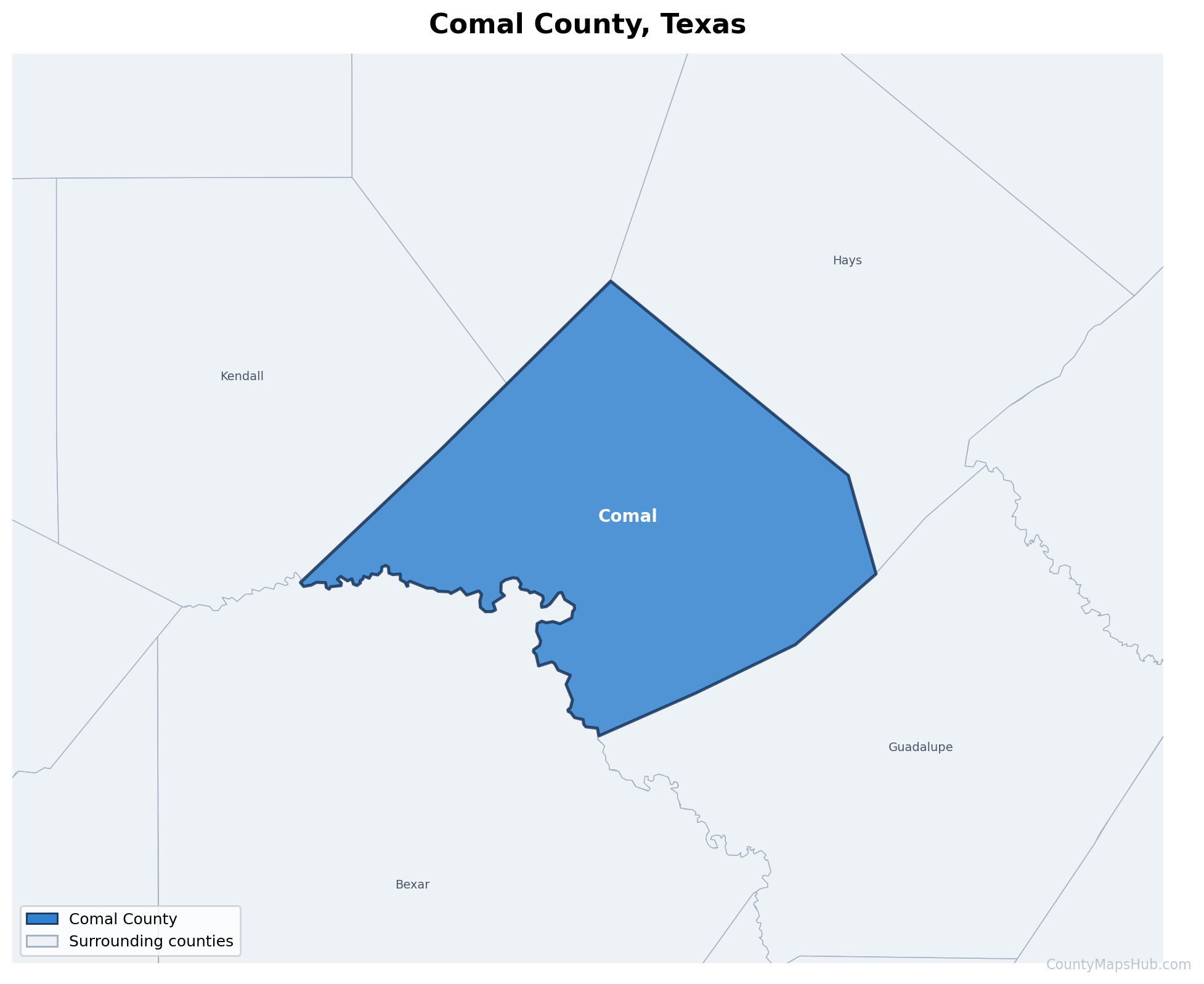
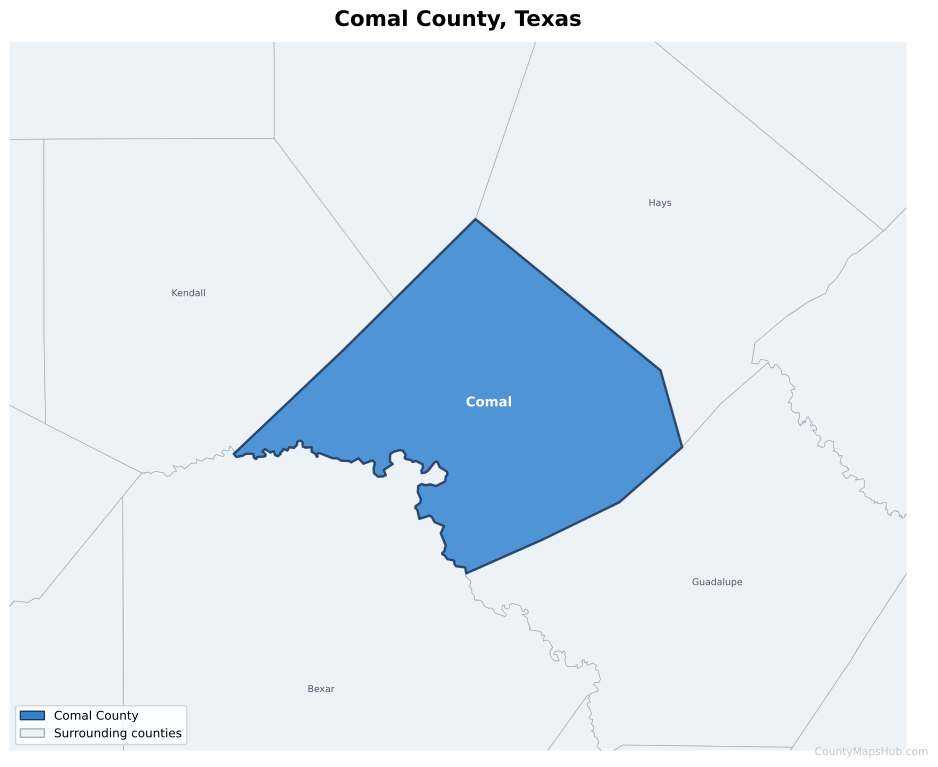
Comal County was established in 1846, making it one of the earlier counties formed during Texas’s initial years of statehood. The county takes its name from the Comal River, a significant waterway that has shaped the region’s development and character throughout its history. The area’s settlement patterns reflect the broader mid-19th century migration into Central Texas, with the county seat of New Braunfels serving as the administrative and commercial hub.
The county’s location in the Texas Hill Country positioned it at the intersection of various cultural influences and economic activities. Throughout the 19th and 20th centuries, the region evolved from frontier territory into an established community with agricultural roots. The natural resources, particularly water sources like the river for which the county was named, played crucial roles in attracting settlers and sustaining growth over subsequent generations.
Population
According to 2020 census data, Comal County recorded a population of 161,501 residents. This population is distributed across the county’s 575 square miles, reflecting a mix of urban concentration in the county seat and surrounding suburban and rural areas. The demographic composition represents the broader trends of Central Texas, where population growth has accelerated in recent decades due to the region’s economic opportunities and quality of life. The county continues to experience development pressures as part of the expanding metropolitan corridor between major Texas cities.
Climate
Comal County experiences a humid subtropical climate characteristic of the Central Texas region. This climate zone brings hot summers with temperatures frequently exceeding 90 degrees Fahrenheit, while winters remain relatively mild with occasional cold fronts. Precipitation is distributed throughout the year, with spring and fall typically seeing the heaviest rainfall, which supports the area’s diverse ecosystems and replenishes the aquifers and rivers that define the landscape.
The humid subtropical conditions create an environment where both temperate and semi-arid plant species coexist, contributing to the distinctive Hill Country scenery. Residents and visitors should be prepared for variable weather patterns, including the possibility of severe thunderstorms during spring months and occasional drought conditions during summer. The generally favorable climate supports year-round outdoor activities and has been a factor in the region’s appeal for both residents and tourists.
Tourist Attractions
The county offers a variety of attractions that highlight its natural beauty and Hill Country location. Visitors often enjoy water-based recreational activities on local rivers and springs, which provide opportunities for tubing, swimming, and kayaking during warmer months. The area’s limestone formations and rolling hills create scenic landscapes ideal for hiking, photography, and wildlife observation. Natural areas throughout the county showcase the native flora and fauna typical of the Texas Hill Country ecosystem.
Historical sites and heritage attractions reflect the county’s 19th-century origins and cultural development. Visitors can explore architecture from different eras, browse local artisan shops, and experience regional cuisine. The county’s location makes it a convenient destination for those exploring Central Texas, offering a blend of small-town atmosphere and access to outdoor recreation. Seasonal events and local establishments provide entertainment and educational opportunities for families and travelers seeking to understand the region’s unique character.
Culture
Comal County’s cultural identity reflects its position within the Texas Hill Country, where European immigrant heritage blends with broader Texan traditions. The region has maintained connections to its settlement-era roots while adapting to contemporary Central Texas culture. Local communities celebrate this heritage through preserved historical sites, culinary traditions, and community gatherings that honor the past while embracing modern diversity. The influence of multiple cultural streams has created a distinctive regional character that distinguishes the area within Texas.
The county’s cultural life includes various community events, local arts initiatives, and festivals that bring residents together throughout the year. Music, whether traditional folk styles or contemporary genres, plays an important role in community identity. Educational institutions and civic organizations work to preserve historical knowledge while fostering engagement with current cultural trends. This balance between honoring tradition and welcoming change characterizes the county’s approach to community development and cultural expression in the 21st century.