Concho County
About
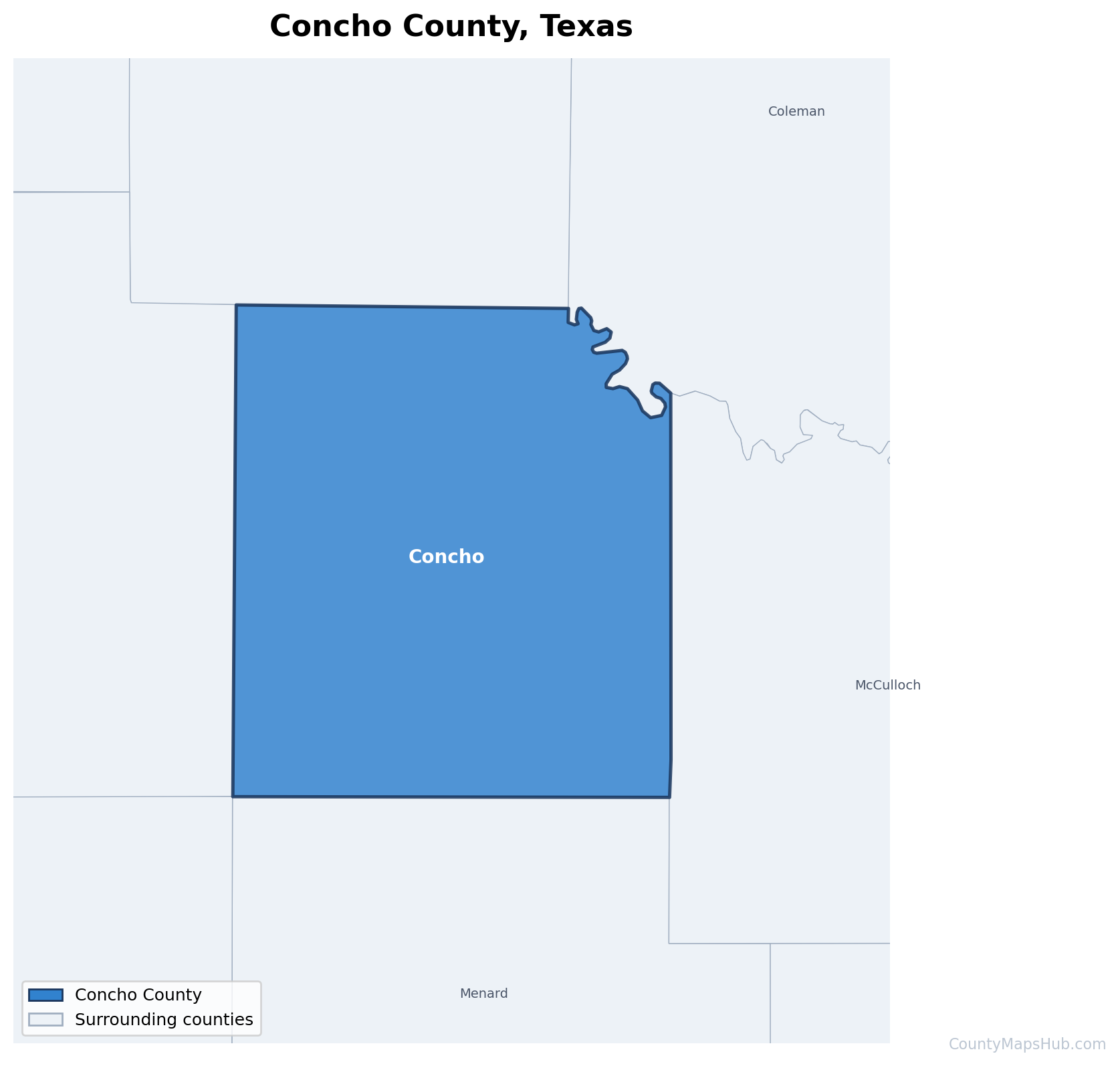
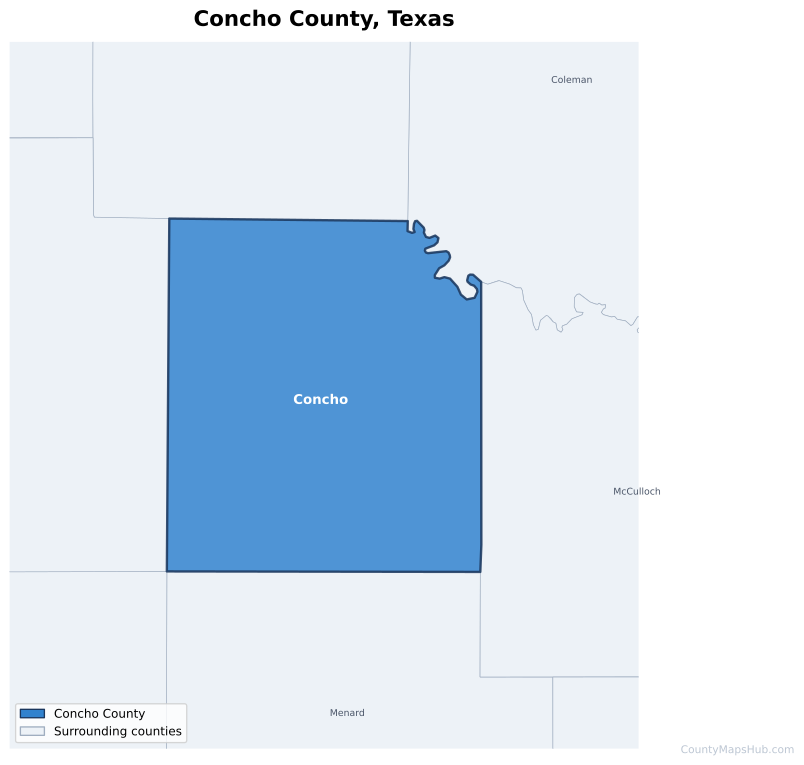
Concho County was established in 1858 and derives its name from the Concho River, which flows through the region. The county seat, Paint Rock, has served as the administrative center throughout the county’s history. Like many Texas counties established during the mid-19th century, Concho County developed during a period of westward expansion and settlement in the state.
The region’s early history reflects the broader patterns of frontier Texas, with settlers attracted to the area’s river valleys and grazing lands. Over the decades, the county evolved from a frontier territory into an established agricultural community, adapting to the challenges and opportunities presented by its semi-arid environment and available natural resources.
Population
According to the 2020 census, Concho County has a population of 2,726 residents spread across its 992 square miles. This translates to a low population density characteristic of rural Texas counties, where wide-open spaces and agricultural lands dominate the landscape. The county seat of Paint Rock serves as the primary population center, providing essential services and amenities to residents throughout the region. The modest population size reflects the county’s rural character and economy based primarily on ranching and agriculture rather than urban development.
Climate
Concho County experiences a semi-arid climate typical of west-central Texas, characterized by hot summers, mild winters, and limited annual precipitation. The region receives less rainfall than more eastern parts of the state, which has shaped both the natural vegetation and land use patterns throughout the county’s history. Temperature variations between seasons can be significant, with summer highs often reaching well into the upper 90s Fahrenheit, while winter temperatures are generally moderate.
The semi-arid conditions influence agricultural practices, with ranching and drought-resistant crops being more common than water-intensive farming. Residents and visitors should be prepared for the intense summer heat and occasional severe weather events typical of the Texas climate.
Tourist Attractions
The county offers opportunities to explore the authentic rural landscape of west-central Texas. Outdoor enthusiasts can enjoy activities such as hunting, fishing, and wildlife observation in the surrounding countryside. The Concho River provides a natural attraction for those interested in the waterways that shaped the region’s settlement and continue to support local ecosystems.
Visitors interested in small-town Texas culture will find Paint Rock representative of traditional county seat communities, with historic architecture and local businesses that reflect the area’s heritage. The region’s semi-arid landscape features characteristic vegetation and geological formations that tell the story of Texas beyond the major metropolitan areas. Travelers seeking an off-the-beaten-path experience can discover the quiet beauty of rural Texas and learn about the communities that have adapted to life in this distinctive environment.
Culture
Concho County embodies the culture of rural west-central Texas, where ranching heritage and agricultural traditions remain central to community identity. The lifestyle reflects values of self-reliance, neighborliness, and connection to the land that have characterized Texas rural communities for generations. Local events and gatherings typically celebrate the region’s agricultural heritage and provide opportunities for community members to maintain social connections across the county’s wide geographic area.
The cultural fabric of the county is woven from the experiences of families who have worked the land for multiple generations, adapting to the challenges of the semi-arid climate and the economic shifts that have affected rural America. Traditional Texas hospitality remains a hallmark of communities throughout the county, where visitors are welcomed and local history is preserved through stories and community institutions. The county’s culture reflects a blend of frontier heritage and contemporary rural life in the Lone Star State.