Cooke County
About
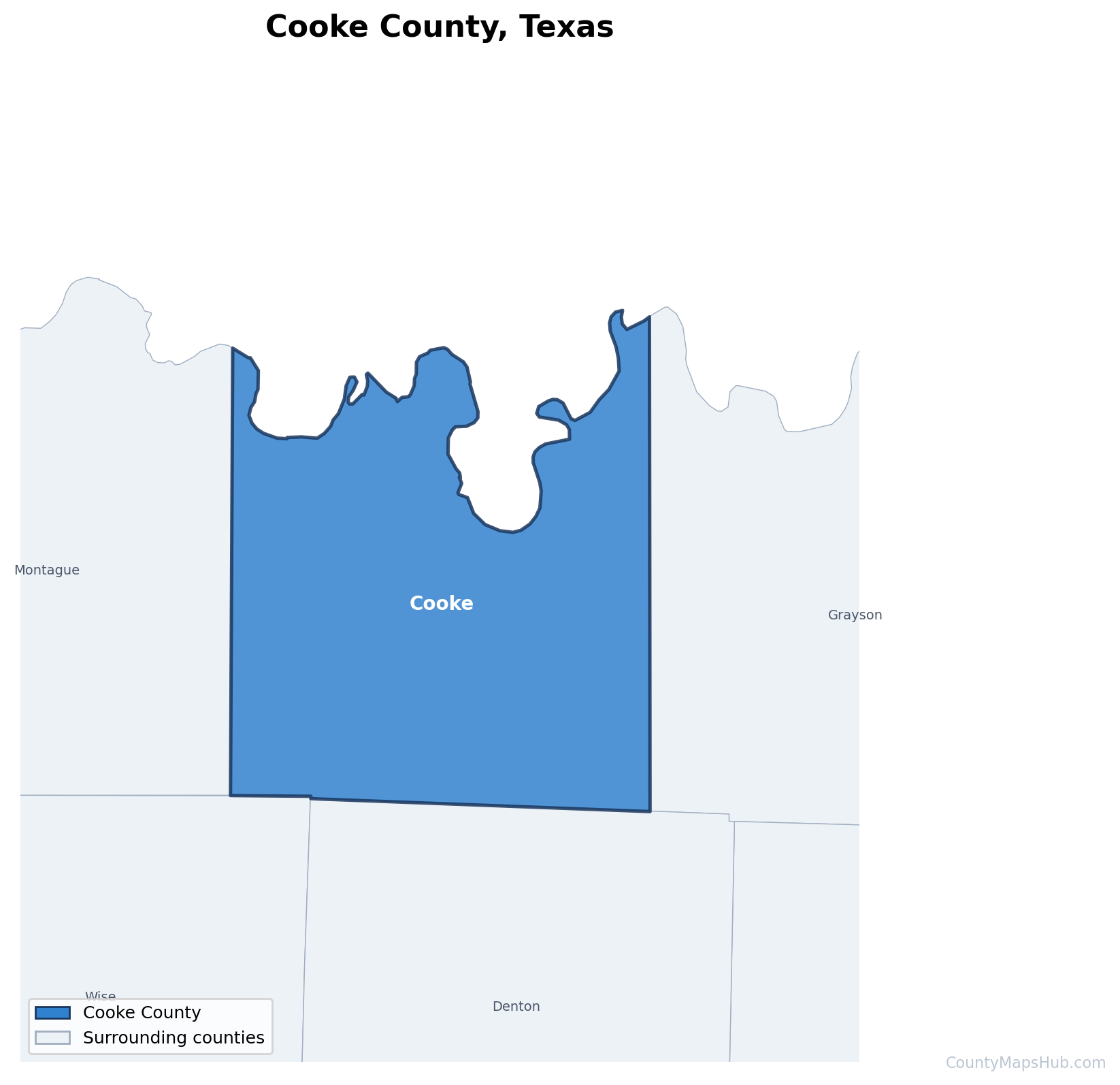
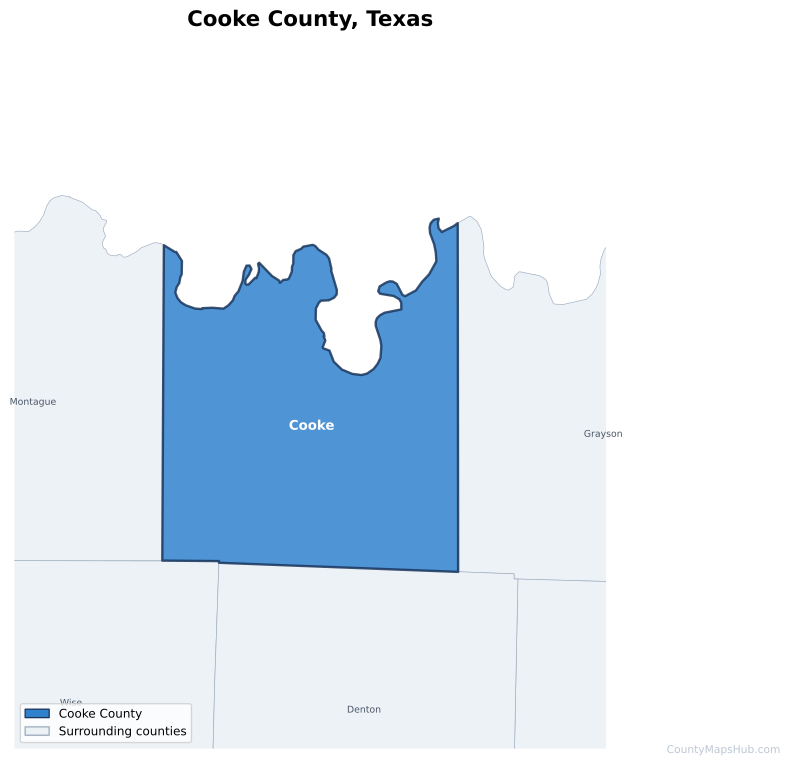
Cooke County was established in 1848 and named after William G. Cooke, a soldier and statesman who played a significant role in the early days of the Republic of Texas. The county’s formation coincided with the expansion of settlement in North Texas during the mid-19th century, as pioneers moved westward seeking agricultural opportunities and new lands. Gainesville, designated as the county seat, became the administrative and commercial center for the surrounding region.
Throughout the 19th and early 20th centuries, the county developed an economy based primarily on agriculture and ranching, taking advantage of the fertile prairies and grasslands that characterize much of North Texas. The arrival of the railroad further stimulated growth, connecting local producers to broader markets and facilitating the movement of goods and people. Over the decades, Cooke County has maintained its agricultural heritage while gradually diversifying its economic base to include manufacturing, retail, and service industries that serve both local residents and the broader regional economy.
Population
According to the 2020 Census, Cooke County had a population of 41,668 residents. The county spans approximately 874 square miles, offering a mix of urban, suburban, and rural living environments. Population distribution reflects the county’s character as a North Texas community that balances small-town life with proximity to larger metropolitan areas. The demographic composition includes families with deep generational roots in the region as well as newer residents attracted by the area’s quality of life, affordable housing, and employment opportunities. Growth patterns over recent decades have been steady, with the county maintaining its role as a stable, mid-sized community in the North Texas region.
Climate
Cooke County experiences a humid subtropical climate characterized by hot summers and mild to cool winters. This climate zone, typical of much of North Texas, features warm temperatures for much of the year with notable seasonal variation. Summer months often bring high temperatures and humidity, while winter can produce occasional cold fronts that bring cooler conditions and sometimes freezing temperatures, though extended cold periods are relatively rare.
Precipitation is distributed throughout the year, with spring typically being the wettest season when thunderstorms are most frequent. The region can experience severe weather including thunderstorms, hail, and occasionally tornadoes during the spring months. Fall and spring are generally considered the most pleasant seasons, offering moderate temperatures and lower humidity. The climate supports diverse vegetation including native grasses, deciduous trees, and a variety of agricultural crops that have historically been important to the county’s economy.
Tourist Attractions
Cooke County offers visitors a glimpse into authentic North Texas culture and landscape. The county’s rural character provides opportunities for outdoor recreation including fishing, hiking, and wildlife observation at various local parks and natural areas. The rolling terrain and scenic countryside attract those seeking a peaceful retreat from urban environments, with country roads offering pleasant drives through agricultural lands and small communities that retain their historic character.
Gainesville, as the county seat, serves as the primary destination for visitors seeking amenities such as dining, shopping, and lodging. The downtown area features historic architecture that reflects the community’s 19th-century origins. Throughout the year, local events and festivals celebrate the region’s heritage and bring together residents and visitors alike. Antique shops, local eateries, and community gathering places provide authentic experiences for those interested in exploring small-town Texas culture and hospitality.
Culture
The cultural fabric of Cooke County reflects its roots as a North Texas agricultural community with strong ties to ranching and farming traditions. Local values emphasize hard work, neighborliness, and community involvement, characteristics common to many rural Texas counties. Churches and civic organizations play important roles in community life, organizing events and providing social networks that bind residents together. The county’s cultural identity is shaped by its history as a frontier settlement and its ongoing connection to the land and agricultural practices.
Regional cuisine features Texas comfort food and barbecue traditions, with local restaurants serving dishes that reflect both Southern and Southwestern influences. High school sports, particularly football, generate significant community enthusiasm and serve as important social events that bring together residents from across the county. Seasonal celebrations, agricultural fairs, and community gatherings maintain traditions passed down through generations while welcoming newcomers into the social fabric. The blend of longtime residents and newer arrivals creates a cultural environment that honors heritage while adapting to contemporary life in North Texas.