Delta County
About
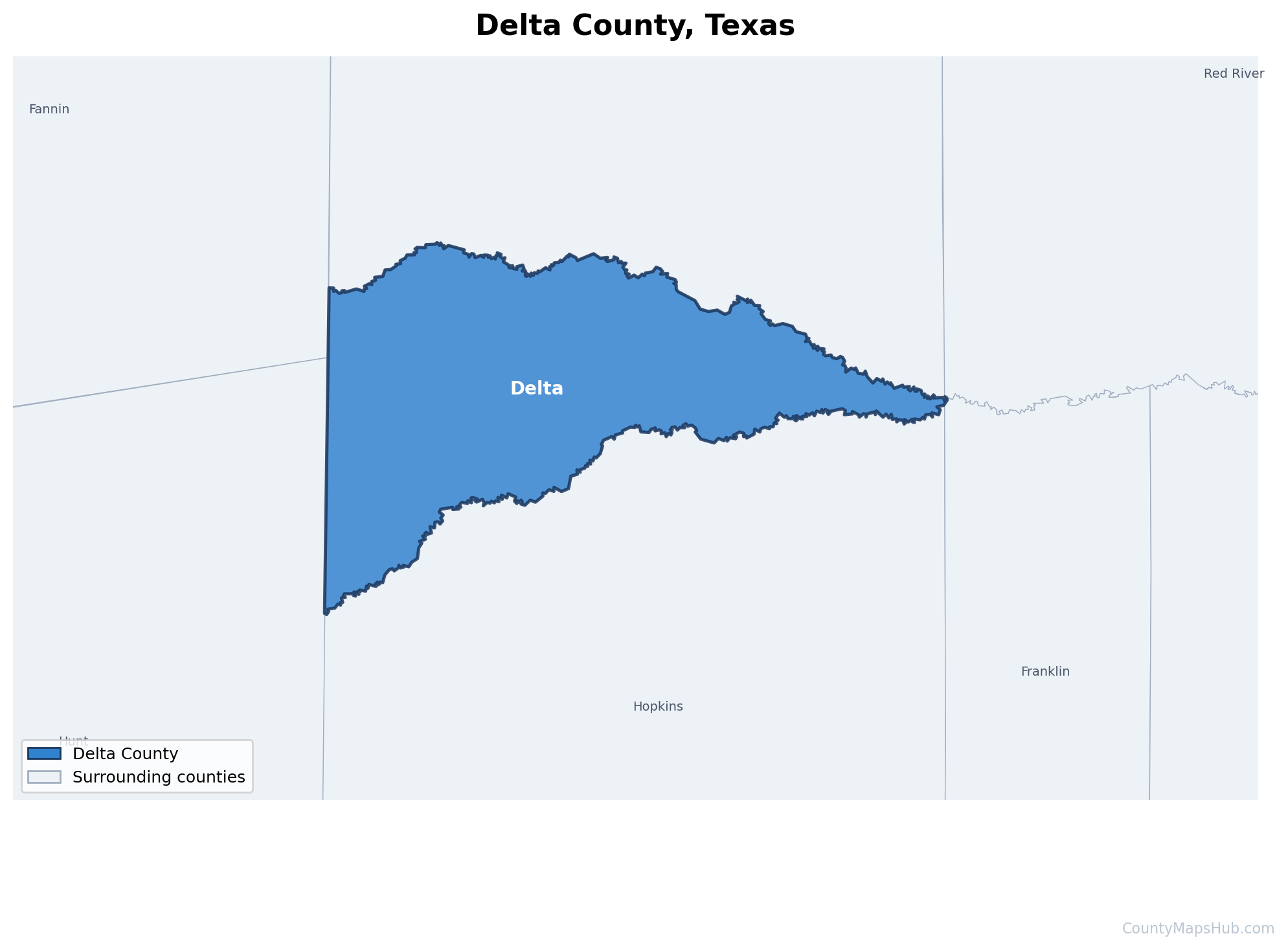
Delta County was established in 1870, making it one of the post-Civil War era counties formed during Texas’s reconstruction period. Named after the Greek letter delta, the county reflects the geometric or agricultural significance common in naming conventions of that era. Cooper serves as the county seat, providing administrative services for the region.
Throughout its history, the county has been shaped by the broader patterns of Northeast Texas development, including agricultural expansion, the arrival of railroad networks, and the evolution from frontier settlement to established rural community. The county’s development mirrors the typical progression of Texas counties formed in the late 19th century, transitioning from open rangeland to organized townships and farming operations.
Population
As of the 2020 census, Delta County had a population of 5,251 residents spread across its 277 square miles. This population density reflects the county’s predominantly rural character, typical of many Northeast Texas counties. The relatively small population creates a close-knit community atmosphere where residents often know their neighbors and participate in local civic life. The county seat of Cooper serves as the primary population center, providing essential services, schools, and commercial activities for residents throughout the region.
Climate
Delta County experiences a humid subtropical climate, characteristic of Northeast Texas. This climate zone brings hot, humid summers with temperatures frequently reaching the 90s Fahrenheit, while winters are generally mild with occasional cold fronts that can bring freezing temperatures and rare winter precipitation. The region receives moderate to abundant rainfall throughout the year, with spring typically being the wettest season.
The humid subtropical conditions support diverse vegetation and agricultural activities common to the region. Thunderstorms are frequent during spring and early summer months, occasionally producing severe weather. The climate allows for a long growing season, which has historically supported the county’s agricultural economy and contributes to the lush, green landscapes typical of East Texas.
Tourist Attractions
Delta County offers visitors a glimpse into rural Northeast Texas life and countryside charm. The region features opportunities for outdoor recreation, including fishing, hunting, and nature observation in the rolling landscapes typical of the area. Local lakes and waterways provide settings for boating and water-based activities, while the rural roads offer scenic drives through farmland and wooded areas.
Visitors interested in small-town Texas culture will find the county seat and surrounding communities welcoming. Local events throughout the year celebrate regional heritage and community spirit, though these tend to be intimate gatherings rather than large-scale festivals. The county’s historic buildings and structures provide architectural interest for those exploring the area’s past, while antique shops and local businesses offer authentic rural Texas shopping experiences.
Culture
The cultural fabric of Delta County reflects traditional Northeast Texas values, with strong emphasis on community, faith, and agricultural heritage. Churches play a central role in social life, serving not only as places of worship but as community gathering points. The county’s residents maintain connections to farming and ranching traditions, even as the economy has diversified over the decades.
Local culture emphasizes neighborliness, self-reliance, and pride in rural identity. Community events, school activities, and youth sports serve as important social anchors. The culinary traditions lean toward Southern and Texas comfort foods, with barbecue, home cooking, and potluck gatherings remaining popular. The pace of life tends to be slower and more relaxed than in urban areas, reflecting the values of a community where family ties, local history, and connection to the land remain important aspects of daily life.